


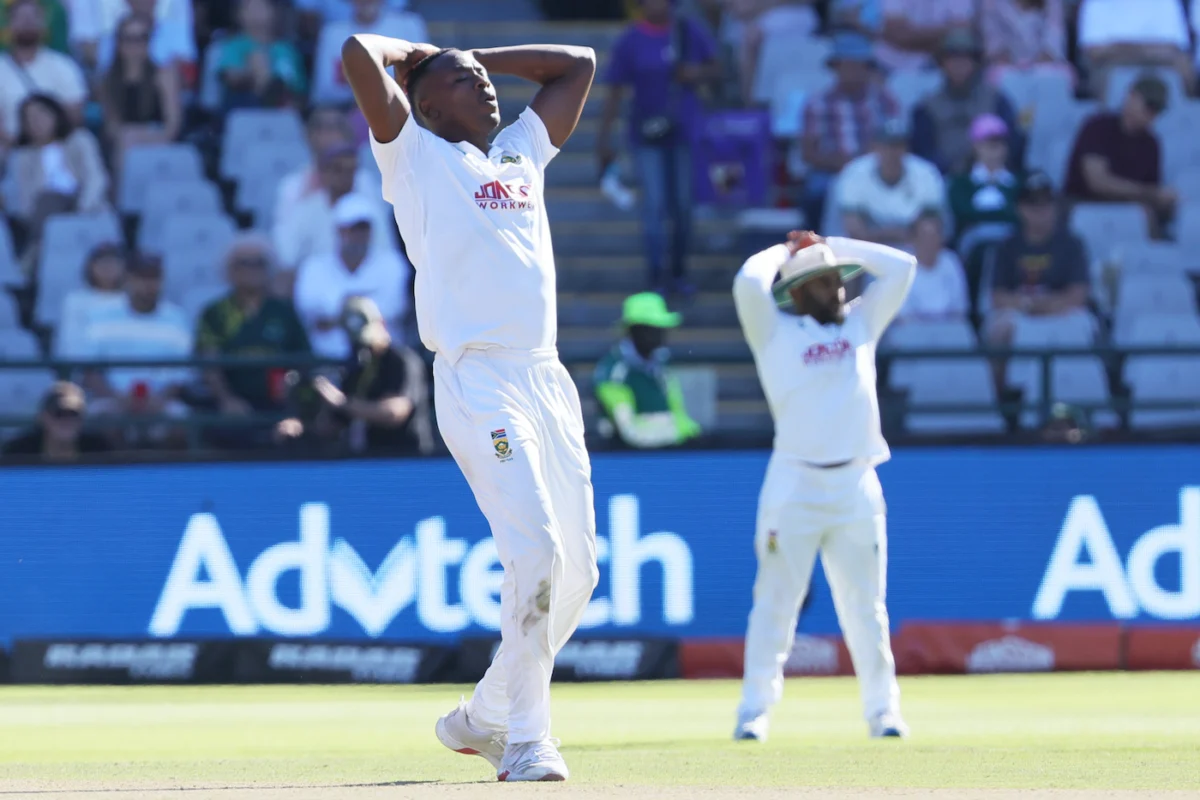
South Africa’s formidable fast-bowling spearheads, Kagiso Rabada and Marco Jansen, found themselves battling physical ailments on the second day of the third Test against Australia at Newlands. The strain of a demanding schedule and a heavy workload weighed heavily on the hosts as Australia managed to secure a crucial first-innings lead in Cape Town.
Rabada, who recently made an inspirational return to Test cricket following a year-long absence and a serious hamstring injury, struggled with sudden stomach cramps during the afternoon session. Meanwhile, his bowling partner Marco Jansen dealt with back stiffness as the grueling nature of the ongoing red-ball season began to take a visible toll on the Proteas’ frontline attack.
The new-ball pair, who had been instrumental in South Africa’s success just a week prior by taking six wickets each in the second match at Gqeberha, were forced off the field shortly after the tea break. At that juncture in the match, Australia had advanced to 191 for 4, with the ball already 54 overs old. Both bowlers courageously returned to the field during the third session of the day and even shared the second new ball when it became available. However, Rabada’s discomfort proved too severe to sustain a full spell, and he left the field once more as the shadows lengthened toward the close of play. Despite the concerning exit, the team management anticipates that he will be fully fit to return to the field on day three.
Speaking to the media after the day’s play, South Africa’s bowling coach Piet Botha addressed the situation surrounding his star fast bowler. He noted that Rabada had been afflicted by unexpected stomach cramps that forced him to leave the action, though he remained uncertain whether the issue was linked to the heavy physical exertion from the previous week’s Test. Botha acknowledged that Rabada was clearly not operating at his absolute best during the day’s play, expressing hope that a night of recovery would help him bounce back. He also admitted that the medical and coaching staff were still evaluating the exact nature of the illness.
Rabada’s physical struggles highlight the immense challenge of his recent reintegration into international red-ball cricket. During the St George’s Park Test, he had looked completely rejuvenated, bowling a marathon 35 overs across two innings and operating at peak velocities. However, the quick turnaround to the Newlands fixture has presented an entirely different obstacle. Having already sent down 18 overs in the current match, Rabada has conceded 81 runs without picking up a wicket. More noticeably for observers, his pace dropped significantly compared to the previous week, where he had maxed out at an impressive 154.5 kilometers per hour and routinely hovered in the 140s. At Newlands, his deliveries were clocked largely in the mid to upper 130s, and he struggled to consistently hit his probing lengths, adding to South Africa’s concerns as they await a definitive diagnosis on his condition.
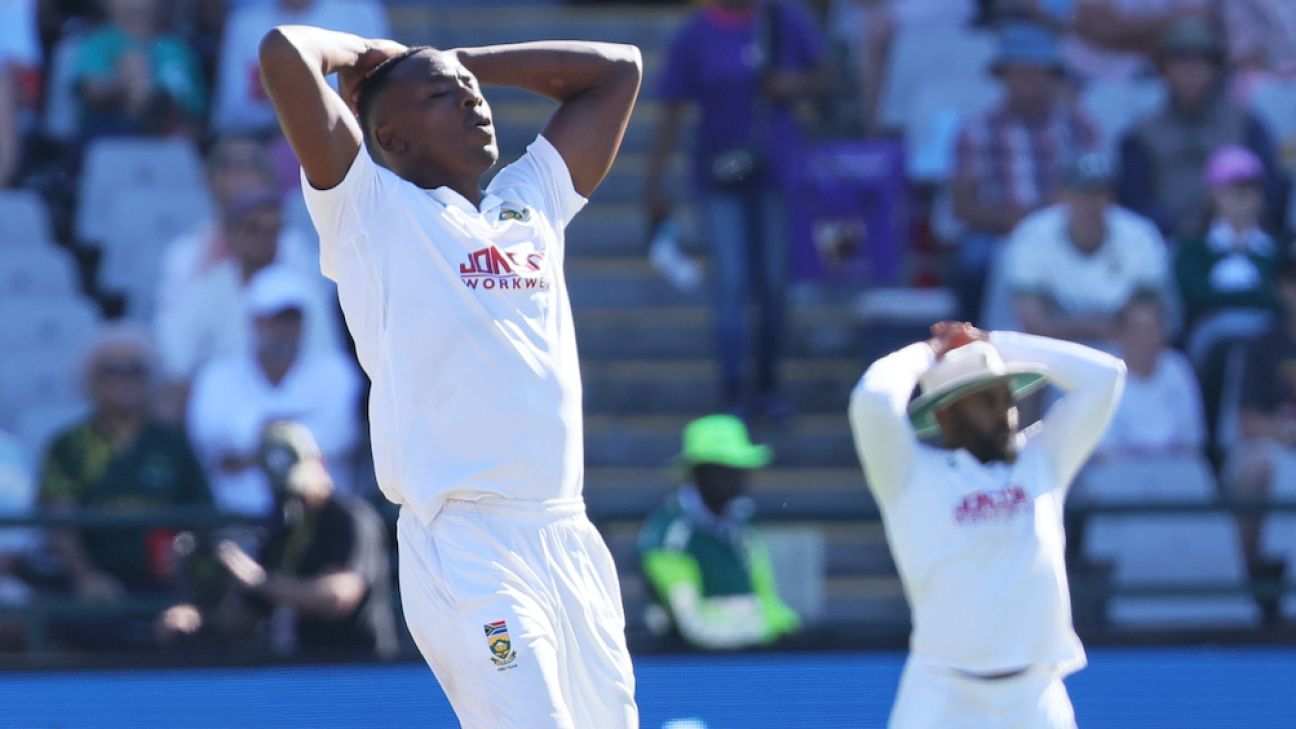
Marco Jansen faced his own physical hurdles on day two, though his situation appeared far less alarming. He did not emerge immediately alongside his teammates after the tea interval but managed to return within a few overs and remained actively involved for the remainder of the session. Jansen bowled a disciplined spell of 14 overs on the day, capturing 2 for 37 and displaying much more of his usual rhythm and effectiveness than Rabada. Aside from standard fast-bowler aches and pains, Jansen was not hampered by any major injury. While Botha confirmed that Marco required a back rub during the tea break to loosen up, Cricket South Africa clarified that the treatment was purely precautionary for minor stiffness rather than any serious pain, reflecting the routine physical toll placed on athletes returning to the rigors of the longest format after a lengthy hiatus.
Coach Botha contextualized these physical complaints as an inevitable consequence of the team’s re-entry into a heavy international schedule. Pointing out that the squad is only three weeks into the core Test season, Botha suggested that it is entirely normal for players to experience localized pain and discomfort as they absorb high volumes of bowling workloads. He reiterated that the management does not view these issues as serious threats at this stage of the match.
The physical strain visible in the South African camp is deeply rooted in their recent fixture congestion and sparse red-ball calendar. South Africa had not played a single Test match since their challenging tour of India late last year, and their last three-Test series dates back to the 2022-23 season in Australia. The lack of continuous red-ball cricket magnified the physical cost of their previous outing in Gqeberha, where they asked Australia to follow-on and were forced to toil through 149.4 overs across two grueling days. With only a four-day turnaround before arriving in Cape Town, the team made just a single change to their starting lineup. Anrich Nortje, who had pulled up with a groin injury during the St George’s Park encounter, was ruled out and replaced by Gerald Coetzee, a player who had not featured in a Test match for nearly two years.
Coetzee’s inclusion brought raw pace to the attack, but the long layoff was evident in his rhythm. He has bowled 14 overs so far in the innings, returning figures of 0 for 54 while occasionally lacking the pinpoint control that South Africa desperately needed against a resilient Australian batting lineup. Assessing Coetzee’s performance, Botha defended the selection by emphasizing the unique attributes the fast bowler brings to the table. Describing him as a genuine quick bowler who has missed significant cricket, Botha explained that the team management believed Coetzee’s raw pace could immediately put the Australian batters under pressure. While acknowledging that Coetzee executed some effective bouncers in alignment with the team’s tactical plans, Botha conceded that the youngster lost a degree of control between his hostile deliveries, attributing it directly to a lack of recent match practice and expressing confidence that control will return with more playing time.
As the match moves toward its pivotal stages, Australia has successfully established a lead in the first innings while retaining six wickets in hand, leaving South Africa’s weary bowling attack with a monumental task ahead when play resumes.



Comments (0)