


Scott Boland made an immediate and decisive impact on the second Test match between South Africa and Australia, claiming two crucial wickets during a rain-ruined opening day that saw only 12.2 overs of play possible in Gqeberha.
Stepping into Australia’s starting XI in place of veteran off-spinner Nathan Lyon, Boland struck twice in his second over of the innings. His double-strike left South Africa labouring on 20 for 2 when persistent afternoon rain forced the players from the field at 4:15 PM, with the weather ultimately preventing any further resumption for the day. While lost overs can theoretically be made up across subsequent days of the Test match, the immediate forecast suggested further disruptions could lie ahead for both teams.
The trouble began well before the first ball was bowled, with morning drizzle clearing just enough to allow an on-time toss. Australian captain Pat Cummins won the flip and elected to bowl first, sending South Africa in to bat under heavily overcast skies. However, the rain returned almost immediately, delaying the official start of play by 90 minutes. When the players finally took the field, only 5.3 overs were possible before the next weather stoppage forced an early lunch.
During that brief opening passage of play, Mitchell Starc struggled to find his rhythm and control from the Park Drive End. Recognizing the need for a shift in momentum, Australia turned to Boland upon the resumption after the rain break. Although his very first delivery fell well short of wicketkeeper Alex Carey, his second ball was an immediate warning sign, skimming sharply past the outside edge of debutant Marques Ackerman as the bowler opened with a maiden over.
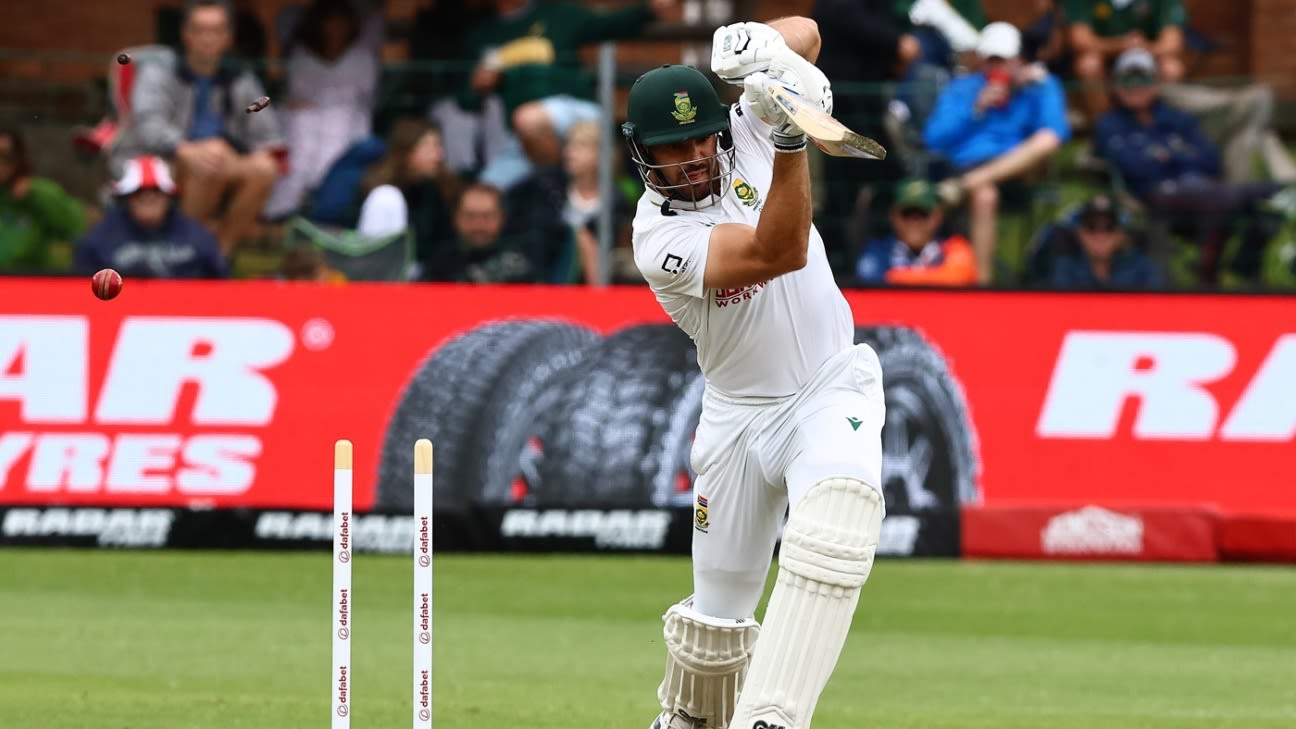
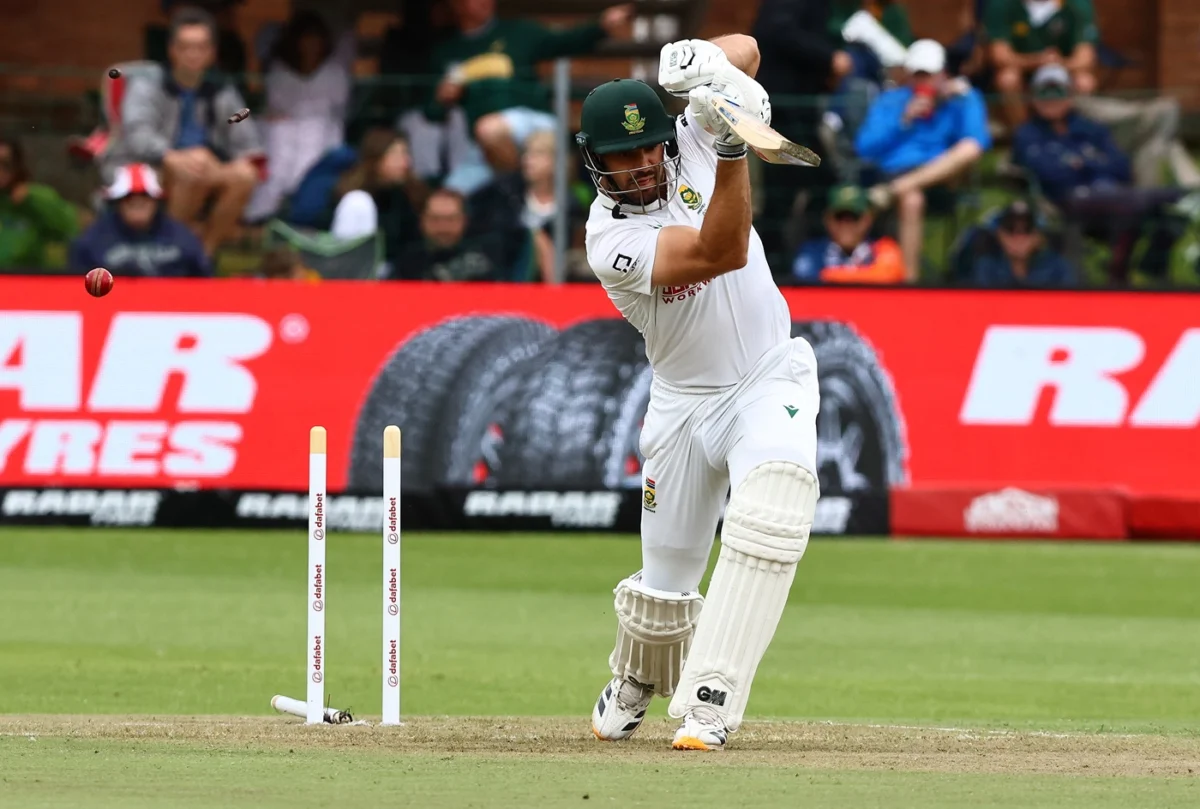
Four balls into his next over, Boland found his reward. Aiden Markram, who had earlier looked in fine touch by putting away two handsome drives against Starc during the first brief window of play, shaped to come forward to a delivery that nipped back sharply off the seam. The ball took a telling inside edge and flattened Markram’s middle stump, breaking the opening partnership and handing the hosts their first major setback.
Boland was not finished. The very next delivery pitched in the channel just outside the off stump, tempting David Bedingham into playing a loose drive away from his body. The resulting thick edge flew toward the slip cordon, accounting for South Africa’s second wicket in consecutive balls and putting the 37-year-old seamer on a hat-trick.
The hat-trick ball nearly brought a third success for the relentless fast bowler. South African captain Temba Bavuma, walking to the crease under immense pressure, managed an inside edge onto his pads. This led to a loud and stifled appeal from the Australian fielders, who have grown accustomed to seeing this exact style of relentless, accurate impact from Boland on the international stage.
Batting conditions proved exceptionally difficult for every South African batsman who faced the Australian seamers. Few players could have faced a tougher introduction to Test cricket than Marques Ackerman, who found himself thrust into the unfamiliar role of opening the batting—a position he had never occupied across his entire first-class career. Ackerman was forced to sweat through a scoreless period of 14 deliveries before finally getting off the mark when a thick edge squeezed past the gully region, moments before the players were once again driven from the field by the returning rain.
Bavuma, who endured a difficult outing with the bat during the opening Test in Durban, also had to scrap for every run. He eventually got off the mark with a streaky thick edge through the cordon, reflecting the treacherous nature of the surface and the quality of the Australian bowling attack under helpful overhead conditions.

The team selections ahead of the match had already drawn significant discussion. Approximately 15 minutes before the toss, it became apparent that Australia had opted for an aggressive, all-pace attack. Nathan Lyon was spotted walking around the boundary in trainers while Boland completed his pre-match warm-ups, eventually measuring out his run-up with the veteran off-spinner holding the tape measure.
The decision marked the first time since 2013 that Lyon had not featured in a red-ball Test match when fully available for selection. The omission echoes similar controversial decisions from the previous year, when Lyon was left out of day-night Tests in Jamaica and Brisbane—omissions that the legendary spinner publicly made clear he was far from impressed with. With no specialist spinner in their XI, Australia’s spin responsibilities for this match rest entirely in the hands of their part-time options: Matt Renshaw, Travis Head, Beau Webster, and Marnus Labuschagne.
For South Africa, the team selection brought a welcome boost with the return of fast bowler Kagiso Rabada. To accommodate Rabada’s return and rebalance their bowling attack, the home side left out spinner Keshav Maharaj. Unlike Australia, however, South Africa still retained a specialist spinner in their lineup by selecting Simon Harmer. In addition to Ackerman making his debut at the top of the order, Matthew Breetzke was also brought into the batting line-up, which prompted a reshuffle that moved Ryan Rickelton down into the middle order to take over wicketkeeping duties.
Australia entered the second match of the series holding a 1-0 lead, having convincingly won the opening Test in Durban by 214 runs. With the first day heavily depleted by the weather in Gqeberha, both sides were left waiting to see how much playing time the remaining four days would afford them to force a result.



Comments (0)