


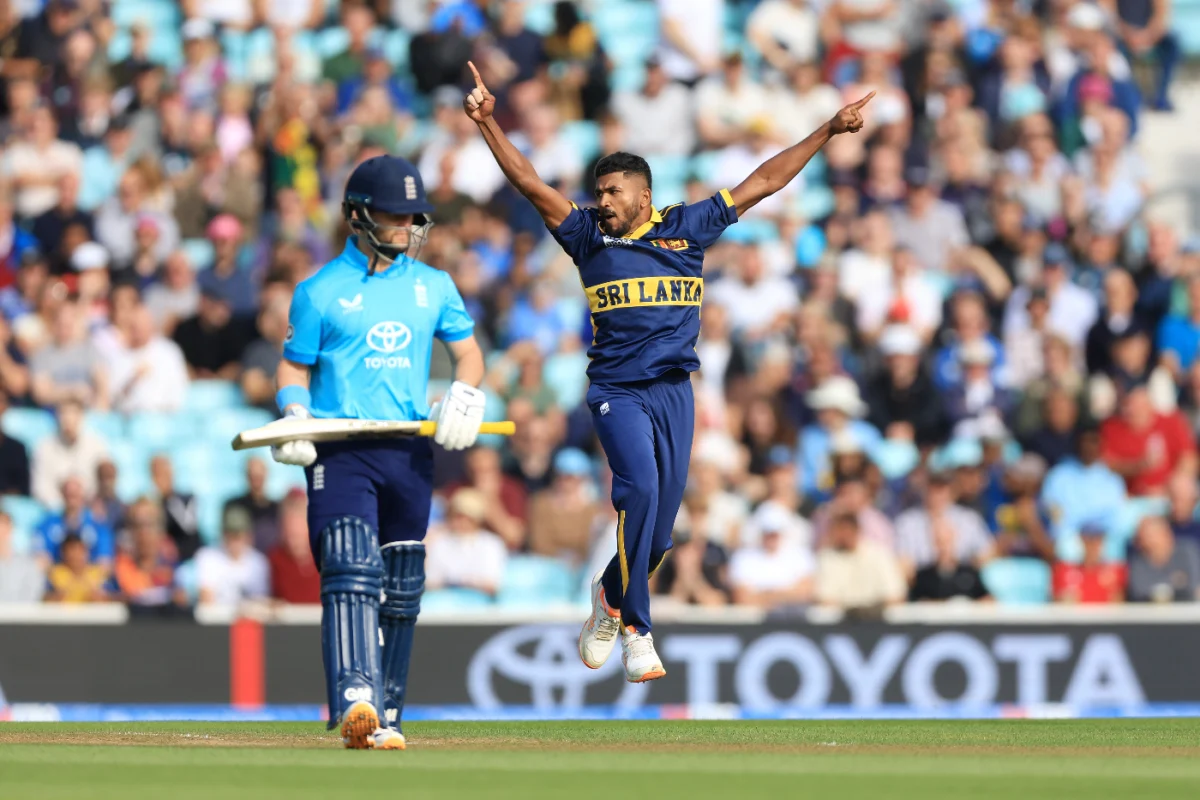
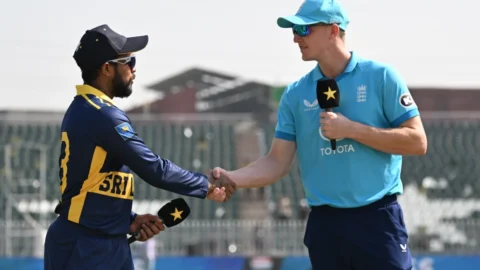
It is barely a month since these two teams duked it out to bring down the curtain on the English summer, a series that provided both entertainment and clarity as the northern hemisphere transitioned into colder months. Now, Sri Lanka and England reunite thousands of miles away in Rawalpindi on Thursday, locking horns in this novel tri-series hosted in Pakistan.
After starting their respective schedules with defeats to the tournament hosts—who effectively now have one foot in next Saturday’s final—both sides have the honour of closing out the Rawalpindi leg of this exhibition. With plenty of manoeuvring of positions still to be done, the immediate tournament jeopardy remains minimal. The inherent beauty of a tri-series format is that a team does not necessarily need to be the absolute best across the board to make the final; they simply need to be the least bad when it counts. Thursday afternoon offers a prime opportunity for either side to take that first vital, positive step toward finding their footing.
Both teams fell short of targets around the 300-run mark in their opening outings, though Sri Lanka’s 37-run defeat against Pakistan was comfortably the smaller margin of disappointment. The island nation tripped up rather dramatically from a position of strength at 210 for 4 in pursuit of 306. England, meanwhile, found themselves at 120 for 1 with 183 required and a remarkably handy 190 balls left to clear them, only to implode and fall short by 87 runs.
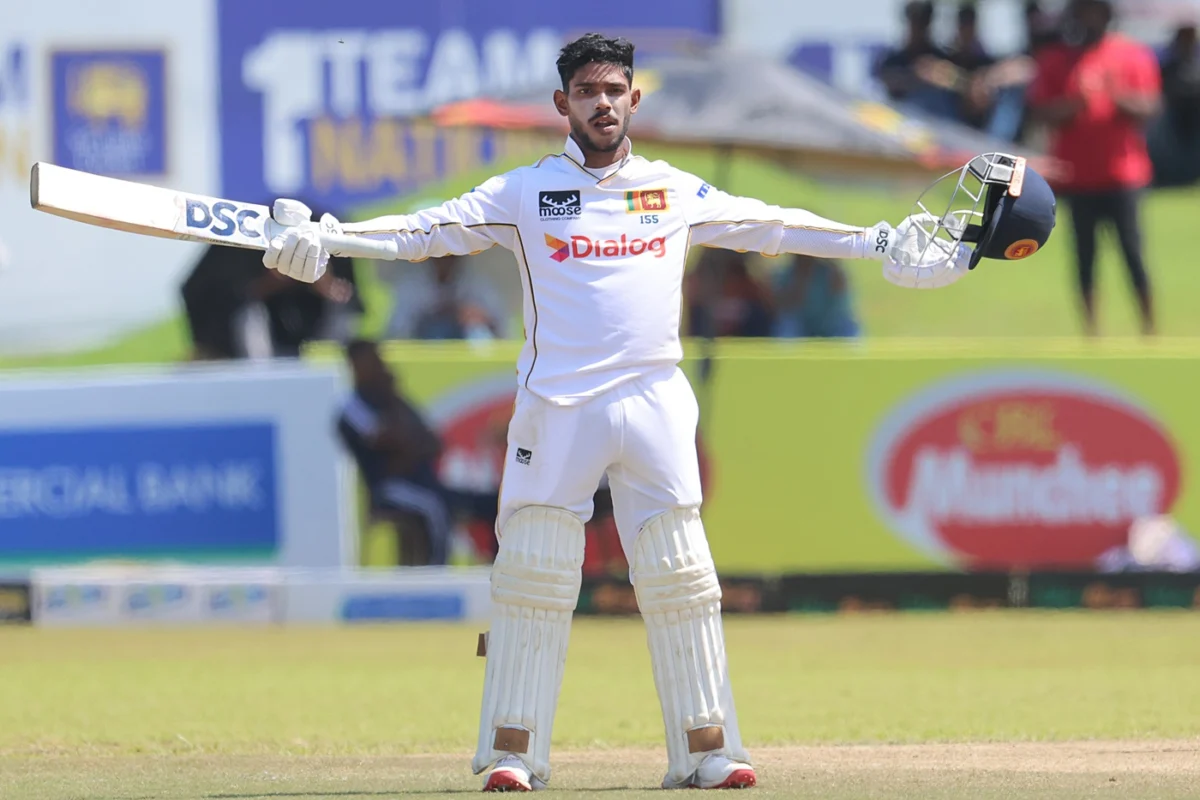
It was a stark contrast to how things ended when these sides met in England. Harry Brook’s charges emerged from that late-summer series with as comfortable a 2-1 series victory as one could realistically ask for. Victories by 89 and 223 runs sandwiched a lone Sri Lankan equaliser in the second ODI at Headingley, which had been inspired by a magnificent, captain’s knock of 121 from Kusal Mendis.
Speaking after Tuesday’s match, Brook was full of praise for Arafat Minhas and his match-turning spell of 6 for 40 in the Pakistan chase, though he candidly admitted he felt England’s batters played the left-arm spinner a little too carefully. It is not the first time a member of this current England group—whether player or coaching staff—has wondered out loud if the root cause for a white-ball defeat is a lingering lack of aggressive intent. Yet, looking at the scoreboard and the manner of the collapse, the England captain certainly has a point.
You could also mount a strong argument that Brook’s on-field captaincy allowed Pakistan’s lower-middle order to get away from England and breach the 300-run barrier in the first place. Only Will Jacks and Jamie Overton were trusted to bowl their full allotted ten overs, and the decision to throw the ball to Joe Root for the 46th over—which promptly went for 12 runs—felt like a needless and avoidable risk to take at the death.
Sri Lanka’s own spin attack, particularly left-arm orthodox bowler Dunith Wellalage who claimed 3 for 49 in that memorable Leeds win, alongside leg-spinner Sachindu Colombage, will undoubtedly be primed for a more confrontational and aggressive England batting lineup this time around. Furthermore, Sri Lanka’s own batters might be privately wondering if their own run chase slipped through their fingers due to similarly conservative and hesitant approaches.
Form Guide
Entering Thursday’s fixture, the recent trajectories of both sides highlight the unpredictable nature of modern one-day international cricket. Sri Lanka arrives with a recent form line reading of LLWLW across their last five completed matches, ordered from most recent first. England sits on a mirror-image record of LWLWW, reflecting periods of fluent dominance interspersed with sudden, sharp collapses.
In the Spotlight: Adil Rashid and Avishka Fernando
It was a less-than-glorious return to international colours for Adil Rashid on Tuesday. A lingering hand injury had kept the veteran leg-spinner out of the Sri Lanka series that closed out the English summer, but he was back in the ranks in Rawalpindi and visibly struggling to make a meaningful impact. Rashid laboured through eight overs for 55 runs, with 24 of those runs coming directly from the blade of Hasan Nawaz, the 24-year-old hitting three of his four sixes during a blistering 79 off Rashid’s bowling.
Remarkably, for the fourth time in as many ODIs—including three matches against India earlier this summer—Rashid was not even asked to bowl his full allocation of ten overs. At 38 years of age, it is not entirely unreasonable to wonder if his legendary powers are finally beginning to wane, and how much lower that trajectory might dip by the time next winter’s ODI World Cup rolls around. A significantly more accomplished and economical showing on Thursday should allay those lingering fears for at least a little while longer.
At the other end of the experience spectrum, Avishka Fernando’s first ODI appearance since February 2025 did not last nearly as long as he would have hoped, getting bounced out after facing just nine deliveries by Naseem Shah. Had Pathum Nissanka been fully fit, it is highly unlikely Fernando would have played against Pakistan to earn his 52nd cap. However, the 28-year-old now has another golden opportunity to restate his case after earning a national recall off the back of strong domestic form. Known as a clean and powerful striker of the ball, Sunday’s brief sighter needs to be properly channeled on what is expected to start out as another true, reliable batting surface.
Team News
Predicting Sri Lanka starting XIs has long felt like playing the lottery, but they will undoubtedly seek to replicate the success Pakistan found through Arafat Minhas by reinstating Dunith Wellalage into the side. Sahan Arachchige may well be the likeliest candidate to step out to accommodate the bowling all-rounder.
Sri Lanka’s probable starting XI features Avishka Fernando and Kamindu Mendis at the top, followed by captain and wicketkeeper Kusal Mendis, Pavan Rathnayake, Sahan Arachchige or Dunith Wellalage, Janith Liyanage, Dasun Shanaka, Sachindu Colombage, Eshan Malinga, Asitha Fernando, and Dilshan Madushanka.
Given a strong emphasis on consistent selection and clear role definition within the squad, England are widely expected to go ahead with the exact same starting XI that fell short against Pakistan on Tuesday. That being said, there will undoubtedly be a strong internal temptation within the management staff to pull the plug on Josh Tongue and bring in Sonny Baker instead to shake up the bowling attack.
England’s probable starting XI lines up with Tom Banton and Ben Duckett opening, followed by Joe Root, captain Harry Brook, wicketkeeper Jordan Cox, Sam Curran, Will Jacks, Jamie Overton, Gus Atkinson, Adil Rashid, and Josh Tongue.
Pitch and Conditions
Both teams opted to field first in their opening fixtures largely because of the heavy dew anticipated with these 1.00 PM local starts. And while the evening dew did indeed arrive as predicted, it did not have the detrimental, game-altering effect on Pakistan’s bowlers that visiting captains typically fear. One imagines neither side will veer far from chasing should they win the toss on Thursday, but some noticeable and variable bounce at the tail end of both previous matches suggests that these Rawalpindi surfaces do tend to act up quite a bit under lights. The tactical blueprint of the past few days has felt like something of a throwback to traditional ODI cricket: stretch your total over 300 runs, and you immediately establish yourself as the favourites.
Quotes
Reflecting on the mood in the camp after the opening setback, England captain Harry Brook offered a measured assessment of his team’s performance.
"It feels like that’s probably the most convincing loss we’ve had since last year some time… that’s a good sign in one way," Brook said, pointing to the rarity of such heavy defeats as a metric of the team’s overall consistency over the past twelve months.

Comments (0)