


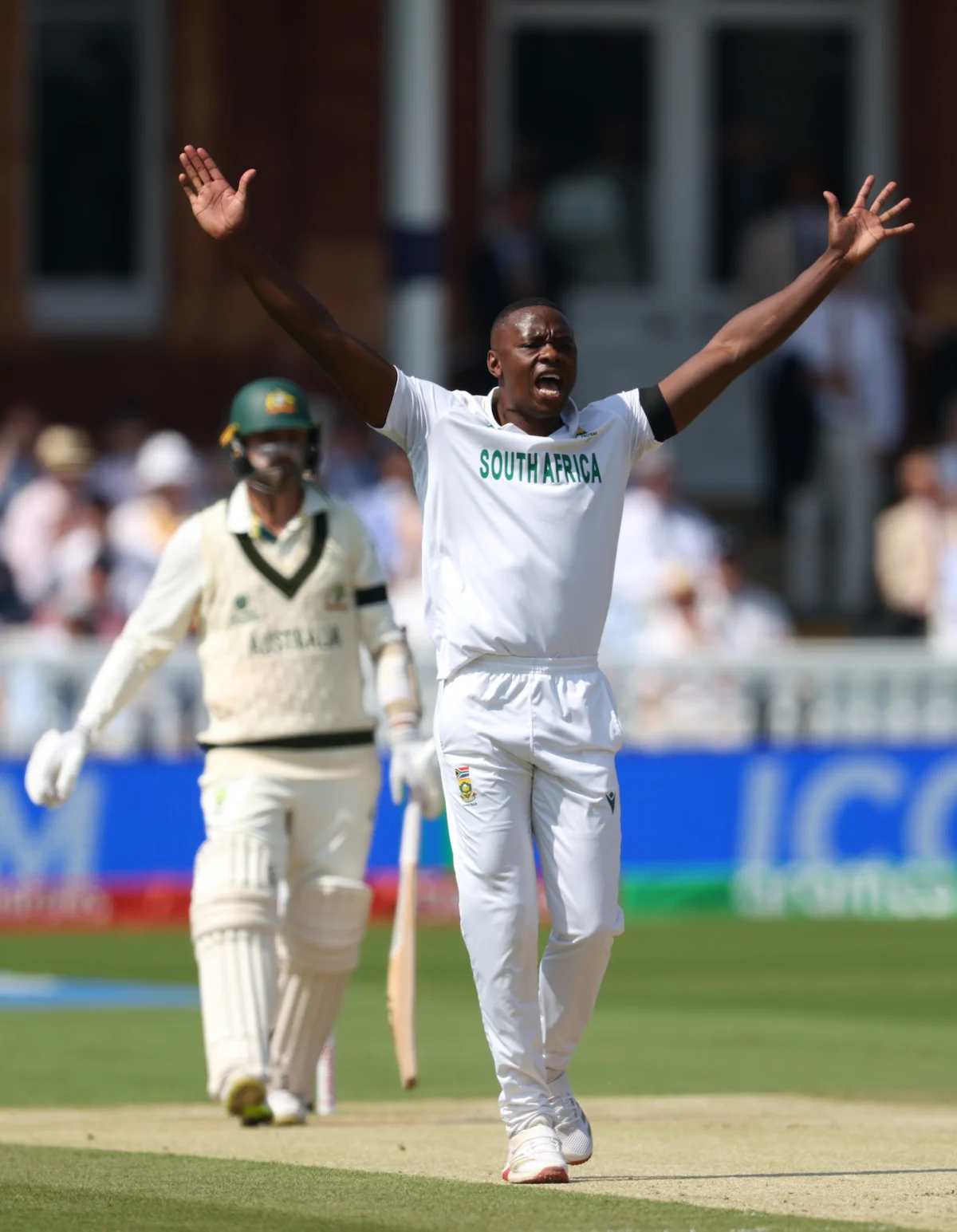
The build-up to Australia’s current tour of South Africa has been persistently haunted by the ghosts of 2018. As both squads settle into Gqeberha ahead of the second Test, an unmistakable sense of déjà vu hangs in the air. Just as they did eight years ago, the Australian tourists arrive on South African soil having claimed a decisive 1-0 lead in the opening match, engineered through a combination of resolute middle-order batting and disciplined, relentless fast bowling.
In Durban last week, Matt Renshaw delivered a stunning individual performance that ultimately proved to be the decisive factor across the five days. His remarkable match figures included a commanding 190 and an 82, complemented usefully by two wickets. Meanwhile, Josh Hazlewood ripped through the South African batting order in the fourth innings, recording career-best figures that ensured the home side’s defeat was substantially heavier than their loss at the same stage in 2018. Aiden Markram offered lonely resistance with a gutsy 75 in the final innings, a knock that bore an almost eerie resemblance to his valiant 143 during a similarly fruitless fourth-innings run chase back in 2018.
Where the historical parallels sharply diverge, however, is in the domestic reaction to the opening defeat and the subsequent strategic pivots made by the home camp. Following the Durban loss in 2018, South Africa opted for a solitary personnel change for the second Test, bringing in Lungi Ngidi to replace the retiring Morne Morkel. This time around, the defeat has triggered a much more extensive overhaul, with the team management expected to ring the changes to rescue their fading series hopes.
Among the major alterations, Ryan Rickelton has been confirmed to take over the wicketkeeping gloves, a move that strongly suggests Kyle Verreynne will be left out of the starting XI. Furthermore, South Africa’s tactical decision to deploy two specialist spinners in Durban backfired significantly on a pitch that offered little assistance, an experiment they are unlikely to repeat on the surface in Gqeberha. The groundsman has prepared a track expected to feature a healthy covering of grass, and with intermittent wet weather forecast to play a disruptive role throughout the week, seam and swing options will take absolute priority.
Australia, by contrast, present a picture of stability despite the various selection dramas and injury concerns that preceded the opening Test in Durban. With Cameron Green currently unavailable due to an abdominal strain, Australia’s impending middle-order selection squeeze has been safely delayed until at least the third Test. By the time that fixture rolls around, the tourists could theoretically have the series securely wrapped up, edging them another crucial step closer to securing a coveted berth in the World Test Championship final.
The only lingering question mark for the Australian camp is how efficiently their ageing pace attack can recover on a notably short turnaround following a heavy bowling workload on a flat Durban pitch. While there has been no indication that any of the senior fast bowlers will miss out, the cumulative physical toll could quickly become a significant factor if Australia are forced to bowl first once again under the heavy skies of Gqeberha.
For South Africa, this second Test represents a classic "now or never" scenario regarding the bilateral series. However, the fixture also carries monumental ramifications for the broader World Test Championship table, despite there still being plenty of cricket remaining in the current cycle. A defeat in Gqeberha would see South Africa slide down to fifth place, slipping behind both Bangladesh and India, while a triumphant Australia would march further clear as they chase a third successive appearance in the championship showcase.
Form Guide
South Africa enter this crucial fixture enduring a difficult run of form, recording four losses and just one victory in their last five Test matches, ordered most recent first (LWWWL). Australia present a slightly more balanced yet fluctuating sequence over the same period, having secured three wins alongside two defeats (WWLWL).
In the Spotlight: Ryan Rickelton and Travis Head
Ryan Rickelton’s returns of 0 and 2 in the opening Test placed his recent red-ball form under intense public scrutiny. Since his magnificent knock of 259 against Pakistan in January 2025, the left-hander has managed just a single half-century across his last 12 Test innings, resulting in a modest average of 25.72. Compounding this statistical slump, all three of his single-digit scores in that sequence have come directly against Australia.
The response from South Africa’s hierarchy has been to entrust him with the wicketkeeping gloves—a demanding role he has never previously performed at Test level—while potentially dropping him down the batting order. Rickelton has not batted lower than No. 3 since October 2024, aside from one isolated instance where he batted lower than No. 5. Despite his lack of Test keeping experience, he possesses vast domestic and white-ball credentials in the dual role, having scored 12 of his 19 first-class centuries while wearing the gloves. South Africa will desperately hope this added responsibility helps unlock his batting potential, particularly with Verreynne having averaged just 20 over his previous 13 innings without a single fifty.
Travis Head finds himself under no immediate pressure from a selection standpoint, yet the curious tactical conundrum regarding how to extract the absolute maximum from his immense talent remains unresolved. The spotlight shines as brightly on the captain, coach, and national selectors as it does on Head himself, given that he remains Australia’s most destructive and dynamic match-winner with the bat.
He sits just three Tests removed from his most recent Test hundred, which was scored while opening the batting. However, a deeper dive into his scoring patterns reveals that cementing him as a permanent opener across all conditions is far from straightforward. Head averages a modest 23.66 when opening the batting in the first innings of Tests, compared to a formidable 54.69 when batting at No. 5. Conversely, in the second, third, and fourth innings of matches, that trend completely reverses, with an average of 57.86 as an opener compared to 33.46 at No. 5.
While Australia’s leadership has frequently spoken about maintaining a flexible batting order, it remains to be seen whether they will finally make an in-game tactical decision to have Head bat at No. 5 in the first innings while reverting to the top of the order for subsequent innings. Furthermore, his stark contrast in form home and away remains an area he is keen to rectify; in Australia, he averages a staggering 51.86 and has scored 11 of his 12 Test centuries, whereas his overseas average drops to a less imposing 31.62.
Team News: Rabada Returns, Australia Potentially Unchanged
South Africa are poised to make several sweeping changes to their starting lineup. Matthew Breetzke has been called into the squad and is expected to open the batting, while Marques Ackerman stands a strong chance of making his Test debut at No. 5. Kagiso Rabada is set to return to the bowling attack after recovering from a hamstring injury, and the team is expected to abandon the two-spinner tactic. Should they opt for a single frontline slow bowler, Senuran Muthusamy could come into serious contention ahead of incumbents Keshav Maharaj and Simon Harmer. Captain Temba Bavuma also confirmed that Anrich Nortje is fully fit to play again despite churning through 40 demanding overs in Durban—his first Test appearance in three years—meaning the fiery paceman should retain his place in the XI.
South Africa’s probable XI includes Aiden Markram, Matthew Breetzke, David Bedingham, Temba Bavuma, Marques Ackerman, Wiaan Mulder, Ryan Rickelton, Marco Jansen, Kagiso Rabada, Keshav Maharaj or Simon Harmer or Senuran Muthusamy, and Anrich Nortje.
Australian captain Pat Cummins indicated that he prefers to wait until the morning of the match before officially naming his final XI. Australia are well-positioned to keep their winning combination unchanged, particularly with Cameron Green still sidelined due to an abdominal strain. Josh Inglis has recovered his fitness to play purely as a batsman, but he is unlikely to force his way into the settled batting order. Cooper Connolly is also available should the selectors desire an additional left-arm orthodox spin option in the top seven, though it remains improbable that he would displace Beau Webster.
The Australian fast bowlers have pulled up well from the physical exertions of Durban and look primed to go again, which means Scott Boland is once again set to carry the drinks for the fourth consecutive Test, even though discussions regarding a four-pronged pace attack inevitably surface before every match in the region.
Australia’s probable XI features Travis Head, Nic Maddinson, Marnus Labuschagne, Steven Smith, Matt Renshaw, Alex Carey, Beau Webster, Pat Cummins, Mitchell Starc, Nathan Lyon, and Josh Hazlewood.
Pitch and Conditions: Rain Forecast, Surface Well-Grassed
The weather forecast for the opening two days of the Test in Gqeberha appears dicey, though meteorologists note it remains difficult to accurately predict precisely how much rain will arrive or how much playing time might be lost. Current weather models suggest conditions will clear up significantly from day three onwards. The city has experienced a largely dry build-up following consistent rainfall throughout September. Although the pitch appeared dry and structurally ready for play three days out from the toss, it is expected to retain a healthy covering of grass. Despite this green tinge, the surface is anticipated to play on the slower side, contrasting with the adjacent practice wickets used for centre-wicket training, which have historically maintained decent pace.
Previewing the atmosphere and expectations for the contest, Temba Bavuma highlighted the unique local flavor of playing in the coastal city. "Playing in PE, it’s one of the ones we look forward to," Bavuma said. "There’s a bit of a different atmosphere with the band. Where we stay close to the mall, there’s a lot more excitement from people. Hopefully that excitement translates to bums on the seats. It’s a Sunday, day one. I don’t know whether the weather is going to encourage people’s enthusiasm. Generally, PE is decently attended."

Comments (0)