



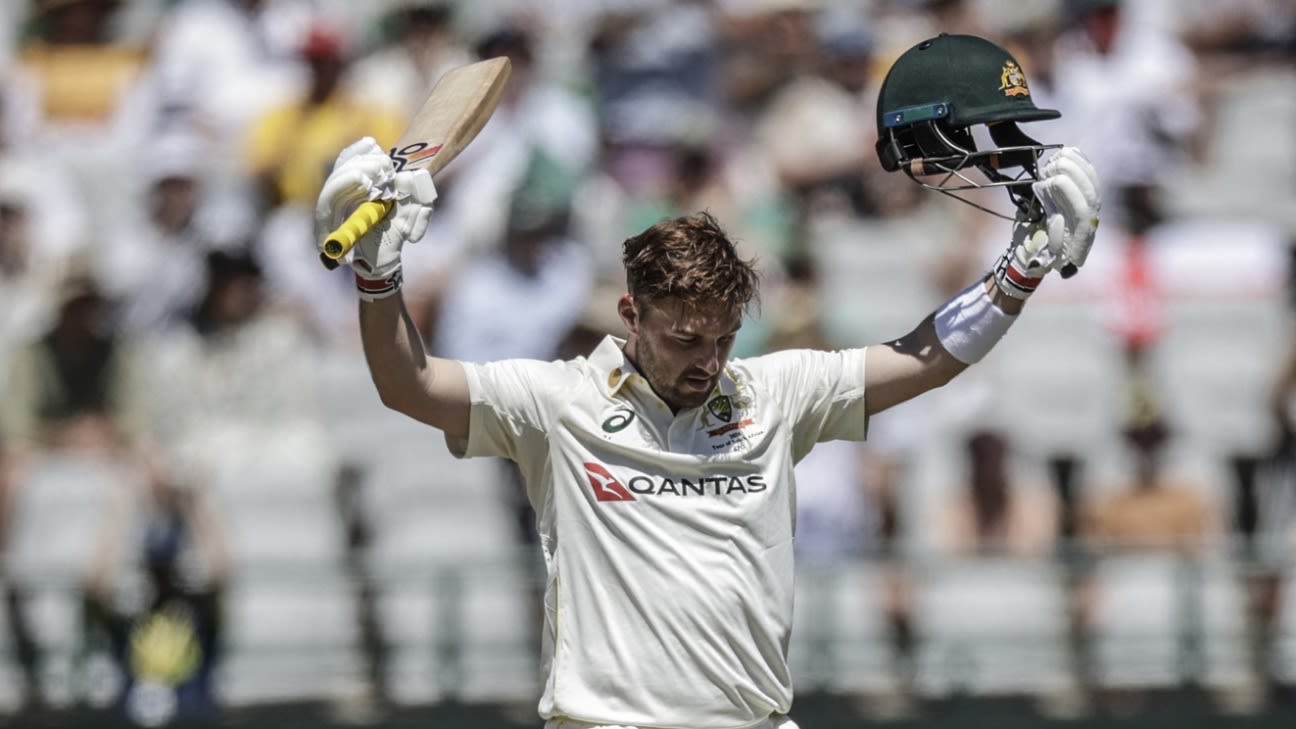
Josh Inglis marked a triumphant return to the international stage with a masterful century, steering Australia into a position of dominance on the third morning of the series-deciding Test against South Africa at Newlands. By the time the players broke for lunch, Australia had reached 411 for 8, establishing a significant first-innings lead of 82 runs on a surface that has remained largely benign for the batters.
Inglis, coming into the side as a replacement for the injured Steven Smith, played with a blend of discipline and calculated aggression that silenced any doubts regarding his readiness for the longest format. His 102 off 135 balls was the centerpiece of a productive morning for the tourists, who entered the day at 330 for 4, harboring ambitions of batting South Africa out of the contest.
A Masterclass from Inglis and Carey
The partnership between Inglis and Alex Carey was the defining feature of the morning session. The duo combined for a vital 185-run stand for the fifth wicket, a partnership that frustrated the South African attack and ground down their bowling resources. Carey, who contributed a composed 80, looked increasingly comfortable as the morning progressed, while Inglis demonstrated the kind of aggressive intent that has long been his hallmark in white-ball cricket.
For Inglis, the innings was a personal vindication. Having been on the periphery of the Test setup for several years, he had not featured in the format since December, and his path to this particular match had been obstructed by a troublesome finger injury that ruled him out of the series opener. His selection to replace Smith—who was sidelined following a neck injury sustained in the second Test—offered a high-stakes opportunity that he grasped with both hands. This performance followed the maiden Test century he recorded against Sri Lanka in early 2025, further cementing his credentials as a reliable middle-order force.
Harmer’s Persistent Threat
While the Australian batters dominated the headlines, South Africa’s offspinner Simon Harmer remained the standout performer for the hosts. Harmer, who eventually finished the session with figures of 4 for 104 from his 37 overs, acted as the primary foil to the Australian momentum. Despite the docile nature of the Newlands pitch, Harmer consistently teased the outside edges of the Australian batters and proved to be the most potent weapon in the Proteas’ arsenal.
Harmer’s influence was felt throughout the morning, though he was not without his own share of misfortune. His resilience was tested early on when he sustained a split finger—fortunately not on his bowling hand—while attempting to field. Despite the injury requiring immediate bandaging, he returned to the fray with grit, eventually breaking the deadlock by claiming the wickets of both set batters.
The breakthrough came when Harmer induced an edge from Inglis, who departed for 102—the exact score he made in his only previous Test century. Shortly after, Harmer removed Carey with a beautifully flighted delivery that invited a drive, resulting in a sharp, low catch by Aiden Markram at slip.
South African Frustrations and Missed Opportunities
The morning was characterized by a palpable sense of urgency for the South African side, who were desperate to stem the flow of runs with the second new ball. However, their execution often failed to match their intent. Kagiso Rabada, who had spent significant time off the field on the second day due to stomach cramps, returned to the attack roughly 30 minutes into the session. While his presence added pace to the South African effort, he struggled to find his rhythm and was left visibly frustrated when a sharp chance off Carey’s edge was put down by Harmer at slip.
The fielding performance, which has been an area of concern throughout the series, once again proved costly. Gerald Coetzee, who is navigating a difficult return to the Test side, suffered a lapse in concentration at mid-on, misfielding a ball that allowed Inglis to progress into the nineties. The general lack of precision in the field served to compound the pressure on the bowlers, who were struggling to build sustained periods of dot balls.
Marco Jansen, who had been the most effective seamer on day two, also found the going difficult on the third morning. He struggled to replicate the fire he displayed when he dismantled the Australian middle order earlier in the innings. His lack of rhythm was underscored by a wayward beamer to Carey, a delivery that highlighted the mounting pressure on the Proteas’ bowling unit.
A Brief Collapse and Lower-Order Resistance
As has been the recurring theme throughout this hard-fought series, the loss of a wicket often signaled the arrival of a cluster. Following the dismissals of Inglis and Carey, Australia experienced a minor collapse, losing 10 runs for 3 wickets. The most significant of these was the dismissal of captain Pat Cummins, who was trapped lbw by Rabada for a duck. The decision, initially given not out, was overturned upon review, with ball-tracking confirming an "umpire’s call" result that sent the Australian skipper on his way.
This period of instability threatened to hand the initiative back to South Africa, but the Australian tail showed the necessary resolve to push the score past 400. Mitchell Starc, known for his ability to wag the tail, provided crucial support to the set Cooper Connolly, who remained unbeaten on 20 at the lunch break.
Coetzee, despite his earlier struggles, finally found a moment of success toward the end of the session, claiming the wicket of Starc for 11. Starc’s departure, caught behind, provided the hosts with a modicum of relief, yet the damage had largely been done.
Looking Ahead
With the score at 411 for 8 and a lead of 82, Australia heads into the afternoon session in a position of significant strength. The Newlands track, while showing signs of wear, has not offered the kind of treacherous movement that would suggest a rapid collapse for the remaining Australian batters. For South Africa, the objective remains clear: they must look to wrap up the Australian tail as quickly as possible to avoid chasing a lead that could prove insurmountable in a series-deciding clash.
The contest remains finely balanced in terms of the broader narrative of the series, but the events of the third morning have undeniably shifted the momentum toward the visitors. As the sun beats down on Cape Town, the pressure remains squarely on the South African bowling attack to produce a sustained burst of excellence, or risk seeing their hopes of a series victory slip further away. For Australia, the focus will be on extending their lead beyond the 100-run mark, knowing that every additional run squeezed out by the lower order could prove the difference between victory and defeat on this decisive stage.


Comments (0)