


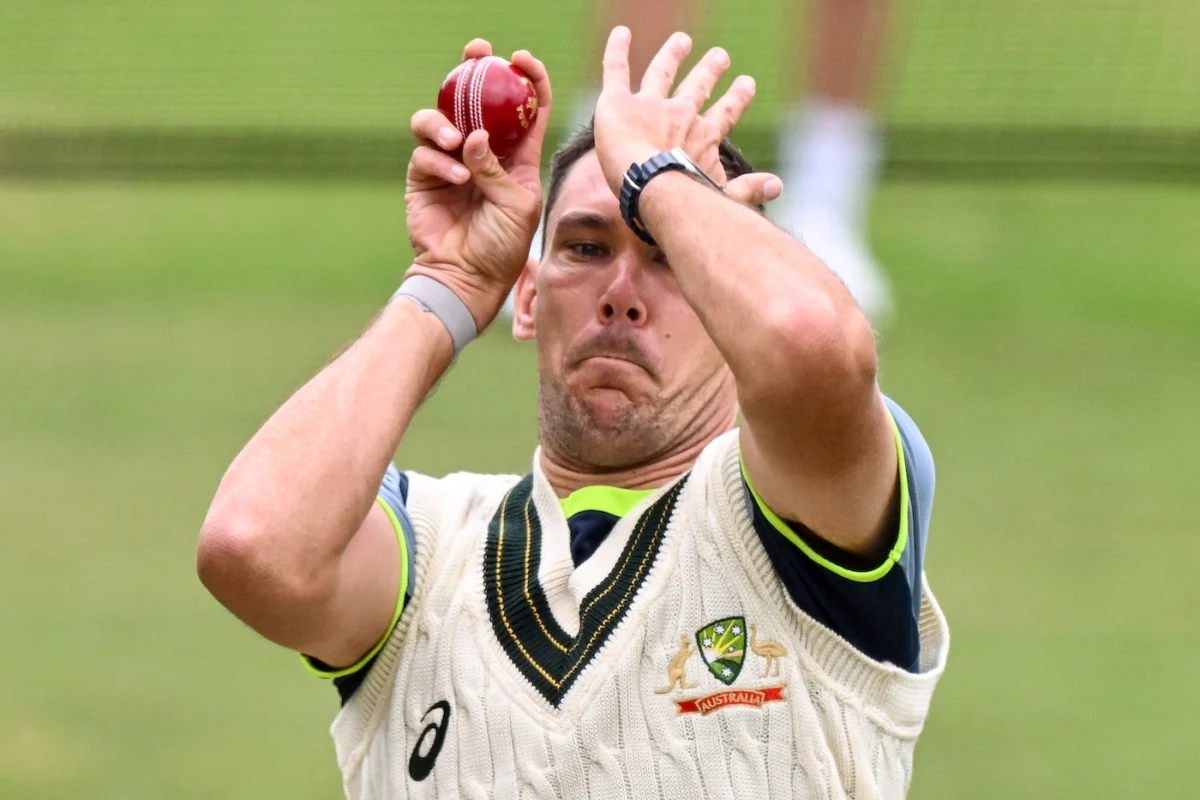
In a bold selection strategy driven by damp overhead conditions and a pitch promising assistance for seamers, Australia have opted to leave out veteran spinner Nathan Lyon for the second Test against South Africa in Gqeberha. For the first time since 2013, the tourists have gone into a red-ball match without a frontline slow bowler, handing a surprise recall to Scott Boland as part of an aggressive all-pace attack. South Africa, meanwhile, welcomed back pace spearhead Kagiso Rabada in their quest to level the series, squeezing out spinner Keshav Maharaj in a tactical reshuffle of their own.
Persistent overnight rain and intermittent morning drizzle cast an early shadow over the opening day at St George’s Park. Groundstaff worked tirelessly as the covers came on and off through the morning session, though a fortuitous weather window allowed the toss to proceed as scheduled. Australian captain Pat Cummins had no hesitation in inserting the hosts upon winning the toss, hoping to exploit the moisture in the surface. However, shortly after the coin toss, the inclement weather returned, forcing the players back to the pavilion. Weather forecasts for the opening two days remain bleak, though conditions are expected to improve significantly as the match progresses toward the weekend.
Cummins explained that the decision to omit Lyon was a combination of reading the unique atmospheric and pitch conditions and finding a way to fit Boland into the starting eleven. Boland has established a reputation for exceptional reliability and potency whenever he has been called upon in Test cricket.
"I think partly conditions, and Scotty Boland has been incredible whenever he’s played Test cricket, so it felt like it aligned this week and it was the right time to insert him," Cummins said of the selection call. Discussing what the Victorian fast bowler brings to the side, the Australian captain emphasized his multifaceted value to the bowling attack. "He brings a lot of things. When there’s anything in the wicket, he gets a lot of seam movement. He’s super accurate, and even if it does flatten out he brings that control. Experience, he can bowl bulk overs, so he’s the whole package."
The omission of Lyon marks another significant chapter in the veteran off-spinner’s recent international career. While Lyon has been an undisputed pillar of Australia’s bowling attack for over a decade, tactical shifts and fitness concerns have increasingly interrupted his run in the team. He was left out of day-night Tests in Jamaica and Brisbane last year, and subsequently missed the latter stages of the Ashes due to injury when Australia similarly chose to field an all-pace bowling unit.
Through a combination of strategic preference and enforced absences, Lyon has now missed five of Australia’s last ten Test matches. The rotation policy has not always gone down smoothly; Lyon was reportedly particularly frustrated when he was left out of the team against England at the Gabba last December. Nevertheless, the team management continues to grapple with an embarrassment of riches in the fast-bowling department, making difficult selections inevitable.
"I mean, every Test match we’re trying to work out how we can fit Scotty Boland in there somehow and Nathan Lyon and even Michael Neser," Cummins acknowledged on the eve of the Test match. "But of course, when you’ve got someone like Scotty… you leave some training sessions shaking your head how that bloke is not in your first XI."
While the bowling lineup underwent a radical transformation, Australia maintained continuity in their batting order, keeping the same top-order combination deployed in the first Test of the series. Travis Head was retained to open the batting alongside Nic Maddinson, while Matt Renshaw slotted into the middle order at number five, providing stability alongside established stalwarts Marnus Labuschagne and Steven Smith.
South Africa, needing a strong response to stay alive in the series, made crucial changes to their lineup to balance their side for home conditions. The headline news for the Proteas was the return of Kagiso Rabada, whose sheer pace and ability to extract disconcerting bounce make him indispensable to their attack. To accommodate Rabada and adjust to the expected seam-friendly track, South Africa opted to drop a spinner, squeezing out Keshav Maharaj from the starting eleven. However, the hosts retained Simon Harmer as a specialist spin option, ensuring they still possess a slow-bowling presence should the pitch deteriorate later in the match.
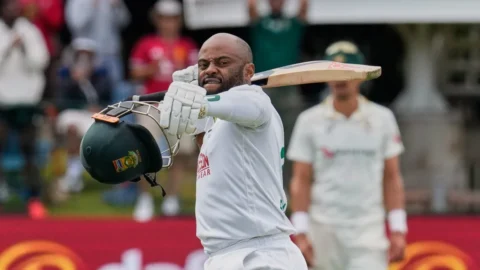
The home side’s batting order also saw notable alterations, highlighted by Marques Ackerman being handed a Test debut. Ackerman will be thrust straight into the opening role alongside Aiden Markram—a challenge compounded by the fact that Ackerman has never opened the batting during his first-class career. Meanwhile, the recalled Matthew Breetzke was named to shore up the middle order, joining captain Temba Bavuma and David Bedingham to form a robust core against Australia’s formidable pace battery.
The teams enter the contest with high stakes, as South Africa look to utilize their home conditions to level the series against a visiting Australian side eager to press home their advantage despite radical changes to their traditional bowling balance.
South Africa Playing XI: Aiden Markram, Marques Ackerman, David Bedingham, Temba Bavuma (capt), Matthew Breetzke, Ryan Rickelton (wk), Wiaan Mulder, Marco Jansen, Simon Harmer, Kagiso Rabada, Anrich Nortje
Australia Playing XI: Travis Head, Nic Maddinson, Marnus Labuschagne, Steven Smith, Matt Renshaw, Alex Carey (wk), Beau Webster, Pat Cummins (capt), Mitchell Starc, Scott Boland, Josh Hazlewood

Comments (0)