


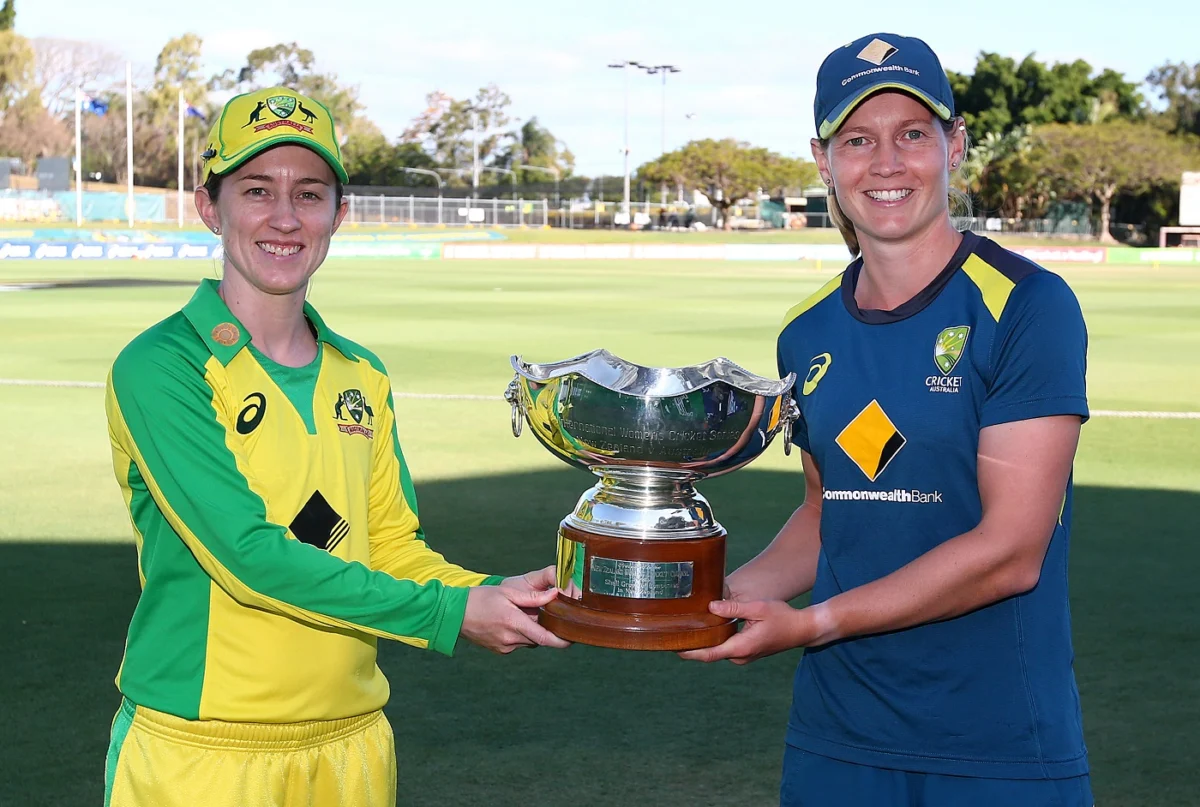
The iconic Rose Bowl, a prestigious piece of cricketing silverware that has stood as the ultimate symbol of trans-Tasman supremacy in women’s cricket for nearly four decades, is entering a dynamic new era. Since its inception in 1985, the trophy has exclusively been awarded to the victors of bilateral One Day International series contested between the women’s national teams of Australia and New Zealand. However, in a major modernization of the historic rivalry, cricket administrators from both nations have announced that the Rose Bowl will now officially encompass Women’s T20 Internationals as well, reflecting the evolving landscape of the global game and the surging prominence of the shortest format.
This historic expansion takes effect immediately, with New Zealand’s upcoming three-match T20I tour of Australia serving as the inaugural multi-format chapter of the famous trophy’s history. The series gets underway on Sunday at the historic North Sydney Oval, marking a milestone moment for both squads. Rather than existing as a standalone T20I bilateral contest, these matches will form the opening salvos of an extended battle for the Rose Bowl. The two fierce rivals will cross paths once again in March 2027, when they return to Australian shores to contest a three-match ODI series, completing the full multi-format cycle required to determine the ultimate winner of the silverware.
Under the newly established regulations governing the expanded Rose Bowl, the criteria for lifting the trophy have been adapted to accommodate the inclusion of multiple formats. For any designated Rose Bowl series that encompasses matches spanning both white-ball formats, the prestigious trophy will ultimately be awarded to the team that accumulates the most victories overall across the entire schedule. In the event of a closely contested series ending in a level scoreline of wins and losses, a provision has been maintained to protect the status quo: the current holder of the trophy will successfully retain the Rose Bowl until the next scheduled encounter.
The decision to broaden the scope of the Rose Bowl has been met with widespread enthusiasm from players, administrators, and historians alike, all of whom recognize the deep emotional and cultural resonance the trophy carries within the trans-Tasman cricketing community. Catherine Campbell, New Zealand Cricket’s chief cricket operations officer and a former New Zealand player who understands the gravity of the fixture from firsthand experience, emphasized the necessity of keeping the historic competition vibrant and aligned with modern scheduling trends.

Reflecting on the evolution of the game, Campbell noted that the Rose Bowl is a deeply prestigious trophy that continues to hold immense meaning for both current competitors and the generations of players who came before them. It is a series that both squads have historically approached with immense pride and competitive fire. With the modern international calendar dominated by the rapid growth of T20I cricket, Campbell observed that incorporating the format is a brilliant and necessary opportunity to keep the Rose Bowl relevant to contemporary audiences while simultaneously building upon the rich, decades-long history shared between Australia and their trans-Tasman rivals.
New Zealand captain Melie Kerr echoed these sentiments, expressing palpable excitement regarding the broadened opportunities to capture the famous silverware. Kerr highlighted the profound cultural and historical significance of the trophy within the White Ferns setup, noting that the team is acutely aware of what the Rose Bowl represents and the vital importance it holds in their collective whakapapa, or genealogy. Over the years, countless great players and legendary teams have fiercely fought for the privilege of holding it, and Kerr made it clear that her current squad is eager to carve out their own piece of that storied history by mounting a serious challenge on Australian soil.
The challenge facing the White Ferns, however, is monumental. Australia has maintained an ironclad grip on the Rose Bowl for more than two decades, having successfully wrestled the trophy back from New Zealand in the year 2000. Since securing a decisive 3-0 series sweep at the turn of the millennium, the Australian side has defended the silverware with remarkable consistency, winning 18 subsequent series. The sole blemish on their modern dominance came during the 2008-09 season, when a hard-fought series concluded in a 2-2 deadlock, resulting in the trophy being temporarily shared.
When looking at the broader historical ledger since the inception of the trophy in 1985, Australia’s statistical superiority in the ODI-exclusive era is staggering. Out of 31 ODI series played specifically for the Rose Bowl, Australia has emerged victorious on 26 occasions. By comparison, New Zealand has claimed the trophy three times, while three additional series have concluded in draws. This lopsided historical record underscores the magnitude of the task ahead for the touring side as they attempt to break their long-standing drought in an expanded format that now rewards multi-format consistency.
The immediate battleground for this new era of trans-Tasman competition will be the North Sydney Oval, which has been selected to host all three matches of the upcoming T20I leg of the Rose Bowl series. Fans and players alike are gearing up for high-octane action scheduled across three fixtures on October 18, 20, and 22. As the first-ever T20I Rose Bowl matches get underway under the Sydney sun, both teams will step onto the field knowing they are not merely playing for a single series victory, but are actively writing the very first lines of a refreshed historical chapter for one of women’s cricket’s most cherished traditions.





Comments (0)