


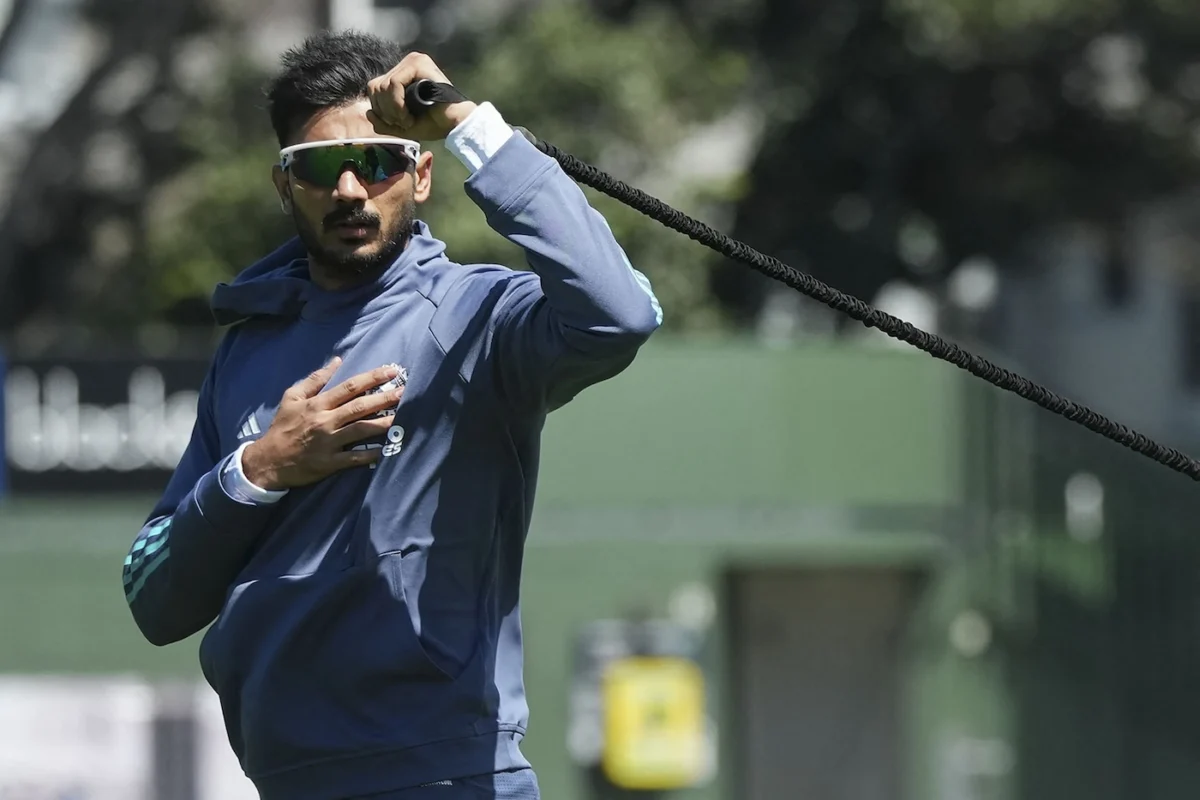
The international T20 landscape in 2026 continues to offer a compelling counter-argument to critics who point toward monotony in bilateral cricket, and much of that narrative is being driven by India’s rollercoaster campaign. As the touring side prepares for the third fixture against New Zealand at Wellington’s Sky Stadium—affectionately known as the "Cake Tin"—the visitors stand on the cusp of an unassailable series victory, leading 2-0 in the ongoing contest.
India’s journey through the format over the past year has resembled a hurtling train. They began the cycle in blistering fashion, etching their name in history as the first team to successfully defend a T20 World Cup title, remarkably losing just a single match across two editions. However, the high-variance nature of the shortest format soon caught up with them. Tours to Ireland exposed vulnerabilities in bouncier, windier conditions, resulting in a 2-0 defeat. A subsequent series loss in England further punctured their aura of invincibility. Even upon returning home, missing premier fast-bowling assets Jasprit Bumrah and Hardik Pandya, they looked far from infallible against a resilient West Indies side, sharing the spoils in a 2-2 draw.
Yet, arriving in New Zealand—another territory defined by bouncy tracks, gusty winds, and once again missing both Bumrah and Pandya with barely a single training session under their belts prior to the opener—India have managed to turn the tide. They have secured victories in the opening two encounters against the reigning World Cup runners-up. This latest surge extends India’s remarkable recent dominance over the Black Caps, stretching their record to nine wins out of their last ten matches against the opposition, even if New Zealand claimed the upper hand in the most recent Test and ODI series between the two nations.
Moving from Christchurch to Wellington presents a distinct set of tactical challenges. While the Cake Tin is renowned for generating swirling winds, its square boundaries are relatively short at around 60 meters. India have managed to navigate these shifting dynamics by executing their bowling plans with greater discipline, while also benefiting from occasional fielding lapses by the hosts. With the series hanging in the balance, both teams will need to recalibrate their strategies to suit the unique dimensions of the venue.
Compounding New Zealand’s early-series woes is a mounting injury and rotation crisis. The hosts will have to make do without senior pacers Matt Henry and Lockie Ferguson, neither of whom completed their full quota of overs during Saturday night’s encounter. Having dropped their last two home series against India, the Black Caps face an immediate must-win scenario to keep the contest alive, while a confident Indian side continues to settle swiftly into foreign conditions.
Form Guide
The recent trajectories of both sides underline the contrasting momentum heading into this crucial fixture. New Zealand’s form in their last five completed T20Is reads as LLWLL, highlighting their struggles to close out matches consistently. India, meanwhile, have experienced a slightly more volatile run reflected by a WWLWL sequence, though their ability to scrape through pressure moments in the current series has tilted the scales in their favor.
In the Spotlight: New Zealand’s Spinners and India’s Middle Order
A fascinating tactical battle has emerged through the contrasting fortunes of New Zealand’s spin attack and India’s middle-order approach. Across the first two matches, the tall home spinners, Mitchell Santner and Michael Bracewell, have combined to bowl 16 overs, conceding 132 runs while picking up eight wickets. Conversely, India have deployed only one specialist spinner in Axar Patel, who has leaked runs at just under ten an over.
Part of this success is undoubtedly tied to the height, drift, and guile generated by the New Zealand slow bowlers. However, an equally significant factor has been a discernible reluctance from certain Indian batters to take proactive risks against spin. Tilak Varma, for instance, has struggled to rotate the strike effectively against the turning ball, operating at a strike rate of 76 compared to a blistering 220 against pace. Aside from Sanju Samson and Naman Dhir, who have occasionally disrupted the spinners’ lengths, the Indian middle order may need to adopt a more aggressive stance. Prolonged periods of slow scoring—such as consuming more than a run-a-ball for extended spells—place undue pressure on the innings, forcing the team to rely heavily on late-stage acceleration against the fast bowlers.
Team News: Sooryavanshi Gets Another Opportunity
New Zealand’s selection headaches deepen with the enforced absence of Matt Henry. Having bowled just two overs—including a maiden—in the previous match, Henry has been withdrawn from the remainder of the series with upcoming commitments in other formats taking priority. Lockie Ferguson is sidelined for only this upcoming match, leaving the home side to lean on Adam Milne and Blair Tickner for the duration of the series, alongside Kyle Jamieson, who is slated to feature in this game before departing for a Ford Trophy fixture.
While there might be temptation within the New Zealand camp to introduce a left-hand batter into the top five, Bevon Jacobs has looked reasonably assured during his time at the crease. The probable New Zealand lineup features Finn Allen and Tim Seifert at the top, followed by Bevon Jacobs or Devon Conway, Glenn Phillips, Daryl Mitchell, Michael Bracewell, Mitchell Santner, Nathan Smith, Kyle Jamieson, Adam Milne, and Jacob Duffy.
India, on the other hand, have steadfastly maintained their philosophy of prioritizing top-five batting depth over adding a fifth or sixth frontline bowling option. Though there was a theoretical case to replace Naman Dhir—whose secondary skill involves spin bowling—with a seam-bowling all-rounder like Shivam Dube, the team management has signaled that Dhir’s batting upside holds greater value. In the absence of a traditional lower-order hitter who can reliably clear the ropes from number eight, they have continued to back Nitish Kumar Reddy, a gamble that has yielded dividends through two encouraging 19th-over spells.
With Ishan Kishan yet to achieve full recovery from his fitness concerns, young batting prodigy Vaibhav Sooryavanshi is set to receive another extended run at the pivotal number three position. India’s probable playing eleven comprises Abhishek Sharma, Sanju Samson, Vaibhav Sooryavanshi, Shreyas Iyer, Tilak Varma, Naman Dhir, Nitish Kumar Reddy, Axar Patel, Bhuvneshwar Kumar, Prince Yadav, and Arshdeep Singh.
Pitch and Conditions
Wellington’s pitch history presents a dual narrative. The most recent T20I at the venue witnessed a successful and comfortable defense of a 164-run target, yet the ground has also played host to a mammoth successful chase of 216. Observers can expect a fresh surface offering initial life for the bowlers, though any potential low scores are far more likely to stem from aggressive shot-making or bowling execution than an inherently sluggish pitch.
Atmospheric conditions have added another layer of intrigue. Strong winds have dominated the build-up to the match alongside occasional passing showers, though forecasts indicate that the actual playing hours will be considerably more settled, marked by clear skies and only moderately strong winds.
As the two sides prepare to lock horns once more, New Zealand head coach Rob Walter reflected on the fine margins that have cost his side so far. "I felt we’ve played pretty well in probably 80% of each game," Walter noted. "We just haven’t been able to put the finishing touches on each time, which is disappointing."
Meanwhile, addressing the notorious wind factor at Wellington, Indian bowling coach Morne Morkel emphasized the importance of psychological resilience. "You’re either going to see it as a challenge or you’re going to see it as a negative or it’s going to let you down," Morkel said. "And hopefully we can get those guys in the mental space where they look forward to that challenge."

Comments (0)