


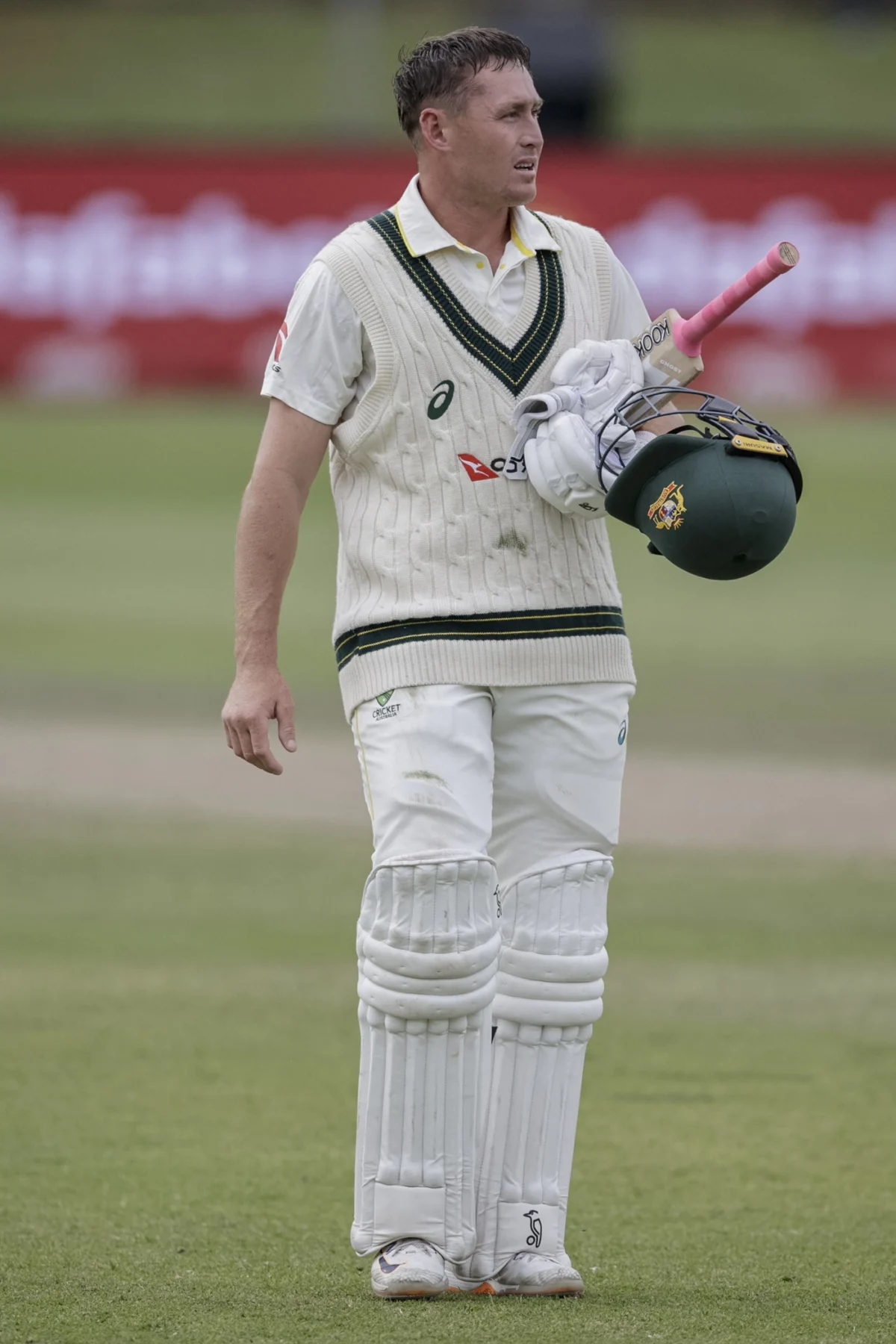
Marnus Labuschagne’s Test career hangs by a knife-edge after the embattled Australian batsman fell for a duck on the second morning of the series-deciding third Test against South Africa. Australia’s heavily rejigged batting order faced a thorough examination under the Cape Town sunshine, with offspinner Simon Harmer turning the match on its head in a single, breathless over that shifted the momentum of the contest firmly back toward the hosts.
At lunch on the second day, Australia reached 90 for 2, still trailing South Africa’s first-innings total of 329 by 239 runs. Travis Head played aggressively to anchor the top order with 41 runs, while Matt Renshaw dug in patiently to remain unbeaten on 27. However, the morning session will be remembered for Harmer’s dramatic double-strike, which exposed Australia’s ongoing vulnerabilities against quality spin and placed renewed pressure on an under-fire middle order.
The day had begun with considerable promise for the tourists. Openers Travis Head and Matt Renshaw launched Australia’s first innings with a brisk, confident 58-run partnership on a sedate surface under bright skies. Hopes within the Australian camp were high of compiling the nation’s first century opening partnership in Test cricket since the 2023 Ashes tour. Both left-handers appeared comfortable against the new ball as South Africa’s pace attack struggled to extract the kind of movement that had caused such devastation late on the opening day.
South Africa’s seamers simply could not find lateral movement, and there was no hint of the menacing, late-innings swing conjured by Mitchell Starc in his extraordinary six-wicket burst during the final session of day one, which had ultimately restricted South Africa to a modest total of 329. Veteran quick Kagiso Rabada and allrounder Marco Jansen failed to seriously threaten with the new ball, frequently erring by bowling slightly too short. Jansen entered the match sitting on 99 Test wickets, but a milestone celebration was not forthcoming as his radar went awry. Unable to consistently hit a probing length, Jansen was routinely punished by Renshaw, who eagerly targeted his favoured leg side.
In trademark fashion, Travis Head lived a more dangerous existence at the crease. The dynamic left-hander twice sliced boundaries just past backward point, leaving the South African cordon visibly frustrated. Those were the only truly nervy moments for the openers against the swinging red ball, although Renshaw courageously absorbed a fierce 145 kilometers per hour bumper from Rabada flush on his right shoulder, brushing off the blow with a beaming smile.
Looking for a breakthrough, South Africa captain Temba Bavuma turned to express pace through Gerald Coetzee, who was playing his first Test match since November 2024 after stepping in to replace the injured Anrich Nortje. Coetzee immediately hurled down a 146 kilometers per hour thunderbolt, but his raw pace proved costly against a rampant Head. Content to counter-attack, Head pounced on any width offered before the morning drinks break, bringing up the fifty-run partnership in style with superb improvisation to expertly uppercut a short delivery over the slips.
With his frontline pace attack effectively blunted by the brisk scoring rate, Bavuma turned to veteran offspinner Simon Harmer in the 18th over. The bowling change paid instant dividends. Head, attempting to remain proactive and refusing to let the spinner settle into a rhythm, misread a delivery and chopped the ball directly onto his stumps for 41, bringing to an end a familiar style of dismissal.
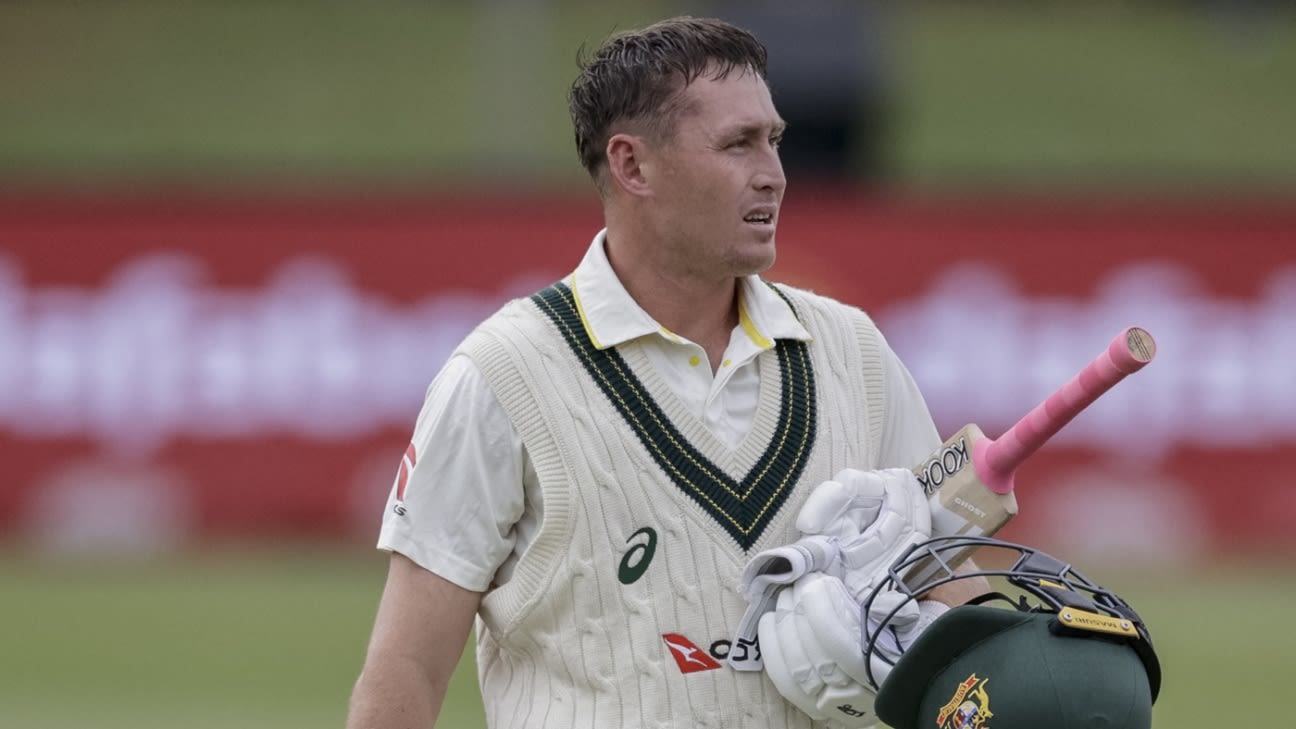
Head’s departure paved the way for Marnus Labuschagne to walk to the crease. Labuschagne had been fortunate to survive the selection axe following a prolonged, deep-seated form slump that had placed his international future under intense scrutiny. Having made promising starts without converting them throughout the series, Labuschagne lasted just five deliveries. He nervously poked at a delivery from Harmer and edged it straight to first slip, departing for a duck and leaving the scrutiny surrounding his place in the Australian Test team at an all-time high.
The sudden double-strike left Australia reeling at 58 for 2, having lost both wickets in the space of the same over. However, Matt Renshaw maintained his composure, digging in deeply to display a clear focus on batting through the long haul. He was joined at the fall of the second wicket by new number four batsman Cameron Green, who looked assured and composed during his brief time at the crease before the lunch interval. Green is making a welcome return to the Test side after missing the opening two matches of the series due to an abdominal injury.

Harmer’s ability to extract occasional sharp turn from a surface that offered little else to the bowlers proved decisive. His sensational spell yielded figures of 2 wickets for just 5 runs from 4 overs, single-handedly engineering a dramatic fightback for South Africa and swinging the psychological advantage back to the fielding side.
The broader context of the innings highlights the immense pressure resting on Australia’s batting depth. The tourists are playing without veteran stalwart Steven Smith, who was unfortunately ruled out of the series-deciding fixture after sustaining a neck injury during the second Test. In response to Smith’s absence, Australia opted for a heavily rejigged batting order, moving Matt Renshaw back to the top of the innings—a position where he had previously batted in 20 of his 29 prior Test appearances. Renshaw had thoroughly enjoyed a productive shift down to number five earlier in the series, where he famously smashed scores of 190 and 82 in a spectacular first Test performance. However, with Nic Maddinson enduring an unsuccessful return to Test cricket, Renshaw was reassigned to the opening role alongside Head.
As the players headed off the field for the lunch interval, Australia faced a long and arduous road ahead to overhaul South Africa’s first-innings total. With Green and Renshaw tasked with rebuilding the innings against a re-energized South African attack led by Harmer’s guile and the lingering threat of Rabada and Coetzee, the afternoon session promises to dictate the ultimate destination of the series.

Comments (0)