


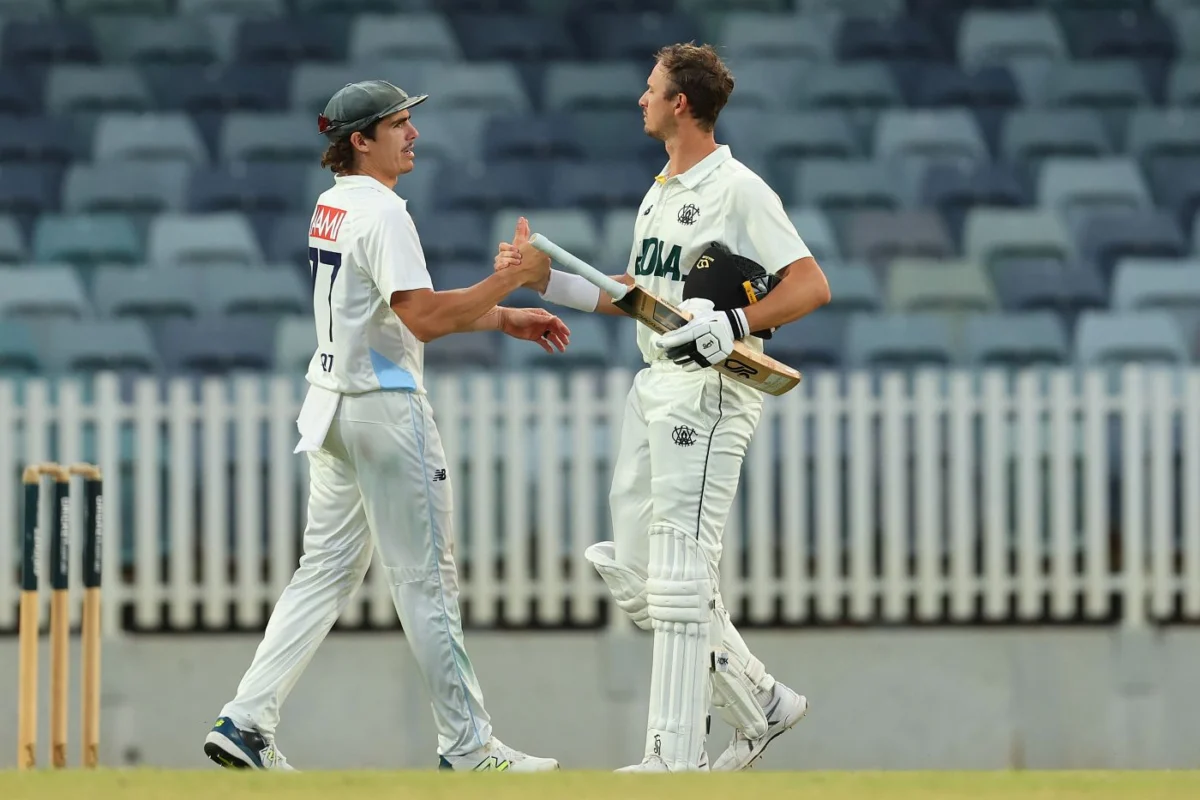
In a display of grit that will long be remembered at the WACA Ground, Western Australia tail-enders Joel Paris and Joel Curtis pulled off a remarkable act of defiance to salvage a draw against New South Wales in their Sheffield Shield encounter on Wednesday. With the match seemingly destined for a lopsided victory for the visitors, the duo survived 28.1 overs of relentless pressure to hold out for the stalemate, despite Paris battling a significant hamstring injury that necessitated the use of a runner.
The climax of the four-day match was a testament to the uncompromising nature of first-class cricket. Chasing an imposing target of 364 for an improbable win, Western Australia’s hopes had all but evaporated when they slumped to 205 for 9. With more than a session of play remaining, the odds of surviving against a potent New South Wales bowling attack—which had already dominated the fixture—seemed minuscule.
Paris, appearing in his 56th first-class match, joined wicketkeeper Joel Curtis at the crease with the task of navigating nearly 30 overs. Paris, already hampered by a hamstring strain sustained earlier in the game, was forced to rely on a runner to navigate the pitch, yet he showed incredible discipline to remain at the crease for 82 balls, finishing on 25 not out. At the other end, Curtis showcased a similar level of resolve, laboring for 113 deliveries to contribute an unbeaten 19.
The pair’s strategy was uncompromising: block, defend, and refuse to engage in anything resembling a risky run. Such was their commitment to the defensive cause that any runs added to the Western Australia total came exclusively through boundaries, as they eschewed singles and twos to ensure they remained in the firing line for the next ball.
As the afternoon sun beat down on the WACA, the frustration within the New South Wales camp became increasingly palpable. With the clock ticking toward the close of play and the hosts refusing to budge, the visitors threw everything at the stubborn pair. By the final overs, the field resembled a scene from a desperate final-day siege, with virtually every New South Wales player surrounding the batters in a ring of close-in catchers. The sight of spinner Tanveer Sangha bowling to a completely enclosed field provided a bizarre, high-tension spectacle, yet the Western Australian resolve remained unshakeable.
The draw serves as a vital result for Western Australia, who have now displayed a recurring theme of late-order resilience this season. Their ability to force results from precarious positions has been a hallmark of their early campaign, most notably highlighted by their opening-round victory over Queensland, where Sam Fanning—also nursing a hamstring injury—batted his side to a famous two-wicket win. For New South Wales, the result was a bitter pill to swallow, marking their second consecutive draw to start the Sheffield Shield season despite having dominated large swathes of both contests.
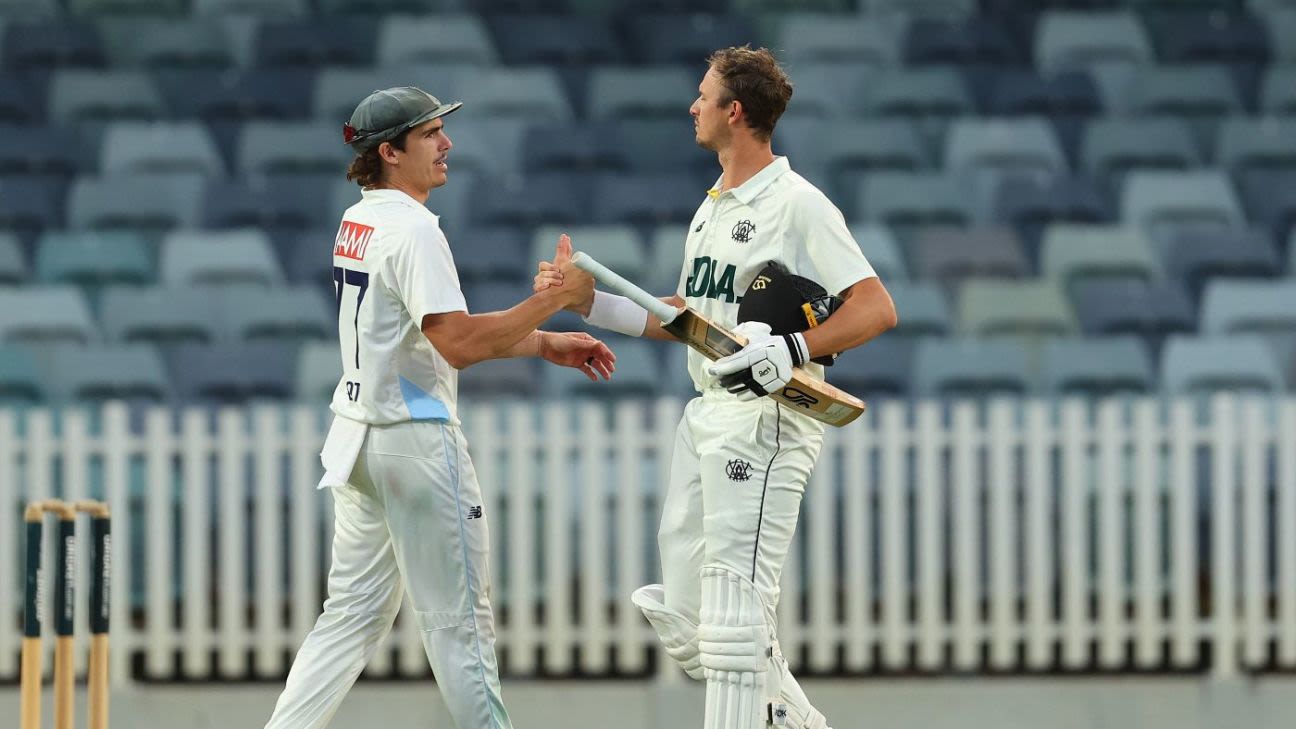
The path to the final day’s drama was paved with high-stakes tension. Western Australia had suffered a disastrous conclusion to day three, losing three wickets for just one run in a collapse that left their middle order in tatters. The late dismissals of Cameron Bancroft for 11, Sam Whiteman for 17, and nightwatchman Corey Rocchiccioli for a duck left the hosts at 30 for 3, requiring a monumental effort just to survive.
The morning session of the final day saw a brief glimmer of stability provided by nightwatchman Liam Haskett and Jayden Goodwin. Haskett, digging in for a gritty 17 off 101 balls, provided the necessary support for Goodwin, who anchored the innings with a composed 67 from 165 deliveries. Their partnership was designed to frustrate the New South Wales attack and eat into the overs, a plan they executed with precision until the lunch break.
However, the tide appeared to turn decisively against the hosts when Goodwin fell in a moment of frustration, tickling a wayward delivery from Jack Edwards down the leg side into the gloves of wicketkeeper Ryan Hicks. At 143 for 5, the pressure returned to the Western Australian dressing room, though a brief resurgence followed. Debutant Corey Wasley—who had been brought into the match as a concussion/injury substitute after skipper Aaron Hardie suffered a left-shoulder injury—partnered with Hilton Cartwright to stitch together a 12-over stand.
The duo looked comfortable, contributing 29 and 34 runs respectively, but the New South Wales attack eventually found its rhythm. Ben Dwarshuis, who finished with impressive figures of 4-50, and Sangha, who claimed 2-43, dismantled the middle order in a decisive eight-over burst. When the ninth wicket fell, the writing appeared to be on the wall, setting the stage for the final, defiant act from Paris and Curtis.
While the result was a draw, the individual brilliance of New South Wales opener Sam Konstas was impossible to ignore. Konstas was rightfully named man of the match after producing a dominant display with the bat, scoring 71 in the first innings and an unbeaten 151 in the second. His form was the backbone of a New South Wales performance that saw them declare at 440 for 6 in the first innings—thanks in part to a century from captain Nic Maddinson (122)—and 262 for 5 in the second. Despite those commanding totals and the dominance shown by their bowlers, they were ultimately unable to breach the final line of defense.
For Western Australia, this draw is more than just a point on the table; it is a morale-boosting result that keeps them firmly in the hunt for a top-two finish as the season progresses. The ability to hold firm under extreme pressure, particularly with personnel hampered by physical limitations, speaks to the depth and character within their squad. As the Sheffield Shield season moves into its next phase, the lessons learned from this WACA stalemate will undoubtedly serve both sides well, though the echoes of Paris and Curtis’s stubborn resistance will likely be the enduring memory of this fixture for some time to come.


Comments (0)