


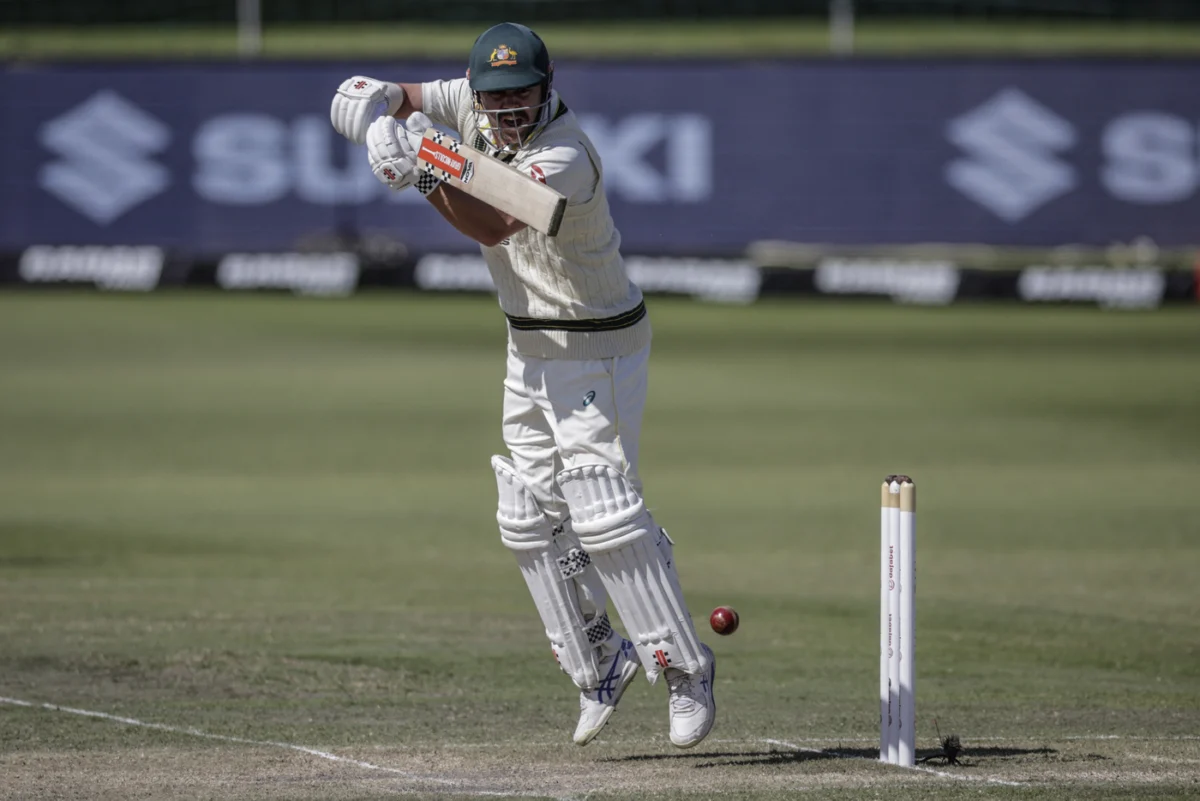
The question marks hovering over Australia’s batting line-up extend far beyond the turbulence of the past two months. However, their last four Test matches—a stretch yielding two crushing defeats—have brought a growing structural problem sharply into focus. Across seven completed innings against Bangladesh and South Africa, the reigning standard-bearers of Test cricket have failed to produce more than a single player crossing the fifty-run mark in any given innings.
This glaring lack of collective contribution has proven costly. In Darwin, it culminated in a stunning nine-wicket defeat at the hands of Bangladesh, while a trip to Gqeberha resulted in an innings-and-31-run thrashing by South Africa. In both of those dismal encounters, Australia were undone by calamitous first-innings collapses—the foundational phase where both matches were effectively lost. While both fixtures featured defiant, brilliant second-innings centuries—Cameron Green fighting valiantly against Bangladesh and Travis Head producing a masterclass this week in St George’s Park—they stood entirely alone amid the ruins. In the opening innings of those specific games, only veteran stalwart Steven Smith in Darwin managed to pass the fifty-run milestone.
Reflecting on the opening day of the second Test in Gqeberha, where Australia were skittled for a paltry 99 in their first innings, Head offered a remarkably succinct appraisal of the team’s collective failure.
"I think it’s pretty clear on what we got wrong, we had a pretty s***house day," Head said.
Captain Pat Cummins observed in his post-match press conference that winning can often paper over the cracks of an imperfect side. Indeed, even Australia’s two handsome victories earlier in the series—a quickfire two-day win in Mackay and an impressive performance in Durban—were heavily reliant on standout individual batting heroics rather than a cohesive batting unit operating in harmony.
The scorecard from Mackay paints an unusual picture, where a modest total of 210 proved sufficient to secure an innings victory largely due to the devastating bowling of Mitchell Starc. Yet, Australia’s batting had stumbled alarmingly to 146 for 7, with Green standing as the sole resistance past fifty. Similarly, at Kingsmead, Matt Renshaw’s formidable match tally of 272 runs towered head and shoulders above his struggling team-mates.
"Think we’ve spoken as a group going into the series that we’ve sort of had one individual each time," Head said after his fighting 121 in the second innings in Gqeberha. "They’ve always been different individuals and we haven’t been able to get that collective batting day that we would desire as a team. That’s what does win you games, individual performance, but as a collective we need to be able to also [do it]. I thought what Baz [Scott Boland] did [making 40 in over three hours from No. 6 in the second innings in Gqeberha]… was exceptional for the team. A little bit more of the supportive roles go a long way, we just haven’t been able to find that.
"It’s something that the team have been really good at over a long period of time, is being able to build big partnerships, substantial partnerships that win games at cricket. We just haven’t been able to find that in the last couple of months. It’s very hard to put a finger on why. We’re playing some exceptional attacks in some trying conditions, but it’s not a lack of trying."
However, looking deeper into the statistical archives suggests that top-order partnership batting has been an underlying issue predating this recent run. Ever since the start of 2024, when the batting order began a significant phase of reshaping following the international retirement of long-time opening anchor David Warner, Australia have managed a mere 11 century stands for wickets one through six. Among all the elite Test-playing nations competing in the World Test Championship cycle, only the West Indies have recorded fewer partnerships of a hundred runs or more during the same period.
In the wake of the first-innings collapse for just 99 runs in Gqeberha—Australia’s lowest first-innings total since South Africa rolled them for 85 on a treacherous pitch in Hobart back in 2016—head coach Andrew McDonald openly bemoaned the batting order’s inability to soak up sustained pressure long enough to stem the tide.
"The game’s all about momentum," Head explained, elaborating on the delicate psychology of Test match batting. "Trying to gain momentum, trying to withstand momentum, trying to put pressure back on the opposition and how you do that is in different ways: do you suck back and defend, do you push forward and fight fire with fire? So that’s that balancing act. When you see collapses, it’s have you got that balance right?"
Head acknowledged the perennial debate surrounding tactical approaches when a side is under siege from high-quality bowling attacks.
"Some would suggest sometimes it’s not attacking enough, sometimes it’s not defensive enough, so it’s a two-edged sword with that sort of stuff. It comes down to decision-making, it comes down to a blueprint, it comes down to a plan and a method so when you’re tested, that’s when your method and your planning and your execution needs to be spot on and when it’s not, that’s when you see collapses and I think that’s throughout cricket forever."
Amid the broader team concerns, Head also addressed the visible strain weighing heavily on individual members of the squad, notably Marnus Labuschagne. The pressure on Labuschagne was plain to see following his dismissal in the second innings when he lofted off-spinner Simon Harmer tamely to mid-on, bringing an end to a promising 92-run partnership. The dismissal arrived just 13 balls after Labuschagne had experienced a massive stroke of good fortune, surviving an lbw review via DRS when replays showed the ball missing his leg stump by a margin of less than five millimeters.
"I’ve been there before," Head said of his teammate’s clear frustration. "It’s a tough place to be when you think you’re batting well. I’ve probably been there more than anyone in my 30s and 40s and feel like you’re close and then it’s not quite there.
"There’s pressure on, it’s pretty obvious to see, and obvious in the way he reacts. [He] got away with an [lbw] and you can see… he knows it was a big moment and he’s disappointed. Nothing’s ever guaranteed in the game, and I can’t speak on what happens in the future, but you know he’s a good player."
Head emphasized that the relentless demands of the international arena mean no player is ever truly immune to the crushing weight of expectation, regardless of past achievements or stature within the game.
"Test cricket is bloody hard, but we’re in a performance-based game so everyone feels the pressure," Head said. "I’ve felt the pressure over the last couple of weeks, I’ve been desperate for runs. So everyone feels that no matter what position. Steve Smith’s got 11,000 Test runs, I reckon he’ll feel pressure at some stage. Everyone wants to score runs."

Comments (0)