


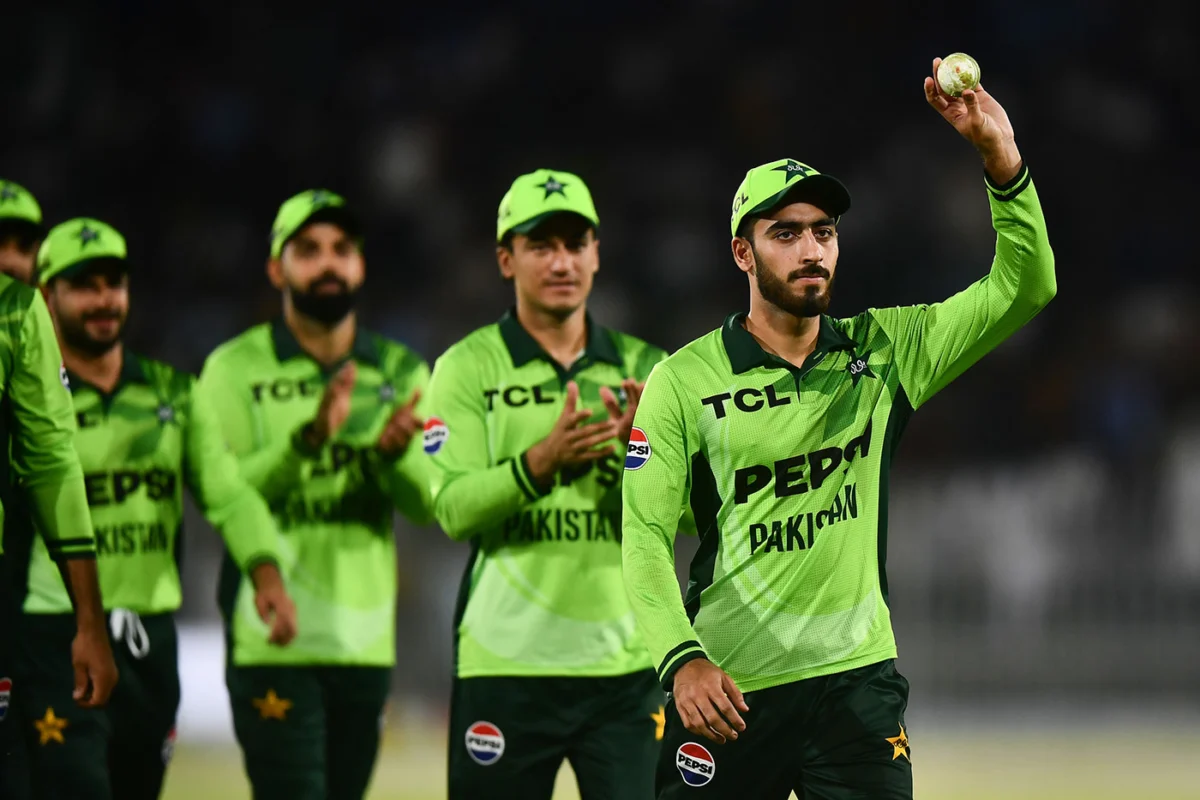
As the international cricket calendar ticks closer to the marquee global showpiece, teams are scrambling to find their best combinations, iron out lingering flaws, and build momentum. Less than twelve months remain before the World Cup is scheduled to begin on October 2 next year, raising the stakes considerably for every bilateral series and multi-nation tournament on the horizon. This high-stakes environment sets the stage for the opening match of the Pakistan ODI Tri-Series, where Pakistan enters with a measure of stability and optimism, while Sri Lanka continues its arduous search for a settled, winning formula in the white-ball formats.
The contest brings together two Asian rivals who have experienced contrasting fortunes over the past year, though both share a burning desire to establish dominance in the 50-over format. For Sri Lanka, the journey into this match follows a turbulent and largely frustrating 2026 campaign. The island nation arrives in Pakistan having secured a much-needed victory in the recent T20I leg, a result that holds psychological significance far beyond the scoreboard. Prior to that breakthrough, Sri Lanka’s year had been characterized by an alarming struggle for consistency, reflected in a sobering record of 22 defeats against just 10 victories across international fixtures.
Yet, that recent T20I win provided a glimpse of what the team is capable of when their plans click into place. Newly appointed captain Kusal Mendis led from the front with a scintillating, unbeaten 87 off just 48 deliveries, anchoring a performance that was well-supported by an encouraging display from the pace bowling unit. However, context remains vital: that victory arrived in a dead rubber after Pakistan had already secured the T20I series. While it offered a morale boost, Sri Lanka’s wider white-ball setup has remained in a state of constant flux throughout the year, with selectors frequently shuffling personnel in a fruitless quest for a reliable winning combination.
Pakistan, meanwhile, has hardly been immune to inconsistency during 2026, but their overall trajectory heading into this tri-series appears considerably more settled. The hosts are coming off a successful ODI series victory against Australia, where they triumphed 2-1 in a low-scoring, highly competitive battle. That series did more than just add another trophy to the cabinet; it potentially unearthed a premier young all-round talent in left-arm spinner and lower-order batsman Arafat Minhas.
Minhas captured the imagination of the cricketing public during the Australia series, walking away with the Player of the Series award after snaring seven wickets at an exceptional average of 12.28. His upward trajectory has shown no signs of slowing down; he has carried that penetrative form directly into the recent T20I series against Sri Lanka, picking up five wickets across the three encounters. Combined with the fiery brilliance of Shaheen Afridi and the guile of leg-spinner Abrar Ahmed, Pakistan’s bowling attack has established a reputation for suffocating opposition batting lineups, a strength that could prove decisive on home soil.
Form Guide
Both teams step onto the field carrying mixed momentum from their most recent assignments. Pakistan’s last five completed matches present a fluctuating pattern of wins and losses, reading as Win, Loss, Win, Loss, Win. Sri Lanka’s recent sequence mirrors this erratic nature, though tilted slightly more toward disappointment, standing at Loss, Win, Loss, Win, Loss. For both sides, breaking this alternating cycle and stringing together cohesive performances will be the primary objective as the tri-series gets underway.
In the Spotlight: Babar Azam and Lahiru Udara
All eyes will naturally gravitate toward senior statesmen and players looking to make a definitive statement. For Pakistan, seasoned batter Babar Azam remains central to their batting aspirations. During the series against Australia, Babar finished as Pakistan’s top run-scorer, accumulating scores of 40, 16, and 69 to maintain a healthy average of 41.66. While purists might hesitate to declare this a complete return to the Bradmanesque heights of his peak years, it served as a deeply encouraging sign of recovery following a relatively modest 2025 in which he averaged 34 across 17 innings.
Historically, Sri Lanka has been one of Babar’s preferred opponents. Over the course of his career, he has struck four of his 20 ODI centuries against them, boasting an impressive average of 58.33 in matches between the two sides. With the pitches in Rawalpindi traditionally offering favorable conditions for stroke-play, the stage is set for Babar to further consolidate his form in the only international format where he now regularly plies his trade.

On the other side of the contest, Sri Lanka’s Lahiru Udara enters the match with a point to prove and a unique opportunity to seize. Regarded by many observers as harshly treated by the national selectors following a brilliant knock of 188 against the West Indies in Test cricket just three matches ago—only to be omitted from the subsequent Test squad—Udara now finds himself thrust back into the white-ball spotlight. An untimely hamstring injury to regular opener Pathum Nissanka has ruled him out of the ODI fixtures, paving the way for Udara to capitalize on the momentum generated by a solid T20I innings last week. At 32 years of age, Udara is acutely aware that opportunities at the international level are finite. With a World Cup looming on the horizon, there is arguably no better arena than ODI cricket for a veteran to cement his place in the national consciousness.
Team News and Probable Combinations
Team selections for the opening match reflect the ongoing experiments and structural adjustments both management groups are undertaking. With neither Sahibzada Farhan nor Maaz Sadaqat included in Pakistan’s current ODI squad, the opening responsibilities are expected to fall to the dynamic pair of Saim Ayub and Fakhar Zaman, providing a left-handed foundation at the top of the order.
Pakistan’s probable playing XI features Saim Ayub and Fakhar Zaman opening, followed by Hasan Nawaz at three and the experienced Babar Azam anchoring the middle order at four. Salman Ali Agha and all-rounder Shadab Khan add depth and stability through the middle overs, while Ghazi Ghouri is expected to handle wicketkeeping duties. The lower-middle order will benefit from the emerging brilliance of Arafat Minhas, while the pace-bowling department will be spearheaded by captain Shaheen Afridi, alongside Haris Rauf and Naseem Shah.
Sri Lanka, meanwhile, faces distinct choices regarding their top-order composition and spin attack. Management is reportedly weighing the option of bringing Avishka Fernando straight into the starting eleven, particularly given that Kamil Mishara has endured a sequence of modest scores at the international level. In the spin department, Sri Lanka must decide between varying tactical approaches, though they are widely expected to favor the mystery spin of Maheesh Theekshana over leg-spinner Sachindu Colombage to trouble Pakistan’s batters in the middle overs.
Sri Lanka’s probable lineup is expected to be led by captain and wicketkeeper Kusal Mendis at three, preceded by openers Lahiru Udara and Avishka Fernando. The middle order will likely feature Kamindu Mendis, alongside a contest between Sahan Arachchige and Pavan Rathnayake for the number five role. Janith Liyanage and seasoned all-rounder Dasun Shanaka add valuable balance, supported by spin-bowling all-rounder Dunith Wellalage. The pace battery is projected to comprise Dushmantha Chameera, Eshan Malinga, and Asitha Fernando, rounding out a squad tasked with containing Pakistan’s varied batting attack.
Pitch and Conditions
The venue for the opening encounter, Rawalpindi, has historically curated surfaces that favor batsmen. Characterized by true bounce and traditionally reliable carry, the pitches in Rawalpindi generally allow stroke-makers to trust the line and length of the ball. Coupled with characteristically short boundaries at the venue, bowlers will need to demonstrate immaculate discipline and tactical variation to restrict scoring opportunities.
The weather overhead is expected to cooperate fully with the schedule, with fine skies and comfortable temperatures forecast to hover in the mid-to-low 20s Celsius. These pleasant conditions promise an uninterrupted contest, allowing players from both squads to focus entirely on tactical execution as the race toward World Cup readiness officially gains momentum.





Comments (0)