


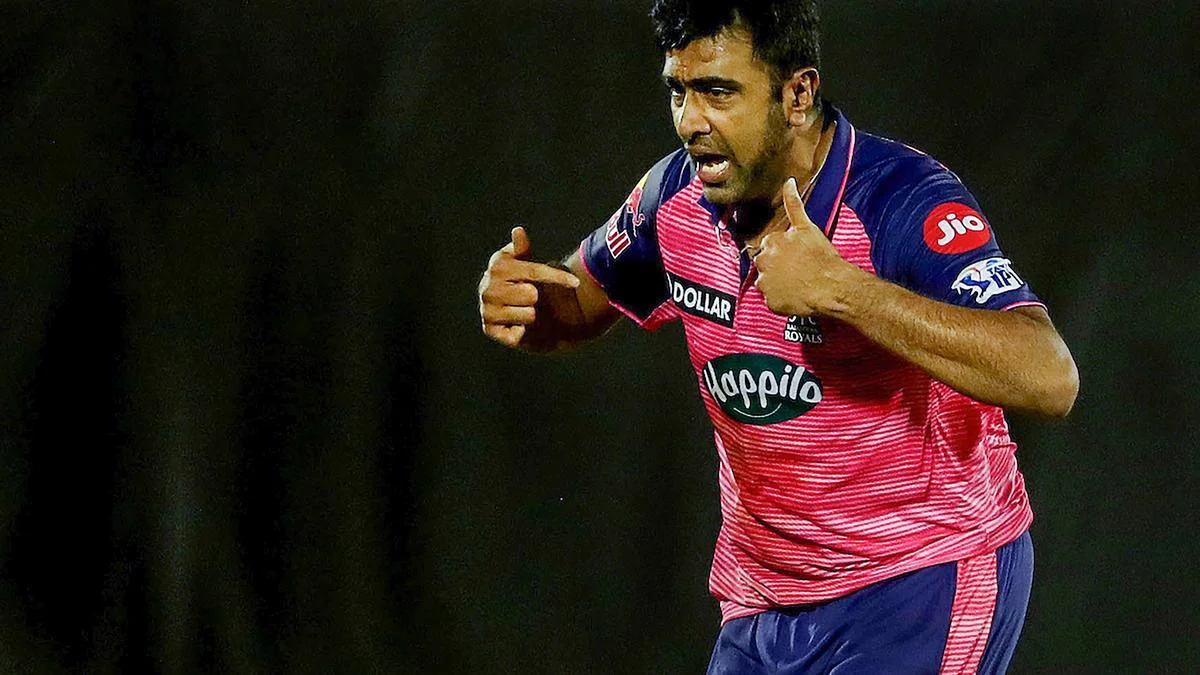
Even as Ravichandran Ashwin continues to cement his legacy as one of modern cricket’s greatest-ever spinners, Rajasthan Royals Director of Cricket Kumar Sangakkara believes the veteran campaigner still has room for tactical evolution. According to the Sri Lankan batting icon, the 36-year-old off-spinner needs to revisit his fundamentals and rely more frequently on conventional, turning off-break deliveries rather than over-relying on variations like the carrom ball.
Ashwin, who stands as India’s second-highest wicket-taker in Test cricket history with 442 scalps to his name, is universally celebrated for his inquisitive cricketing mind and his constant willingness to experiment with his craft. However, this penchant for innovation often sees him utilizing the regulation off-break—which drifts and turns into right-handed batters—far less often than his heavily utilized carrom ball, a delivery that skids and moves away from right-handers.
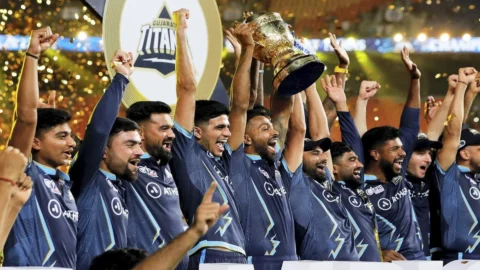
The strategic assessment from the Rajasthan Royals’ coaching staff came to light during the post-match press conference following the franchise’s comprehensive seven-wicket defeat against the Hardik Pandya-led Gujarat Titans in the Indian Premier League (IPL) final on May 30, 2022, at the Narendra Modi Stadium in Ahmedabad.
Reflecting on the campaign and Ashwin’s overall contributions, Sangakkara acknowledged the immense value the veteran brings to the dressing room while simultaneously highlighting areas for technical reflection. "Ash has done a great job for us," Sangakkara told reporters after the summit clash. "Even for Ash, being a legend in terms of what he has achieved on the cricketing pitch, there will be a lot of improvements and thinking to do, especially with his off-spinners and bowl more of it."
The veteran off-spinner endured a relatively quiet finale by his lofty standards. Across a grueling 17-match campaign in the 2022 season, Ashwin managed to pick up 12 wickets. In the title decider, however, he opted to deploy a significant number of carrom balls rather than trusting a traditional off-spin rhythm. Defending a sub-par total of 130 runs, Ashwin leaked 32 runs across his three overs without managing to break through the Gujarat batting lineup.

Sub-Par Total and Missed Opportunities
Analyzing the collapse that led to the heavy defeat, Sangakkara admitted that the total of 130 runs was never going to be enough to challenge a formidable Gujarat Titans batting unit on a high-pressure night. Winning the toss and opting to bat first, Rajasthan Royals faltered badly against a disciplined bowling attack, stumbling to 130 for 9 in their allotted 20 overs. The target was comfortably chased down by the Titans with 11 balls and seven wickets to spare.
"It was a tough one. 130 was never enough," Sangakkara reflected. "We were debating whether to put them in to bat first as well. By the time we arrived at the ground, we looked at the pitch; it was pretty dry and we thought it would get slower and maybe offer a little bit of turn for our spinners. So, we were expecting to get about 160-165."
The former Sri Lankan captain noted that Rajasthan had positioned themselves reasonably well during the first half of their innings before losing momentum. The team allowed the opposition bowling attack to claw their way back into the contest after a stable foundation had been laid.
"We were really well-set in our batting innings at 70 for 1 at the halfway mark until Sanju Samson got out," Sangakkara explained, pointing to the dismissal of his captain as a critical turning point. "And then they came and bowled some beautiful overs and we let Gujarat back into the game."
Defending a meager total of 130 demanded early breakthroughs and a substantial slice of fortune, neither of which ultimately materialized for the Royals. While they managed to strike twice inside the powerplay, failing to dismiss in-form opener Shubman Gill early proved costly. As a result, Gujarat’s required run rate never climbed past a manageable threshold of seven runs per over.

"With 130, we need a bit of luck and some quick wickets in the powerplay. We did get two, but unfortunately, we didn’t get Gill in that first over and the run rate never went above seven," Sangakkara said. "It was always going to be tough. It was hardly about calculations and maths and just about trying and getting a couple of wickets and break through that [David] Miller and Hardik [Pandya] and Gill partnership, but we were unable to do it."
A Need for Comprehensive Improvement
Despite finishing the two-month tournament as the runners-up and enjoying a largely successful campaign that captured the imagination of fans, Sangakkara maintained a realistic outlook regarding the team’s overall trajectory. He stressed that a deep analysis of the season reveals significant gaps that need addressing if the franchise is to go one step further in future editions of the tournament.
"Well, we have got a lot of improving to do in all areas," Sangakkara stated. "If you take our batting, we had huge contributions from Jos [Buttler], Sanju, and Shimron Hetmyer at the early stages."
While the top order fired effectively for large stretches of the tournament, the Royals’ Director of Cricket pointed out that consistency from the middle and lower-middle order remained an unresolved issue.
"Riyan Parag and Devdutt Padikkal really played well in patches, but I think in terms of overall performance, we need a little bit more from the support role players as well," he added.

Grooming Riyan Parag for a Bigger Role
Singling out young all-rounder Riyan Parag, Sangakkara voiced strong backing for the youngster’s potential and outlined a clear developmental path for him moving forward. The coaching staff envisions a more prominent role for Parag within the batting lineup, transitioning him from a lower-order finisher into a dependable early middle-order anchor.
"I think Riyan Parag has got a huge amount of potential, and we’ve got to work him into a higher batting number by the time we come in next season," Sangakkara said. "I look forward to kind of grooming him to become more of an early middle-order player rather than just a death-hitter, because I think he is so accomplished against spin as well as pace."
Concluding his assessment of the season, Sangakkara reflected on the personnel available to the franchise throughout the tournament, expressing confidence that despite the heartbreaking end in the summit clash, the management had utilized the best possible resources at their disposal.
"When you take the quality of players that we had, this was the best side and the strongest side that we put out on the park," he signed off.


Comments (0)