


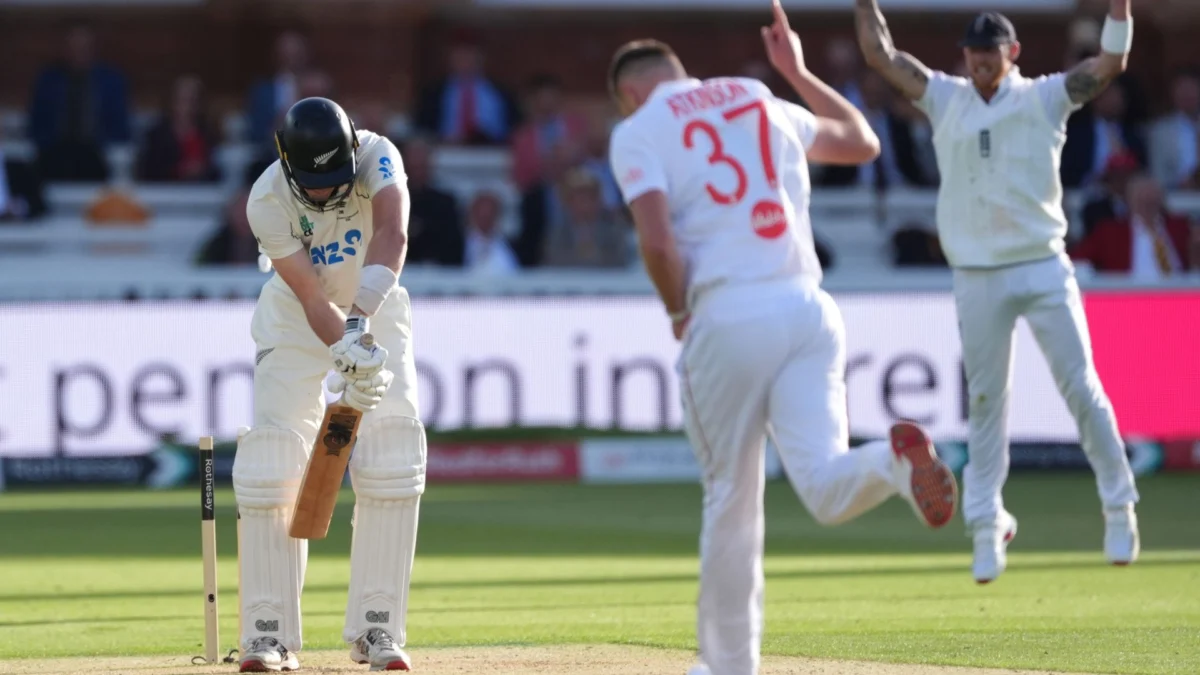
The historic pitch at Lord’s Cricket Ground that played host to England’s chaotic Test match against New Zealand in June has been entirely dug up and re-laid by the Marylebone Cricket Club, meaning the strip will be out of action for the next two to three years.
Pitch 9, which stands as one of the five central strips on the famous north London venue’s square, was slapped with its first-ever demerit point earlier this year. It was officially deemed "unsatisfactory" by the International Cricket Council after match referee Andy Pycroft submitted a critical report highlighting excessive seam movement and deeply inconsistent bounce throughout the summer contest.
The match itself proved to be a remarkably swift and erratic affair, with all 40 wickets tumbling in a mere 166 overs. Bowlers found themselves dominating proceedings from the opening hour, exploiting a surface that offered unpredictable behavior and sharp sideways movement that troubled even the most accomplished international batsmen. The sheer speed with which the game concluded drew widespread scrutiny from players, pundits, and administrators alike, prompting a thorough internal investigation by ground staff and club executives.
In response to the fierce backlash and the official ICC sanction, the MCC took decisive action by completely reconstructing the pitch following a comprehensive review of the entire Lord’s square. Ground staff began the labor-intensive reconstruction work earlier this month, stripping away the problematic surface to start afresh with new soil profiles and preparation techniques designed to prevent similar issues in the future.
The MCC candidly informed its members this week that the drastic decision to dig up Pitch 9 was reached only after completing what it described as the most exhaustive review of pitch conditions in the modern history of Lord’s. Club officials recognized that maintaining the world-class reputation of the Home of Cricket required immediate and uncompromising remedial work, ensuring that future international and domestic fixtures are played on surfaces that offer a fairer, more predictable contest between bat and ball.
Alongside the immediate rebuilding of Pitch 9, the MCC’s forward-looking strategy involves exploring innovative turf technologies to bolster the resilience of its playing surfaces. The club revealed plans to incorporate hybrid pitches in practice and auxiliary areas, noting that extensive data analysis has demonstrated these reinforced surfaces to be significantly more durable than traditional, all-natural clay pitches. However, current cricket regulations dictate that hybrid pitches are not permitted to be utilized in official Test match cricket, meaning traditional preparation methods must remain the standard for the international arena.
Further modernization efforts are also underway at the ground, with the MCC currently producing the first of three drop-in trays. These specialized trays are scheduled to be permanently integrated into the main square by the year 2028. Unlike the temporary drop-in pitches that are routinely removed and replaced on a seasonal basis at multi-use stadiums in countries like Australia, the installations planned for Lord’s are intended to function on a long-term basis, offering stability while still benefiting from off-site preparation and maintenance advantages.
Despite the ongoing reconstruction work on Pitch 9 and the broader modernization projects across the square, Lord’s remains fully prepared to host a high-profile international schedule in the upcoming season. The venue is currently locked in to stage two major Test matches next year, beginning with a clash against Bangladesh in May, followed by a blockbuster fixture against Australia at the end of June as part of the highly anticipated Ashes series.
Meanwhile, as Lord’s addresses its infrastructure and pitch quality behind the scenes, the wider international cricket landscape continues to move forward. The prestigious Kia Oval has officially been chosen as the host venue for the upcoming World Test Championship final, taking center stage for the pinnacle red-ball match of the global calendar.



Comments (0)