


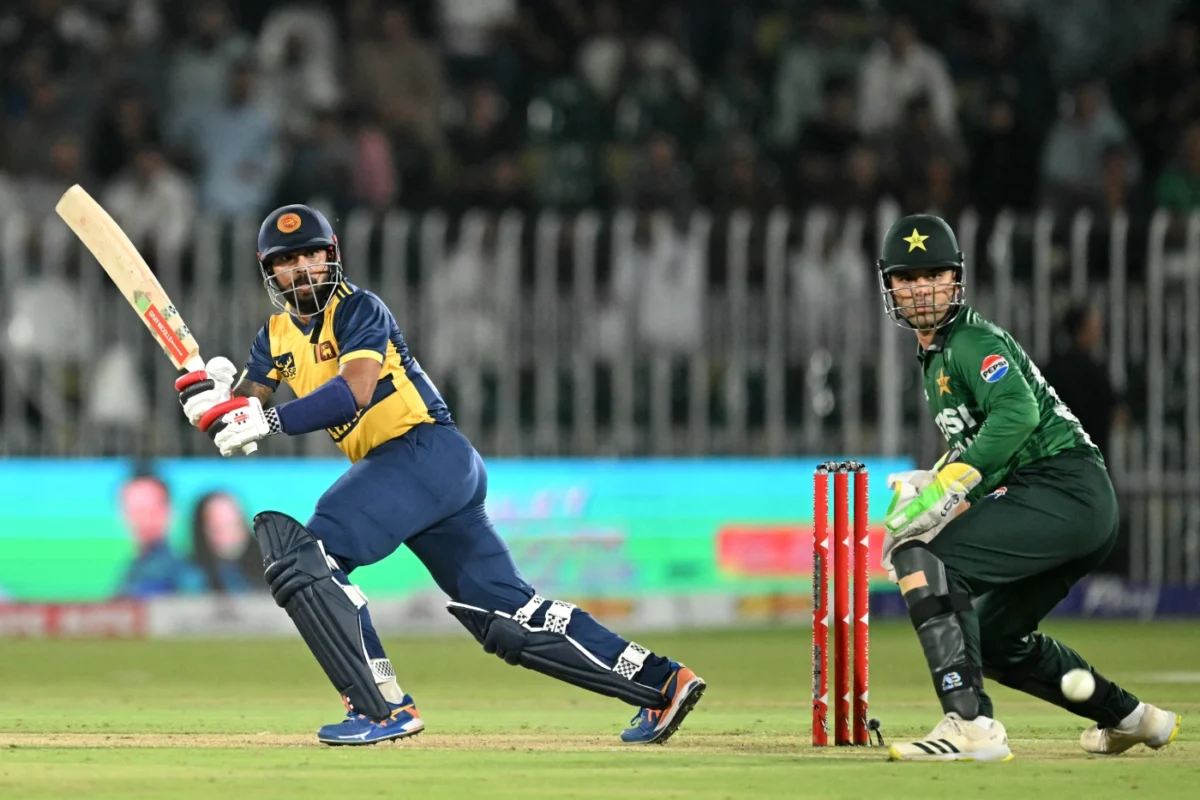
Sri Lanka 172 for 2 (Kusal 87, Kamindu 40, Imran 1-31) beat Pakistan 168 for 8 (Farhan 76, Shanaka 3-21) by eight wickets
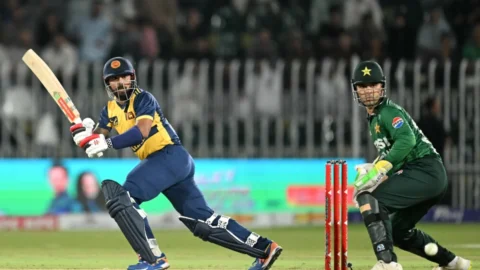
The bilateral series may have already slipped from their grasp, but Sri Lanka will undoubtedly be feeling a great deal better about themselves following a comprehensive and commanding victory in the third and final T20 international. Kusal Mendis spearheaded the run chase with a brilliant, unbeaten 87 off 48 deliveries, leading his side as they hunted down Pakistan’s total of 168 for 8 with a remarkable 17 balls and eight wickets to spare.
While the visitors had endured a difficult tour up to this point, this final fixture showcased a much-needed cohesion, tactical discipline, and clinical execution that had been absent for much of the preceding encounters. Although Pakistan’s Sahibzada Farhan once again produced a customary, fifty-plus score to anchor the home side’s innings, this time Sri Lanka’s bowling attack ensured their strategic plans were executed with far greater precision. This collective defensive effort was neatly highlighted by the fact that, aside from Farhan, only one other Pakistan batsman managed to score more than 20 runs—Arafat Minhas, who contributed a useful 34 lower down the order.
Dasun Shanaka emerged as an unlikely hero with the ball for the tourists, picking up impressive figures of 3 for 21. Meanwhile, Vijayakanth Viyaskanth, brought into the starting lineup in place of Maheesh Theekshana, proved pivotal in halting the opposition’s momentum during a miserly four-over spell that conceded just 23 runs and yielded a crucial wicket. Further tightening the screws, Eshan Malinga and Nuwan Thushara chipped in with two wickets apiece to prevent Pakistan from posting a truly imposing total.
When it came to the run chase, Sri Lanka experienced an early hiccup when opener Lahiru Udara fell cheaply. The visitors opted against using a review that would have granted Udara a reprieve, a decision that initially looked like it might cost them. However, skipper Kusal Mendis quickly steadied the ship, orchestrating two vital partnerships of 59 and an unbroken 98 with Sineth Jayawardena—who contributed 38 off 26 balls—and Kamindu Mendis, who added an enterprising 40 off 27. Together, they saw the game through to its conclusion with a comfortable margin, ending the tour on a distinctly positive note.
Farhan’s battle, but SL’s war
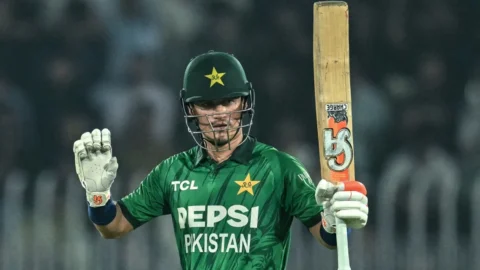
It was Sahibzada Farhan once more who put Sri Lanka’s bowling attack to the sword, aggressively punishing any width or overpitched deliveries as he pummelled seven fours and three sixes across his 76-run, 47-ball masterclass. Yet, the fact that Sri Lanka still managed to restrict Pakistan to a sub-170 total stands as a testament to how effectively their bowlers executed their plans against the rest of the batting lineup.
After yet another typically quick start from the Pakistan openers, Eshan Malinga produced an outstanding fourth over of the innings—a double-wicket maiden that thrust Sri Lanka right back into the contest. Both Fakhar Zaman and Maaz Sadaqat were sent back to the pavilion in quick succession as they attempted to force the issue and clear the boundary.
This double blow, however, did little to deter Farhan. He and Hasan Nawaz struck five boundaries over the course of the next two overs to propel Pakistan past the fifty-mark, ending the powerplay phase at 57 for 2. This was precisely the juncture where Sri Lanka decided to aggressively apply the squeeze, spearheaded by the exceptional control of Viyaskanth.
The 24-year-old leg-spinner from Jaffna did his long-term prospects for future national team selections no harm at all, delivering a brilliant masterclass in defensive bowling. Operating on a pitch that offered good bounce and allowed the ball to come onto the bat nicely, Viyaskanth kept his trajectories consistently flat and maintained a steady pace between 90 and 100 kilometers per hour.
This disciplined approach effectively choked the run-scoring from one end—a currency in the shortest format of the game that carries arguably more tactical importance than picking up wickets alone. Benefitting directly from Viyaskanth’s control and defensive aptitude was Shanaka, who has increasingly demonstrated a sharp bowling intellect in recent times. Despite possessing a natural pace in the mid-120s, Shanaka’s clever variations in both pace and length proved profoundly frustrating for the Pakistani batsmen, who failed time and again to read him or dispatch his deliveries to the boundary.
At the opposite end of the pitch, however, Farhan was fighting a lone battle, occupying the crease and anchoring the innings almost all the way through before finally falling on the penultimate ball of the innings. While Arafat Minhas’s late contribution was certainly vital, Farhan’s stubborn resistance was undoubtedly the decisive factor that prevented Pakistan from stumbling to a score well below 140 and instead giving them something competitive to defend.
Sineth’s mixed start
It has been a whirlwind roller coaster of a couple of months for 21-year-old Sineth Jayawardena. Following an exceptional breakout season in Sri Lanka’s premier domestic T20 tournament—where he accumulated 372 runs across nine innings to guide Tamil Union to the championship title—he earned a well-deserved call-up to the national squad for the Asian Games, subsequently making the step up to the senior national side for this tour of Pakistan.
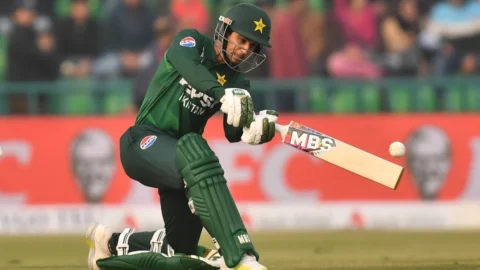
Yet, it was not initially his batting that caught the attention of observers. His dropped catch of Farhan during the second match of the series proved to be a pivotal, sliding-doors moment that altered the course of the fixture. In this third game, an over-exuberant and unnecessary throw to the wicketkeeper meant Sri Lanka missed out on a golden, early run-out chance to dismiss Arafat just as he was arriving at the crease. The fact that Arafat proceeded to capitalize on that reprieve by cracking 34 runs off just 20 deliveries served as proverbial salt in the wounds for the fielding side.
Jayawardena’s youthful inexperience was further highlighted later in the innings when his opening partner, Lahiru Udara, was trapped plumb in front by a booming, swinging delivery from Imran Randhawa. Udara opted against reviewing the decision, presumably acting on the advice of his young partner at the non-striker’s end. Replays subsequently showed that the ball’s point of impact had actually been outside the line of the off stump. Whether Jayawardena was overly tentative in pushing for a review due to his earlier defensive lapses in the field is a matter for conjecture, but the possibility remains.
Conversely, the raw, unpolished nature of his game—rough edges that can only truly be smoothed out through consistent exposure to international competition—was also fully on display when he held the bat. His 26-ball stay yielded an impressive five fours and two sixes. While there were 13 dot balls during his innings, nearly all of them were the direct result of him attempting aggressive, boundary-scoring strokes, showcasing a fearless and unbridled intent at the top of the order.
Ahead of the game, head coach Gary Kirsten spoke about the T20 side currently operating within an "exploratory phase" as the team builds toward the next ICC World Cup, which is still two years away. Viewed through that strategic lens, a talent like Jayawardena is certainly worth investing in and exploring further, rough edges and all.
Kusal finally finds form
Kusal Mendis has historically been the cornerstone of several of Sri Lanka’s most memorable victories, and it came as little surprise that in the first two matches of the series, his cheap dismissals left the team struggling significantly in the batting department.
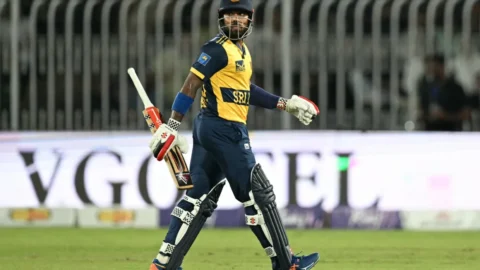
Here, however, the script was entirely different. After a relatively subdued start to his innings where he sensibly deferred the aggressive stroke-play to the more inexperienced Jayawardena, Kusal steadily grew in confidence and authority. By the latter stages of the run chase, he was striking the ball cleanly at a run rate well above 180. Operating alongside him, Kamindu Mendis provided the ideal foil through immaculate strike rotation, facing a mere four dot deliveries across his enterprising 27-ball stay.
While analysts might argue that Sri Lanka should harbor legitimate concerns regarding their heavy over-reliance on their captain, the reassuring performances of players like Jayawardena and Kamindu stepping up in the absence of star batsman Pathum Nissanka certainly offer promising and encouraging signs for the future development of the side.

Comments (0)