


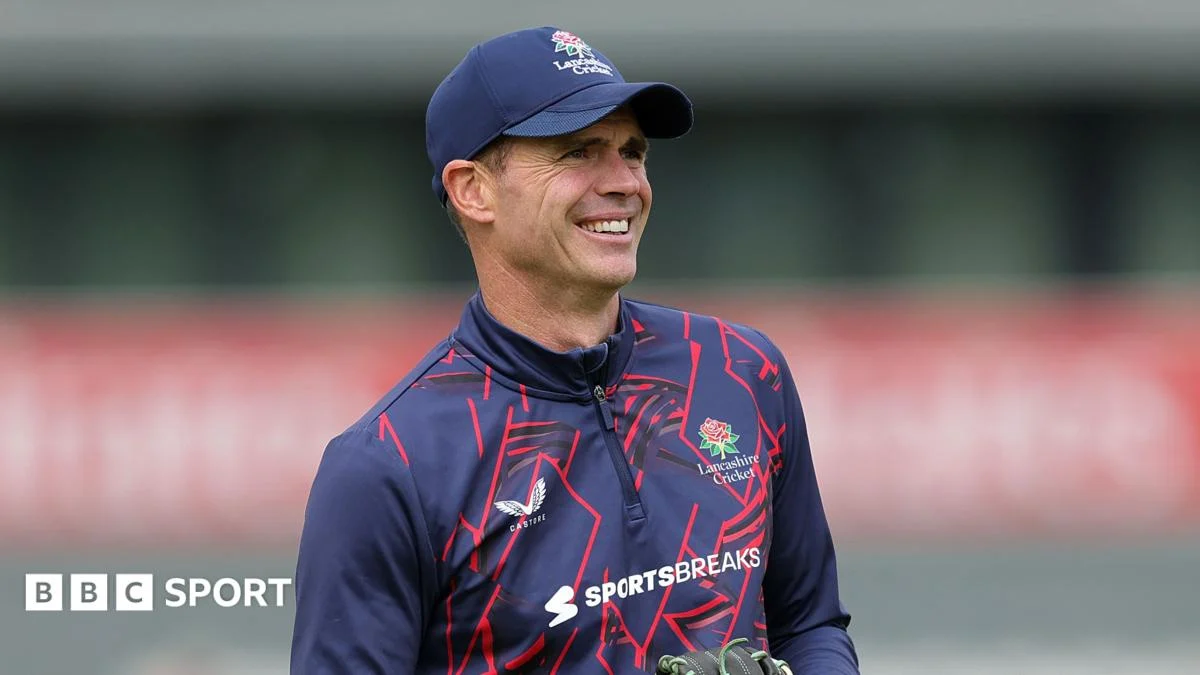
James Anderson is facing a defining moment in his legendary professional career after being informed by Lancashire that he will not be offered a new contract for the upcoming season, opening the door for potential moves to a number of rival county clubs.
The 44-year-old fast-bowling icon, who captained Lancashire through their previous campaign, had harbored clear intentions to continue playing for at least another year. However, those plans were disrupted when the county hierarchy delivered the news that his illustrious association with Old Trafford is drawing to a close. This decision leaves England’s all-time leading wicket-taker with a pivotal choice: to finally bring the curtain down on an extraordinary career spanning more than two decades, or to seek a new chapter with another county championship side.
Already, several clubs across both divisions of the County Championship have monitored the situation closely, with a number of teams having informally reached out to gauge his interest. Whether Anderson decides to extend his playing days into the summer will hinge on several key factors, including the financial structure of any potential deal, the specific playing and leadership role proposed, and the logistical realities of relocating or managing time spent away from his family home in Cheshire.
For any prospective county, securing Anderson’s signature would represent the acquisition of unmatched experience, leadership, and playing quality, both on and off the field. Even at this late stage of his career, Anderson proved his enduring effectiveness last summer by earning Lancashire’s County Championship player of the year award. He spearheaded the attack with remarkable consistency, claiming 50 wickets in Division Two—a prolific return surpassed by only six other bowlers across the entire second tier.
Beyond his immediate value with the ball, signing Anderson could present an attractive long-term proposition for a new county. It raises the distinct possibility of an eventual transition into a coaching or mentoring role once his playing days officially conclude. The opportunity for an ambitious club to tap directly into a generational bank of knowledge and technical expertise would carry immense appeal for organizations looking to develop their next generation of fast bowlers.
Yet, pursuing a player of Anderson’s advancing years does not come entirely without risk. While he has consistently maintained a reputation for supreme physical fitness and conditioning, his age introduces the reality that he could remain vulnerable to injury setbacks. In the latter stages of his international and domestic career, Anderson has occasionally been troubled by recurring calf problems, meaning any club taking him on would need to carefully manage his workload and recovery periods.
The decision to release Anderson was communicated directly by Lancashire’s newly appointed chief executive Richard Kenyon and director of cricket Paul Farbrace during a meeting. Notably, the veteran bowler was not presented with an option to remain at Old Trafford on reduced terms, signalling a decisive shift in direction by the county’s management.
Lancashire has chosen not to issue immediate public comments regarding the departure, though club officials are scheduled to host a members’ forum where the decision is widely expected to be addressed and scrutinized. Anderson’s current contract does not officially expire until the end of October, and suggestions have circulated that Lancashire may still hope to keep him involved with the organization in some capacity. However, given the abrupt and definitive manner in which his playing career at his boyhood county has been concluded, it remains far from certain whether Anderson would be receptive to maintaining formal ties with the institution he first represented over two decades ago.
Anderson’s deep-rooted history with Lancashire stretches back to the turn of the millennium. He made his top-level competitive debut in a List A match for the Lancashire Cricket Board against Suffolk in the National Westminster Bank Trophy in 2000. His breakthrough into the senior Lancashire side followed a year later during a one-day fixture against Derbyshire, marking the beginning of a domestic journey that would intertwine with an unprecedented international career.
In 2002, Anderson earned his first call-up to the England setup, embarking on a monumental 22-year international career that would redefine fast bowling. Over the course of his Test career, he accumulated 704 wickets for England, establishing the third-highest tally by any male bowler in the history of Test cricket and remaining comfortably the most prolific pace bowler the game has ever seen.
After stepping away from the international arena following his retirement from Test cricket, Anderson reaffirmed his commitment to the domestic game by signing on to continue playing for Lancashire. At the time, he expressed a belief that his body could withstand the rigors of county cricket for at least three more seasons, setting the stage for what he had hoped would be a prolonged twilight to his playing days in Manchester. Instead, those plans have been abruptly altered, leaving the veteran seamer to weigh his next move as the county circuit prepares for the possibility of seeing one of its greatest-ever competitors wearing different colors next summer.




Comments (0)