


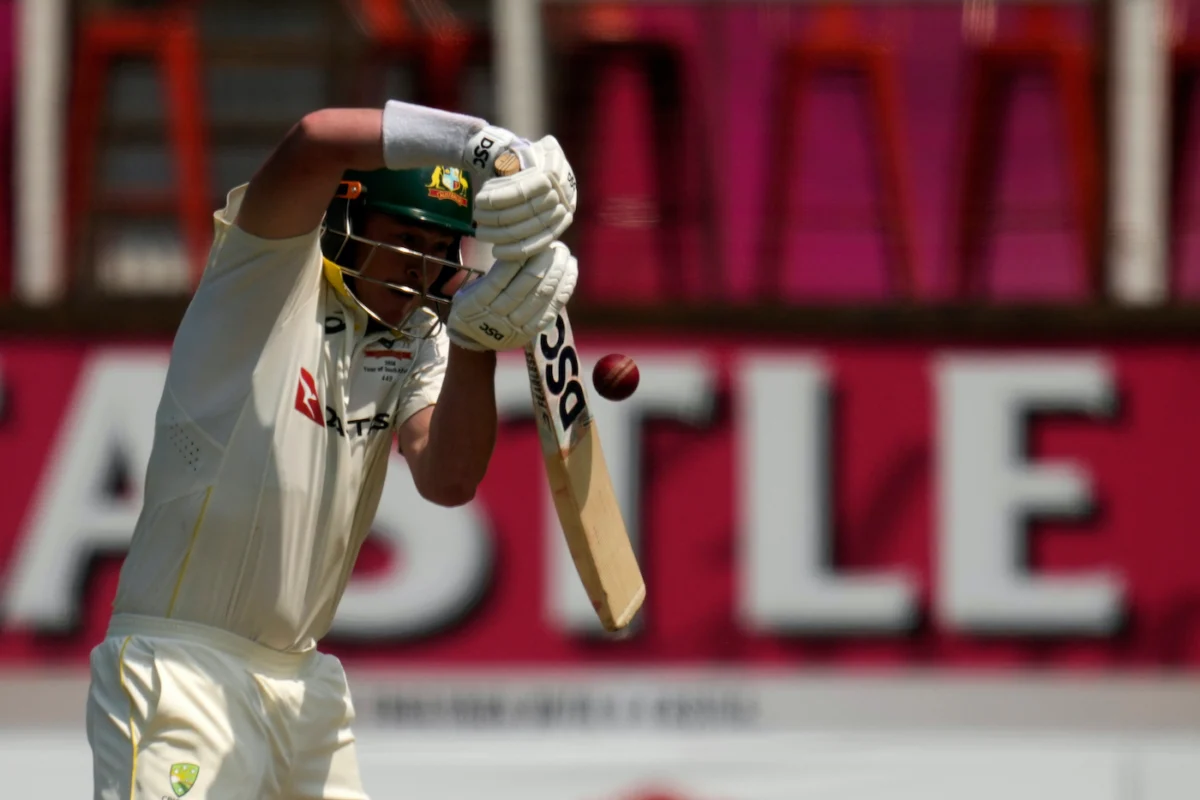
Australia captain Pat Cummins has acknowledged that while displacing Matt Renshaw from the number five position will require a compelling argument, the team remains firmly open to a flexible batting structure moving forward. The discussion around potential shuffling among Renshaw, Nic Maddinson, and Travis Head comes in the wake of Australia’s commanding victory over South Africa in the first Test in Durban—a triumph built on resilience, patience, and a throwback to traditional five-day Test cricket.
Renshaw’s stellar match tally of 272 runs served as the absolute cornerstone of the victory. His monumental knock included 190 runs in the first innings followed by a gritty 82 in the second. That performance directly answered Cummins’ pre-match plea for his side to embrace the grind of a longer match, steering clear of the rapid, high-scoring shootouts that had defined several of Australia’s fixtures over the preceding twelve months.
However, Renshaw’s deployment at number five was originally necessitated by circumstances rather than a long-term tactical blueprint. The injury to star allrounder Cameron Green forced the Australian team management to completely rethink their strategy for the series opener. Renshaw’s recent proficiency in the one-day middle order heavily influenced their selection matrix, ultimately leading to the recall of Nic Maddinson to open the batting nearly a decade after his previous Test appearance. With Green’s fitness for the upcoming second Test in Gqeberha remaining uncertain, the team management has signaled that the door remains wide open for continued tactical adjustments between Maddinson, Renshaw, and Travis Head depending on match conditions.
Refining the Balance of the Top and Middle Order
Speaking to reporters after the victory, Cummins emphasized that disrupting Renshaw’s current rhythm would not be done lightly, yet reiterated the overarching value Australia places on adaptability.
"Give us a few days, we’ll look at the conditions of the next Test. I mean, it’s got to be pretty compelling to move him [Renshaw] from there," Cummins said. "免許 But we’ve seen Travis Head down at No. 5 as well. We’re always working out the six batters, or seven plus [Alex Carey] and how is that going to function as a whole? So, if anything, I still think he [Renshaw] can be a great opener, and now he’s got another string to his bow that he’s found this week."
Cummins pointed out that stability at the top of the order remains strong with Marnus Labuschagne firmly entrenched at number three and Steve Smith at number four. Beyond that core, the integration of Maddinson has provided a unique tactical luxury that the team has lacked in recent years.
"We’re pretty certain that we like Marn [Labuschagne] at No. 3, Smithy at No. 4, and then, the six and seven felt pretty locked up. I think bringing in Maddo, we really like the idea of bringing that flexibility, that unlocks a lot [such as] Trav back to No. 5, Renners down to No. 5, even Maddo himself at five. We haven’t had that option [in] the last few years where we feel like we’ve got plenty of options at the top," Cummins explained.
The captain emphasized that this newly discovered flexibility is not merely a temporary fix, but an intentional strategic shift that could see ongoing rotation based on opposition tactics, pitches, and weather patterns.
"We’re very big on that flexibility. I know you’re probably sick of us talking about it but, why not next week, have different openers if the conditions take us somewhere different, or swapping out the batting orders between innings. I think having the structure that we do now with a few guys that can open, that’s really unlocked that," he added.
Embracing the Old-School Test Match Grind
Before a ball was bowled in Durban, Cummins had publicly urged his team to adapt to the specific tempo demanded by traditional red-ball conditions. That outlook was severely tested early in the match when Australia found themselves in deep trouble at 124 for 6. Renshaw perfectly embodied the captain’s vision, anchoring the innings with a masterclass in concentration that lasted nearly eight hours.
Yet, Renshaw’s heroic effort required crucial support from the lower order. Cummins himself joined the left-hander in a vital rescue mission before the close of the opening day, halting what felt like an inevitable collapse. From the second morning onward, South Africa found few avenues back into the contest, worn down further by a magnificent 134-run ninth-wicket partnership between Renshaw and Nathan Lyon—a partnership that head coach Andrew McDonald had highlighted as a key area of focus in the pre-series preparation.
Although occasional lapses in shot selection from the South African batters prevented Australia from having to toil in the field for as long as they might have anticipated, closing out the match required immense discipline. On the final day, the visitors had to work tirelessly to break the stubborn resistance of Aiden Markram, who crafted a patient 75 off 237 balls before finally falling as the ninth wicket.
The victory demonstrated that Australia has certainly not lost its capacity to play the long game. Last season’s memorable Test in Adelaide showcased a similar resilience, but following tactical and execution errors against Bangladesh in Darwin, the approach deployed in Durban represents a strategic model the team is eager to carry forward. With a rigorous schedule of Test cricket stretching out over the next ten months, mastering this art of endurance is viewed as a vital evolutionary step for the squad.
"This week has felt a bit more, I don’t know, like the old Test cricket, I reckon. It’s a bit more of a grind," Cummins reflected. "[It’s] probably just appreciating that we weren’t as good at those little moments as we could have been [in some Tests]. I think you need to sometimes just grind it out, wait for the game to come to you and we just missed those moments in the past. So us as a group as we look at the next evolution, that’s something we spoke about."
Securing the Win Through Sustained Pressure
After claiming a crucial first-innings lead of 106 runs, Australia wasted no time stamping their authority on the contest, scoring rapidly in their second turn with the bat. Despite lingering concerns that deteriorating light might curtail their momentum on the fourth day, play continued uninterrupted, allowing Australia to capture four vital wickets and set up the final push. Pacer Josh Hazlewood provided the definitive exclamation point to a near-flawless four days of cricket, returning a career-best bowling analysis of 6 for 49.
Reflecting on the psychological weight of winning away from home, Cummins expressed immense satisfaction with how his players handled adversity and maintained their intensity right down to the final wicket.
"Overseas, it’s always tough," Cummins said. "You never quite know what you’re going to get [in the] first Test … the position we were on day one, six down, [it] felt well behind where we wanted to be. Then, mainly through Renshaw, clawing our way back … and then once we had the lead not giving it back. Sometimes when we have got that far in front, I feel like we haven’t been as ruthless as we could, but I think our standards were very high for the last three or four days. It’s very satisfying."




Comments (0)