


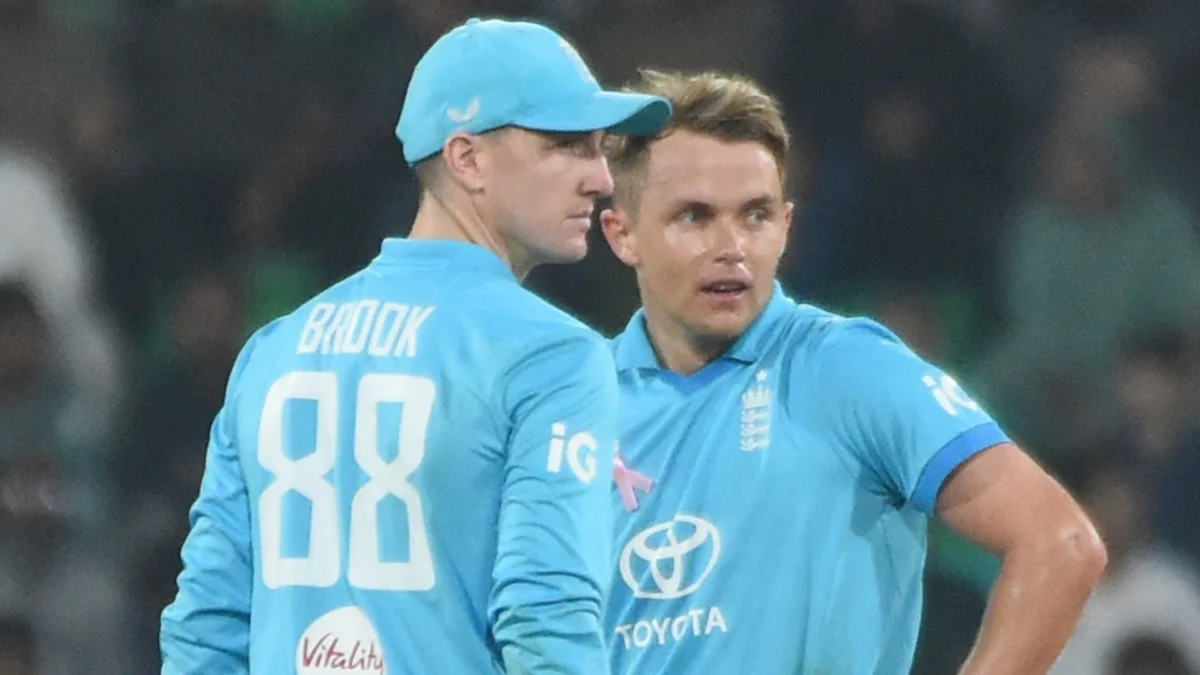
It is not just Manchester United who have endured a chastening week of high-profile sporting collapses. Halfway across the globe, the England men’s cricket team have shown themselves to be more than capable of suffering dramatic and inexplicable downward spirals of their own.
If losing a match from an overwhelmingly dominant position once can be considered a stroke of misfortune, then repeating the exact same error twice in the span of four days moves past the realm of bad luck and into the territory of carelessness.
That is not to denigrate the remarkable achievements of Sri Lanka, who successfully chased down a colossal target of 430 last Thursday—marking the second-highest run chase in the history of One-Day International cricket. Nor does it diminish Pakistan, who pulled off a stunning rescue act to successfully chase 242 after sliding to a perilous 154-9. Both opposition performances deserve to be lauded for their resilience and ambition.
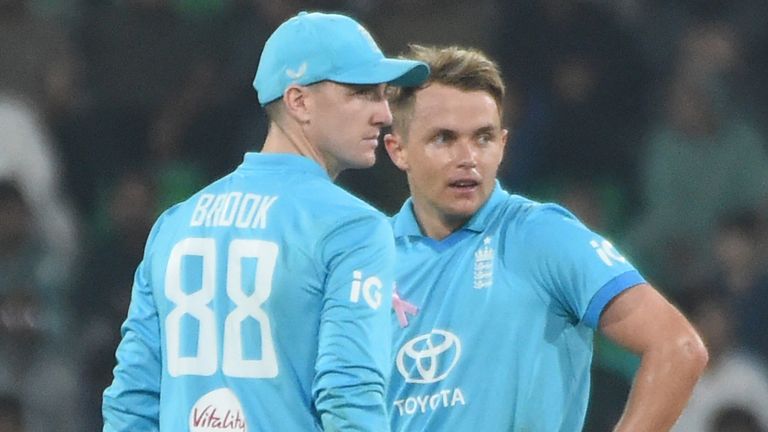
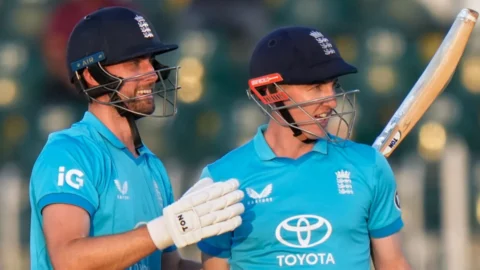
However, those stunning reversals exposed a few underlying cracks in the England setup that were barely visible during the home ODI summer, a period during which Harry Brook’s team recorded confident bilateral series victories over both India and Sri Lanka.
England are admittedly not currently experiencing the sort of systemic disarray currently engulfing Manchester United. Head coach Brendon McCullum will not be sacked, and captain Harry Brook is hardly likely to be dropped for publicly slamming the coaching staff’s tactical blueprints. Yet, there are clear issues that need to be ironed out ahead of future global tournaments—some relatively straightforward to fix, and others requiring a more complex tactical evaluation.
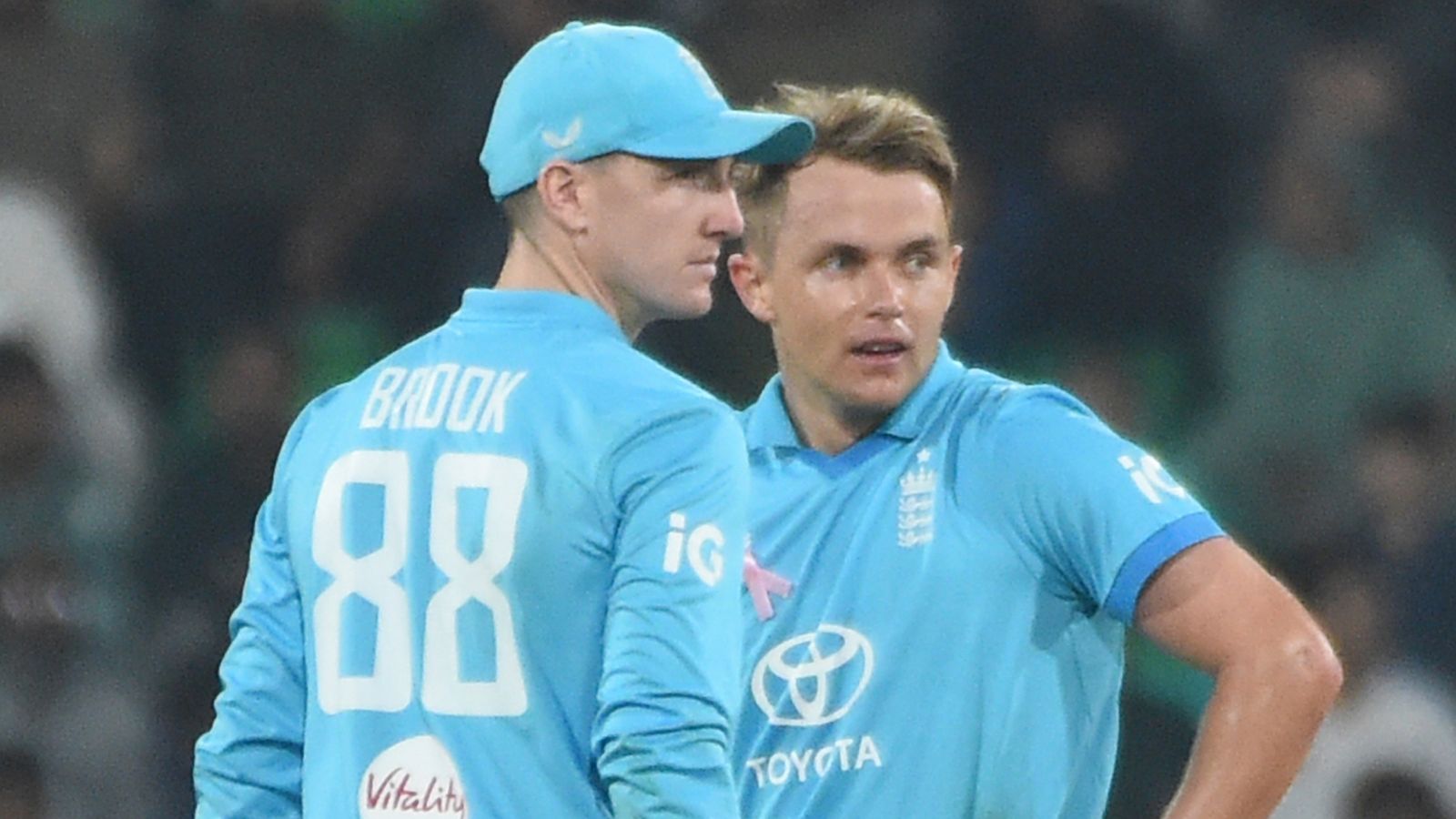
England Missing Senior Personnel, Including Archer
It is certainly worth noting that an England side currently sitting winless with three defeats from three matches in the ongoing tri-series—having also botched a chase of 303 in their opening game against Pakistan—is currently missing several key personnel.
Key figures such as white-ball stalwart Jos Buttler, who is sidelined through injury; young batting talent Jacob Bethell, who is currently recovering from his own physical setbacks; and premier fast bowler Jofra Archer, who has been rested for the tour, are all absent from the squad. Furthermore, experienced leg-spinner Adil Rashid has not been selected for the last two matches, while fast bowler Josh Tongue missed Sunday’s disappointing defeat in Lahore.
The presence of Rashid—whose recent omission has remained somewhat of a tactical mystery—and an enforcer of Archer’s caliber would undoubtedly have bolstered a leaking bowling attack. Meanwhile, the experienced heads of Bethell and Buttler could have acted as vital sounding boards for a young captain like Brook when things began to unravel on the field under mounting pressure.
The absences of Bethell and Buttler were also keenly felt within the batting department. To be entirely honest, that is where this weekend’s latest match was ultimately lost.
The pitch at the Gaddafi Stadium in Lahore was certainly not the flat, batter-friendly "Rawalpindi road" on which England and Sri Lanka struck a combined total of 859 runs earlier in the tour, but neither was it an unplayable minefield. The stark reality that Pakistan’s number eight batsman, Shadab Khan, could score a resilient 113 not out, while England’s number ten, Gus Atkinson, contributed an unbeaten 36, speaks volumes about the true nature of the surface.
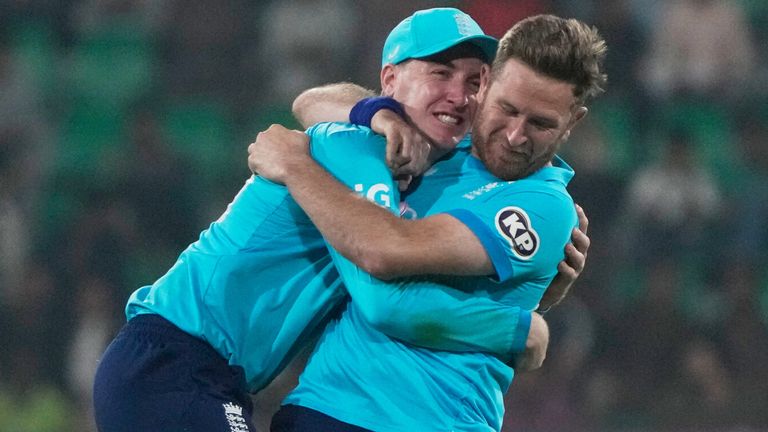
England’s total of 241 all out was clearly under par, and a total they realistically should never have been expected to defend successfully against a surging home side. It was not necessarily the fact that they failed to defend the total that rankled the coaching staff, but rather the manner in which they allowed the game to slip through their fingers.
The chronic lack of middle-overs wicket-taking options that blighted England during their loss to Sri Lanka—and has troubled them in the 50-over format for some time—was actually resolved against Pakistan, as Jamie Overton and Liam Dawson both excelled with the ball. Instead, the problems this time around flared up when their opponents were already nine wickets down, unable to deliver the final knockout blow.
England’s Curran Conundrum
During their dismal 2025 Champions Trophy campaign in Pakistan, where they crashed out after losing all three of their group matches, England were visibly crying out for the tactical variety and left-arm angle that Sam Curran’s box of tricks can theoretically provide.
Since his reinstatement to the white-ball setup, Curran has occasionally made a tangible difference on the international stage. Most notably, he delivered a clutch final over earlier this year in India to help England stave off a humiliating defeat against Nepal during the group stages of the T20 World Cup.
However, the all-rounder has endured a torrid time in Pakistan over the last few days, a struggle that may well be attributed to the rustiness caused by missing the previous two months of competitive cricket due to a persistent groin injury. None of Curran’s trademark variations have truly troubled the opposition batters during the tri-series.
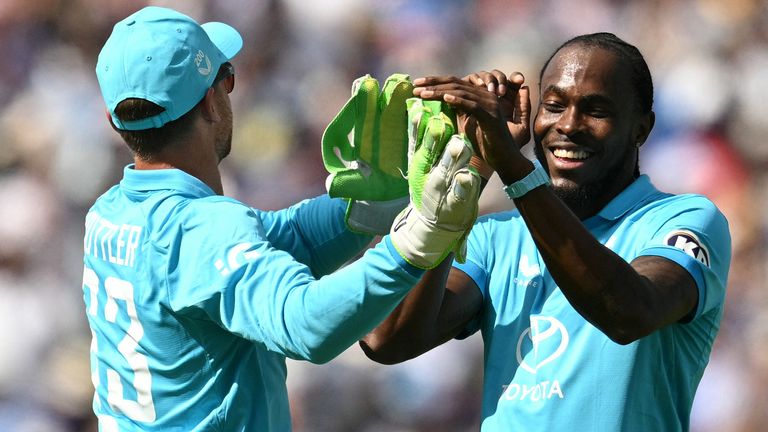
His array of slower deliveries, bouncers, and attempted yorkers have grown far too predictable. Curran did chip in with a useful knock of 42 with the bat against Pakistan, helping to rally his side after a top-order collapse left them reeling at 52-4. In isolation, his bowling figures of 0-32 from eight overs against Pakistan also look respectable on paper, but they fail to tell the entire story of his spell.
During his fifth, sixth, and seventh overs, Curran regularly offered up boundary balls to an entrenched Shadab Khan while also leaking crucial singles, while failing to sufficiently test Pakistan’s number eleven batsman, Haris Rauf, when the opportunity presented itself to wrap up the innings.
Just three days prior, the all-rounder was heavily punished, recording the most expensive bowling figures by an Englishman in ODI history as Brook persisted with him for too long against Sri Lanka. Curran’s expensive return of 2-103 from nine overs surpassed his own previous unwanted record of 0-98 from 9.5 overs against the West Indies back in 2023.
Former England captain Stuart Broad is among many pundits who believe that a player of Curran’s profile performs best when entrusted with a clearly defined and prominent role within the team structure. England now urgently need to determine what that role actually is, as he currently appears to be functioning in a somewhat bit-part capacity. If his ongoing struggles with the ball continue, that bit-part role may soon have to become no role at all.
Should Overton continue to excel through the middle overs by hitting a hard length and picking up crucial wickets in the style of former international Liam Plunkett, while offering a bit more lower-order value with the bat than he currently does, Curran’s spot could come under severe threat. This is especially true if England’s management decides they want to accommodate another out-and-out express seamer into the starting eleven as they step up their preparations for the 2027 World Cup in Africa.

Why is Rashid Not Playing?
The selection hierarchy also needs to find a pathway for Adil Rashid to return to the side at some stage—unless the veteran leg-spinner’s recent absence signals that the team has quietly begun moving on from a man who has served as their white-ball spin linchpin for well over a decade.
The fact that Rashid, 38, has been named in the squad for the upcoming tour of Australia next month strongly suggests that international retirement is not yet on the horizon. His current spell sitting on the bench is perhaps a consequence of needing time to work his way back to full match fitness following a hand injury that prematurely ended his home summer.
Even so, Rashid’s statistical output in the 50-over format throughout 2026 has not been entirely stellar. He has claimed nine wickets across seven matches at an average of 36.22 and a strike-rate of 37.50, a notable dip following a highly productive 2025 campaign where he averaged two wickets per game, taking 30 scalps in 15 fixtures at an average of 23.63.
Speaking on Sky Sports last week, expert analyst Nasser Hussain noted that Rashid’s overall performances had noticeably "dropped off" over recent months.
Rashid’s omission in favor of Liam Dawson—who has performed admirably throughout the tri-series—purely for tactical reasons in Rawalpindi and again in Lahore, has inevitably raised external questions that simply were not there before. Questions across the board are bound to be asked when a national side manages to fluff its lines twice in the space of a single week.
At least head coach Brendon McCullum, unlike Manchester United manager Erik ten Hag or his domestic counterparts following heavy defeats, will remain securely in place to try and formulate the necessary answers before their next outing.
England’s next assignment in the tri-series sees them face Sri Lanka in Lahore, with the team looking to salvage some pride and momentum before the tour concludes.

Comments (0)