


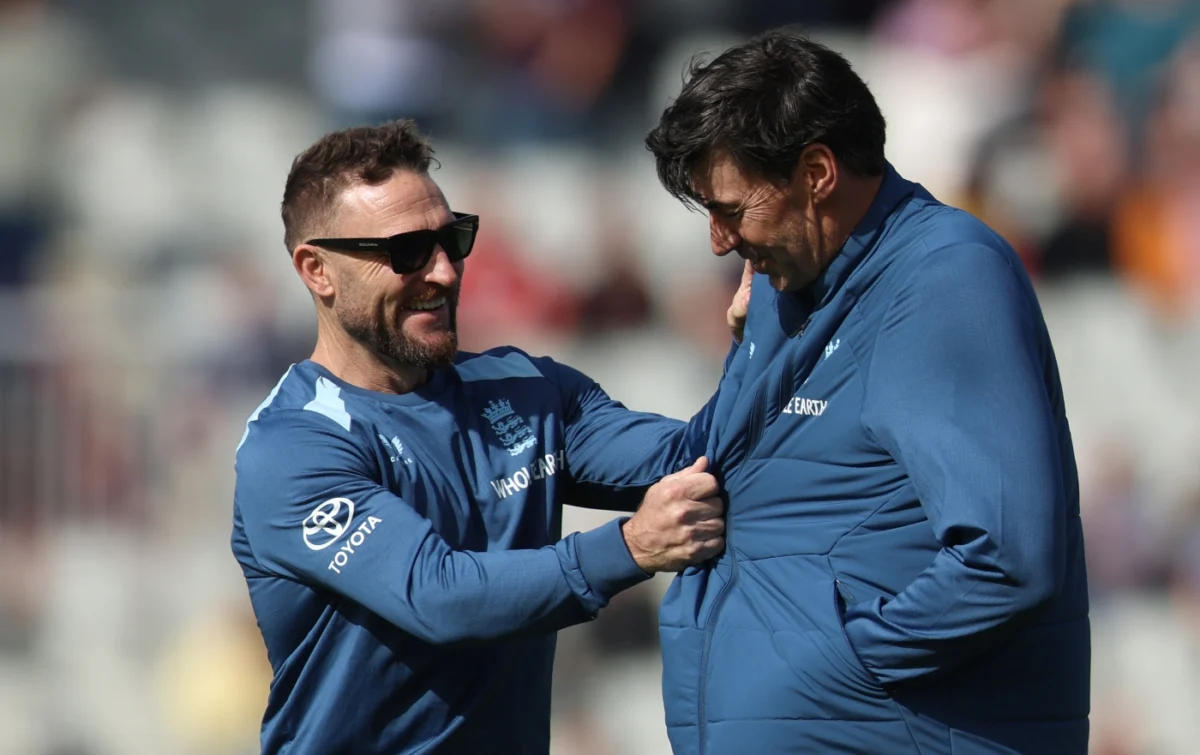
Stephen Fleming, England’s newly appointed Test coach, believes that his position should ideally be held by an Englishman, and has firmly pledged to make the development of domestic coaches a cornerstone of his tenure at the helm of the national side.
Fleming enters the role as the second consecutive New Zealander to take charge of the Test team, having agreed to succeed Brendon McCullum on a four-year contract earlier this year. This appointment continues a long-standing trend of the England and Wales Cricket Board (ECB) looking overseas for its full-time Test leadership. In the 21st century, only two Englishmen—Peter Moores, who served from 2007 to 2009 and again from 2014 to 2015, and Chris Silverwood, who held the position between 2019 and 2022—have occupied the role on a permanent basis.
Recognizing this historical landscape, Fleming has structured his newly appointed support staff with an eye toward the future, featuring several candidates who are widely regarded as potential future Test coaches. Among them are Richard Dawson, James Foster, and Marcus Trescothick, the latter of whom stepped up to hold the role on an interim basis earlier this year following transitions within the management structure. Furthermore, the broader talent pipeline has seen other former England players stepping into pivotal roles, with Jonathan Trott appointed to coach the England Lions this winter, and Mike Yardy taking up the mantle as the national batting lead at the ECB.
"One of my focus points is that I do believe that, primarily, the national team should be coached by a national representative," Fleming said, speaking on BBC Radio 5 Live, outlining his philosophy on the cultural identity of the coaching staff.
"I’m grateful for the opportunity, but there will be some development in terms of the coaching and you can see by our staff that there are some really key people that have come back into the system, and I’m really pleased about that and I look forward to working with them, but it [the development of English coaches] is a real focus."
The strategic reshaping of the backroom team is already underway. Dawson stepped down from his position as Glamorgan head coach earlier this month to take up a dual role within the national setup, serving simultaneously as the national spin-bowling lead and one of Fleming’s primary assistants. Rob Key, England’s managing director of men’s cricket, has already hinted that Dawson would be "near the top of that list" when the time eventually comes to appoint Fleming’s successor in years to come, signaling a deliberate, long-term succession strategy that has been baked into the current coaching architecture.
In addition to his permanent backroom staff, Fleming confirmed his clear intention to actively integrate county coaches into the England environment whenever their domestic schedules permit, creating a collaborative bridge designed to further accelerate their professional development.
"It’s an ambition as well that you will also get county coaches who will be introduced at certain times, and you will get past players that will be asked to come back as well," Fleming explained. "It’s really inclusive and a comfortable nature around using what’s around, but also driving what should be driven within the county game and the English game."
Fleming will not officially take charge of his first series until the team travels to South Africa in December. In the interim, Trescothick successfully deputised for the side during their series victory over Pakistan in August and September. Demonstrating a hands-on approach that represents an immediate and visible contrast to the operational style of his predecessor, Brendon McCullum, Fleming traveled to the United Kingdom last month and embarked on an extensive fact-finding tour of the various county grounds. He confirmed that he intends to undertake similar exploratory visits ahead of next summer’s high-profile Ashes series.
"Yeah, I’ll be around," Fleming said, detailing his commitment to embedding himself within the wider English cricket ecosystem. "I actually really enjoyed this year getting to catch up with a lot of the guys that I played with [who] are now in positions—either coaching position or the head position—at counties. It was good to catch up with those guys and get a good feel for where the county game is at… It will be a key part to continuing developing players."
Beyond his administrative and developmental philosophies, Fleming also used his early media engagements to provide a strong hint regarding the tactical composition of the playing XI for the upcoming tour of South Africa. He indicated that England will likely continue to operate without a frontline specialist spinner in South African conditions, opting instead to rely on part-time and utility spin options such as Jacob Bethell, Dan Lawrence, and Joe Root to shoulder the slow-bowling responsibilities.
"Pitches are becoming a little bit more seamer-friendly [in Test cricket]," Fleming observed, analyzing the shifting physical characteristics of pitches across the international landscape. "Games are over in three-and-a-half to four days, max. You’re not getting the deterioration in a lot of wickets that you used to see, with the advent of drop-ins, so it’s becoming a lot more challenging [for spinners]."
Elaborating on how these modern surface trends dictate strategic selection, Fleming pointed to the evolving balance of bowling attacks across the global game.
"What you’re seeing is the rise of the part-time spinner: in our case, the Bethells, the Lawrences and the Roots," he said. "And then if you combine that with four seamers, it’s an adequate—or more than adequate—attack to get through a Test match, so the dynamic of it really has changed at the moment."

Comments (0)