


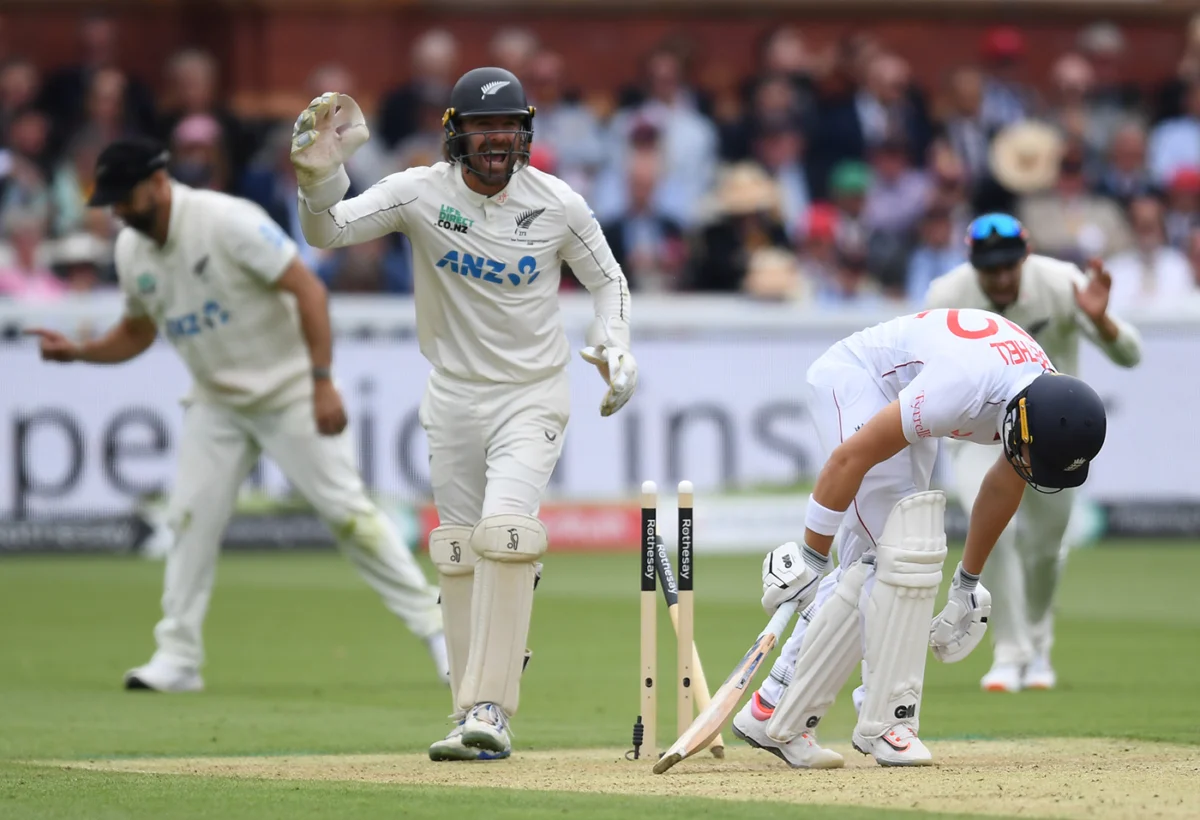
The infamous pitch that earned the Home of Cricket its first-ever demerit point from the International Cricket Council (KCC) has been completely dug up and relaid by the Marylebone Cricket Club (MCC) groundstaff, with the strip set to remain out of action for at least the next two seasons.
Pitch 9, which stands as one of the five crucial central strips traditionally reserved for international fixtures at Lord’s, fell under heavy scrutiny following a chaotic, fast-moving Test match between England and New Zealand in early June. Match referee Andy Pycroft subsequently rated the surface as "unsatisfactory," pointing directly to excessive seam movement and deeply variable bounce that created an extraordinarily bowler-friendly environment.
The contest proved to be a historic anomaly in modern Test cricket, witnessing all 40 wickets tumble in a mere 166 overs. Of those dismissals, an astonishing 24 came either bowled or lbw, as batsmen struggled mightily against unpredictable trajectories and balls shooting low off the surface. The match concluded rapidly, leaving players, pundits, and administrators questioning the integrity of the preparation.
In the immediate aftermath of the fixture, MCC chair Mark Nicholas stepped forward to address the glaring shortcomings, devising a comprehensive seven-point action plan aimed at rectifying the issues. Rob Lynch, the MCC’s director of cricket and operations, alongside the club’s dedicated groundstaff, immediately sought out external expert advice. This included commissioning detailed scientific data analysis to understand precisely why the surface behaved so erratically.
The resulting efforts have culminated in what Nicholas has described to club members as the most comprehensive review of the square and pitch preparation at Lord’s in an entire generation. Reconstruction work on Pitch 9 officially began earlier this month, ensuring the strip will be unavailable for competitive play for the next two to three seasons while the newly laid turf settles and matures under strict observation.
In an email sent to MCC members, Nicholas emphasized that the intensive project is necessary to ensure the club consistently prepares pitches worthy of the historic ground’s prestigious global reputation. However, he also issued a pragmatic warning to the membership, noting that everyone should be braced for the scheduling challenges these extensive plans will inevitably bring in the coming seasons.
Beyond the immediate loss of a central strip, the repercussions of the pitch review are expected to ripple across the venue’s broader fixture list. According to information obtained from Cricinfo, the MCC is actively looking into building longer "lead-in" periods ahead of marquee events, such as upcoming Ashes Tests. These extended buffers are designed to maximize the uninterrupted time available for groundstaff to meticulously roll, mow, and nurture the pitches without the pressure of preceding matches.

To accommodate these scheduling adjustments and protect the main square, some smaller, recreational fixtures traditionally played at Lord’s may be relocated. The MCC intends to shift these matches to Sir Paul Getty’s Ground at Wormsley, transforming the picturesque venue into a reliable partner location following a highly successful pilot program conducted over the summer. While definitive details are still being finalized, the partnership represents a strategic shift in how the club manages its heavy domestic and international workload.
As part of its forward-thinking long-term pitch strategy, the MCC is also embracing modern innovations, incorporating both hybrid pitches and permanent drop-in pitches into its operations. A third hybrid pitch—constructed from a blend of 95 percent natural turf and 5 percent synthetic material—is scheduled for installation in the spring. Nicholas noted that the efficient utilization of these hybrid surfaces will play a vital role in relieving the operational pressure caused by the absence of Pitch 9 over the next couple of years.
While hybrid pitches are currently barred from international Test matches, they can be deployed for limited-overs internationals provided both competing teams and the ICC grant formal approval. Furthermore, these surfaces are already a common sight across English domestic cricket, valued widely for their ability to behave more consistently than standard turf while offering a much quicker turnaround time to recover and become "fresh" again after heavy use.
Alongside the hybrid strips, the club is embarking on the production of its first three drop-in trays. The pioneer tray is slated for relocation onto the main square in 2028, following a careful and extended incubation period on the nursery ground. Unlike the seasonal drop-in trays utilized and repeatedly swapped out at multi-use stadiums in countries like Australia, these permanent drop-ins at Lord’s will be installed on a long-term basis.
Lord’s carries a heavy international hosting obligation under its current staging agreement, which runs through 2031 and requires the venue to stage two men’s Test matches every year. Next summer’s calendar already features a pair of high-profile England Tests against Bangladesh from May 28 to June 1, followed by a blockbuster clash against Australia from June 30 to July 4. However, the ground will not host the upcoming World Test Championship final, with the ICC opting instead to award the prestigious showpiece event to The Oval.
Despite the heavy controversy surrounding the New Zealand Test, other fixtures hosted at Lord’s over the summer largely escaped censure. The ground successfully welcomed two additional Test matches—an engaging encounter between England’s women and India, and a men’s Test between England and Pakistan—both of which received satisfactory ratings from match officials.
Additionally, the venue’s four limited-overs international pitches, which were utilized across three women’s T20 World Cup matchdays and a men’s One-Day International between England and India, earned glowing "very good" ratings, offering some reassurance regarding the core capability of the groundstaff amidst the broader overhaul of the square.




Comments (0)