


A total of 146 overs have been lost in the Test match so far, but with minimal further rain forecast in Gqeberha, Australia will firmly believe they have enough time to make it 2-0 in the series. At the close of a heavily truncated second day at St George’s Park, South Africa found themselves laboring at 97 for 5 in reply, still trailing significantly and fighting merely to stay alive in the contest.
Temba Bavuma and Ryan Rickelton had earlier shared a resolute 52-run fifth-wicket partnership, attempting to mount a rescue mission after the hosts had slipped into deeper trouble at 40 for 4. Yet, it remained very much advantage Australia by stumps, with a stunning, acrobatic catch by Matt Renshaw at first slip capping off a day where just under 30 overs were possible, yielding 77 runs for the loss of three wickets. With only 3.2 overs left in the day’s allotment, Renshaw pulled off a remarkable, reflex-driven "speckie" to terminate Rickelton’s innings in the dying light, leaving the Proteas staring down the barrel of a daunting deficit.
Significant time has already been drained out of this match by the elements, amounting to 146 lost overs all told. On day two, play was forced to start at 3:45 PM—a staggering six hours after it was originally scheduled to commence—as heavy overnight and early morning rain had left several wet patches across the outfield. With three days still remaining in the fixture and only minimal rain forecast for the remainder of the week, Australia will feel confident they have more than enough time to force a result. That optimism is owed in large measure to the inspired selection and relentless execution of veteran seamer Scott Boland.
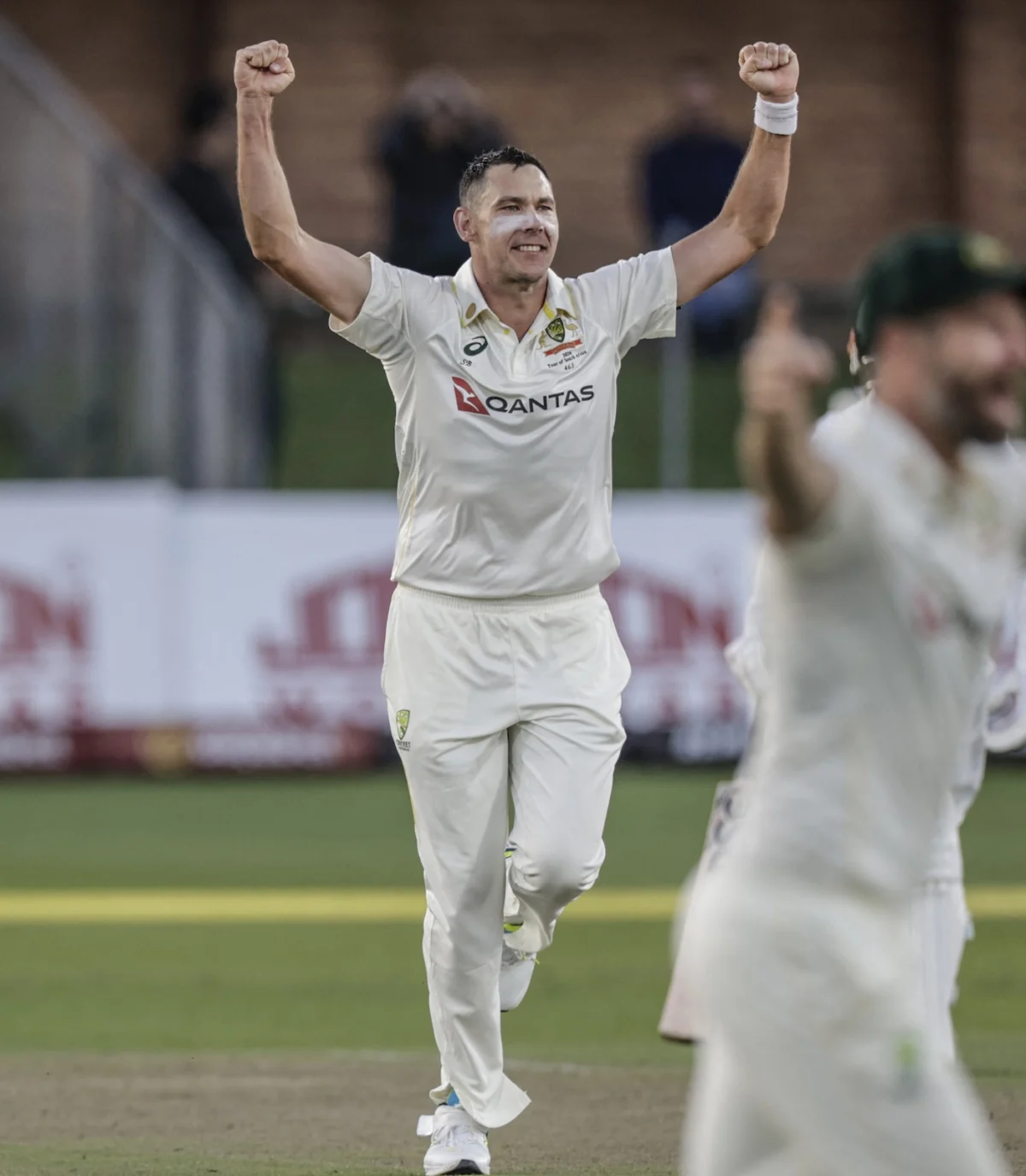
After snagging two vital wickets in two balls on the rain-truncated first day, Boland added two more to his tally on day two, securing his best-ever bowling figures in Test cricket against South Africa. Boland picked up right where he had left off almost 24 hours prior, immediately testing Bavuma’s technique and beating the outside edge with the very first ball of the resumed play. Bavuma responded with composure, successfully negotiating the remainder of the over and ending it with the first runs of the day—a cracking, authoritative drive through the cover region that would have visibly eased the early-morning nerves within the South African dressing room.
Marques Ackermann, enduring a far more difficult initiation to Test cricket, enjoyed no such reprieve. Greeted with a sharply rising bouncer from Australian captain Pat Cummins, the ball struck Ackermann flush on the arm guard and ballooned safely into the hands of wicketkeeper Alex Carey. While the Australians briefly contemplated sending the decision upstairs for a review, they ultimately decided against it, only to find they had to wait just one more over to decisively end Ackermann’s laboured stay at the crease. Trying to force the issue, Ackermann drove hard-handed at a delivery from Boland, managing only a thick edge that flew straight to Carey after facing 38 balls. It marked a difficult start for Ackermann, whose debut Test innings yielded just six runs.
As the morning session unfolded, Bavuma appeared to settle into a more assured rhythm, though a sharp appeal for a caught-behind dismissal off a cleverly disguised wobble-seam delivery from Boland served as a timely reminder that he needed to maintain absolute concentration. He was joined at the crease by Matthew Breetzke, who was playing in just his third Test match and his first competitive first-class fixture since February. Predictably, the signs of long-term rustiness were evident in Breetzke’s footwork and judgment. While he initially left the ball reasonably well outside his off stump, he was eventually lured into a false sense of security by the testing angle generated by Mitchell Starc. Inviting the young batter to drive on the up, Starc induced a faint nick that safely carried through to the keeper.

The fall of Breetzke’s wicket brought Rickelton to the crease as early as the 22nd over, presenting the left-hander with an immense rescue job. Because Rickelton serves as South Africa’s designated wicketkeeper in this format, team tactics required him to be moved down the order from his usual opening slot to number six. Despite the precarious situation, Bavuma found his timing and touch, executing a couple of delightful, textbook drives that did further good for his growing confidence and calm demeanor at the crease.
Boland’s opening spell of the day eventually stretched to ten overs, though he had bowled 4.4 of them during the previous afternoon’s limited window. With fellow fast-bowling stalwart Josh Hazlewood unwell and unavailable for selection, Australia were forced to look elsewhere for control, turning to all-rounder Beau Webster earlier than they might have anticipated. Webster responded by bowling two tidy maiden overs, prompting Carey to step right up to the stumps by his third over to increase the pressure. The first run off Webster’s bowling did not arrive until his fourth over, when Rickelton firmly drove him down to mid-on and scampered through for a tight, high-risk single. By that stage, however, Rickelton was beginning to time the ball sweetly, subsequently unfurling two gorgeous, straight drives down the ground off the bowling of Cummins.
With only nine overs remaining in the day and the shadows beginning to lengthen across the historic expanses of St George’s Park, Boland was summoned back into the attack for a second intensive burst. The rapidly changing, fading light did not appear to bother Bavuma in the slightest; he boldly dispatched a short delivery from Cummins over the boundary and out into Park Drive for a magnificent six. Yet, his comfort was relative, as Australia soon raised the intensity once more when Carey stepped up to the stumps for Boland, immediately re-imposing psychological pressure on the batters.
Australia very nearly prised out a crucial late wicket when Rickelton defensively tucked a delivery from Cummins straight to Marnus Labuschagne stationed at leg slip. With the harsh late-afternoon glare directly in his eyes, Labuschagne appeared to lose the flight of the ball, which struck him squarely in the sternum rather than being cleanly caught, giving Rickelton—then on 26—a major slice of good fortune.
Even so, Australia did not have long to wait before securing their breakthrough. Boland was switched to the opposite end and immediately found subtle, late movement away from the left-hander. Rickelton was tempted into chasing the ball, getting a feathered edge, but Carey remained rooted to his spot behind the stumps. Instead, Renshaw reacted with lightning speed, diving almost completely across Carey to pluck a stunning, one-handed catch mere inches off the turf. As the Australian fielders erupted in celebration around their golden boy, Rickelton threw his head back in sheer disbelief, lamenting yet another promising start left unconverted. Statistics underline his recent struggles at the highest level, with the batter managing just a single half-century from his last 13 Test innings.
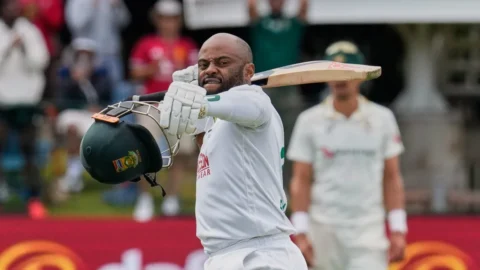
Following the dismissal, Wiaan Mulder successfully negotiated the remaining deliveries of the day alongside Bavuma. The South African captain finished unbeaten on 41, having looked by far the most assured and technically secure batter in the home side’s lineup throughout this challenging match so far. With day three looming, the onus remains squarely on the remaining Proteas batters to withstand the relentless pressure of Australia’s varied and disciplined bowling attack.


Comments (0)