


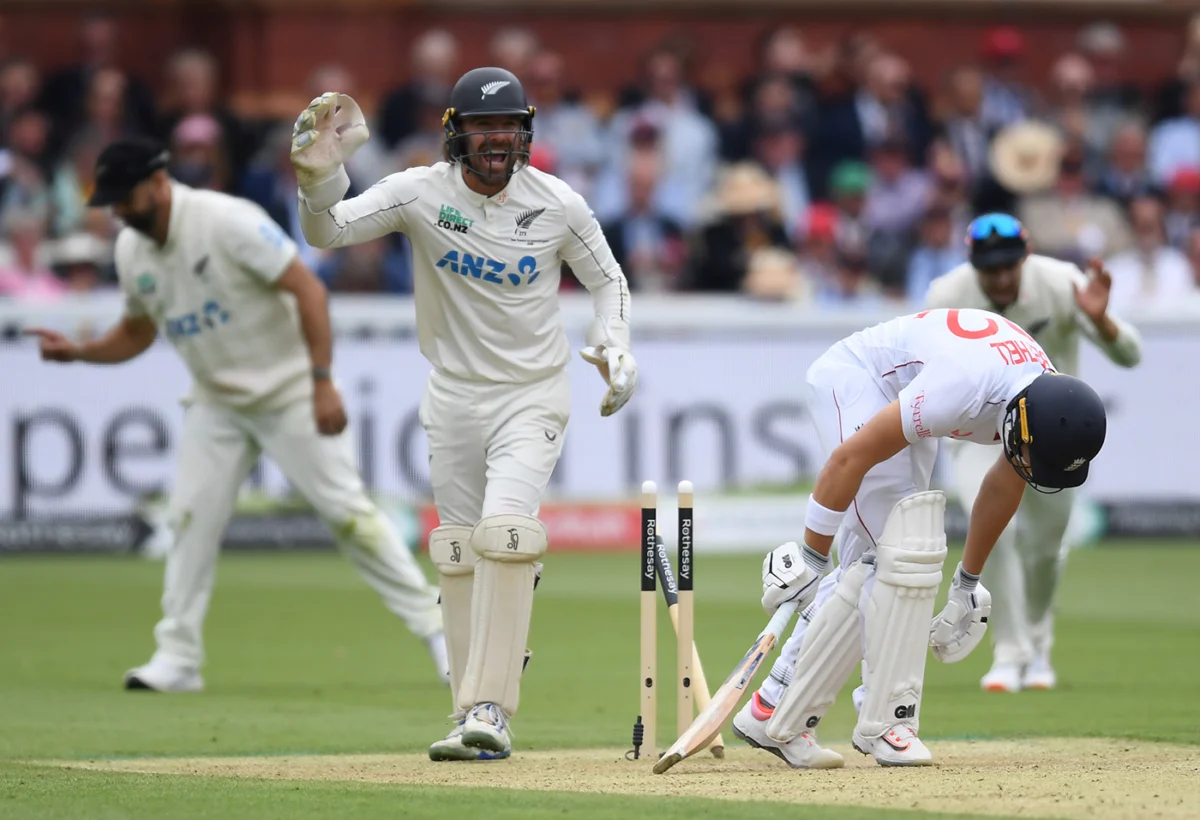
The pitch that earned Lord’s its first-ever demerit point from the International Cricket Council (ICC) has been completely dug up and relaid by the Marylebone Cricket Club (MCC) groundstaff, and will remain out of action for at least the next two seasons.
Pitch 9, which serves as one of the five central strips designated for international fixtures at the Home of Cricket, was handed an "unsatisfactory" rating by match referee Andy Pycroft earlier this year. The disciplinary action followed England’s hard-fought victory over New Zealand in early June, a Test match that descended into a bowler’s paradise characterised by excessive seam movement and deeply variable bounce. The surface proved virtually unplayable for long stretches, leading to an extraordinary collapse where all 40 wickets tumbled in a mere 166 overs. Of those dismissals, an overwhelming 24 came either bowled or leg-before-wicket, highlighting the erratic nature of a strip that quickly drew heavy criticism from players, pundits, and officials alike.
In the immediate aftermath of that chaotic June fixture, MCC chair Mark Nicholas formulated a comprehensive seven-point action plan to address the glaring shortcomings of the playing surface. Rob Lynch, the MCC’s director of cricket and operations, alongside the club’s dedicated groundstaff, swung into action. They sought external expert advice, commissioned detailed scientific data analysis, and initiated what Nicholas has accurately described to club members as the most thorough and extensive review of the square and pitch preparation at Lord’s seen in a generation.
Physical reconstruction work on Pitch 9 officially began earlier this month, meaning the marquee central strip will consequently be unavailable for selection for the next two or three seasons while the new turf beds in and matures. In an email sent to MCC members on Wednesday, Nicholas stressed that the ambitious project is entirely necessary to ensure that the historic club consistently prepares playing surfaces that match the prestigious global reputation of the venue. However, he also issued a pragmatic warning regarding the logistical hurdles ahead, noting that members and administrators alike should brace themselves for the various scheduling challenges these extensive ground development plans will bring in the coming years.
Beyond the immediate loss of a key central strip, authoritative sources have indicated that the wider Lord’s fixture list could face further alterations. Current plans are being drawn up to build in a significantly longer "lead-in" period ahead of major marquee events, such as upcoming Ashes Tests. These extended buffers are specifically designed to maximize the uninterrupted preparation time available for the groundstaff to work on the pitches, ensuring optimal playing conditions and avoiding a repeat of the June debacle.

To accommodate these changes and alleviate the inevitable fixture congestion, discussions are underway to potentially relocate some smaller, recreational fixtures away from Lord’s. These matches could be moved to Sir Paul Getty’s Ground at Wormsley, which the MCC intends to formally establish as a long-term partner venue following a highly successful pilot programme conducted over the summer months, though official details and final confirmations are yet to be finalized.
As part of its forward-looking, long-term pitch strategy, the MCC is aggressively exploring modern turf technology, planning to incorporate both hybrid pitches and permanent drop-in trays into its operations. A third hybrid pitch—comprising a precise blend of 95 percent natural turf and 5 percent synthetic reinforcement—is scheduled for installation in the spring. Discussing the utility of these modern surfaces, Nicholas explained that their efficient deployment will actively help relieve the operational pressure caused by the temporary loss of Pitch 9 over the next couple of years.
While hybrid pitches are not currently permitted under regulations for use in standard Test matches, they can be utilized for limited-overs international fixtures provided both competing teams and the ICC grant formal agreement. These reinforced surfaces are already a common and trusted sight across English domestic cricket. They are widely believed by turf experts to behave with significantly greater consistency than traditional standard turf pitches, while also offering a considerably quicker turnaround time to recover and become "fresh" again following heavy use.
In tandem with the hybrid installations, the club is also in the process of producing its very first batch of three drop-in trays. The pioneer of these trays is slated to be moved onto the main square in 2028, but only after completing a rigorous incubation period on the nearby nursery ground. Crucially, these will function as "permanent drop-ins," meaning they will be installed on a long-term basis to support the square, rather than being constantly removed and replaced on a seasonal cycle like the drop-in pitches frequently seen at multi-use sporting venues in Australia.
Lord’s carries a heavy international hosting burden, scheduled to stage two men’s Test matches every single year under its current staging agreement, which runs right through to 2031. Next summer, the famous ground is slated to host two high-profile England Tests—facing Bangladesh from May 28 to June 1, followed by a blockbuster clash against Australia from June 30 to July 4. Notably, however, Lord’s will not host the upcoming World Test Championship final, with the ICC instead opting to award the prestigious showpiece event to The Oval.
Despite the intense scrutiny and warranted criticism surrounding the New Zealand Test, the rest of Lord’s summer schedule proceeded with far better reviews. The ground successfully hosted two other international Tests—England women against India, and England men against Pakistan—with both of those respective pitches rated satisfactorily by match officials. Furthermore, their four limited-overs international pitches, spread across three women’s T20 World Cup matchdays and a high-stakes England men’s One-Day International against India, received glowing "very good" ratings from match referees, proving that the broader square retains significant quality even as the club undertakes its sweeping generational overhaul.




Comments (0)