


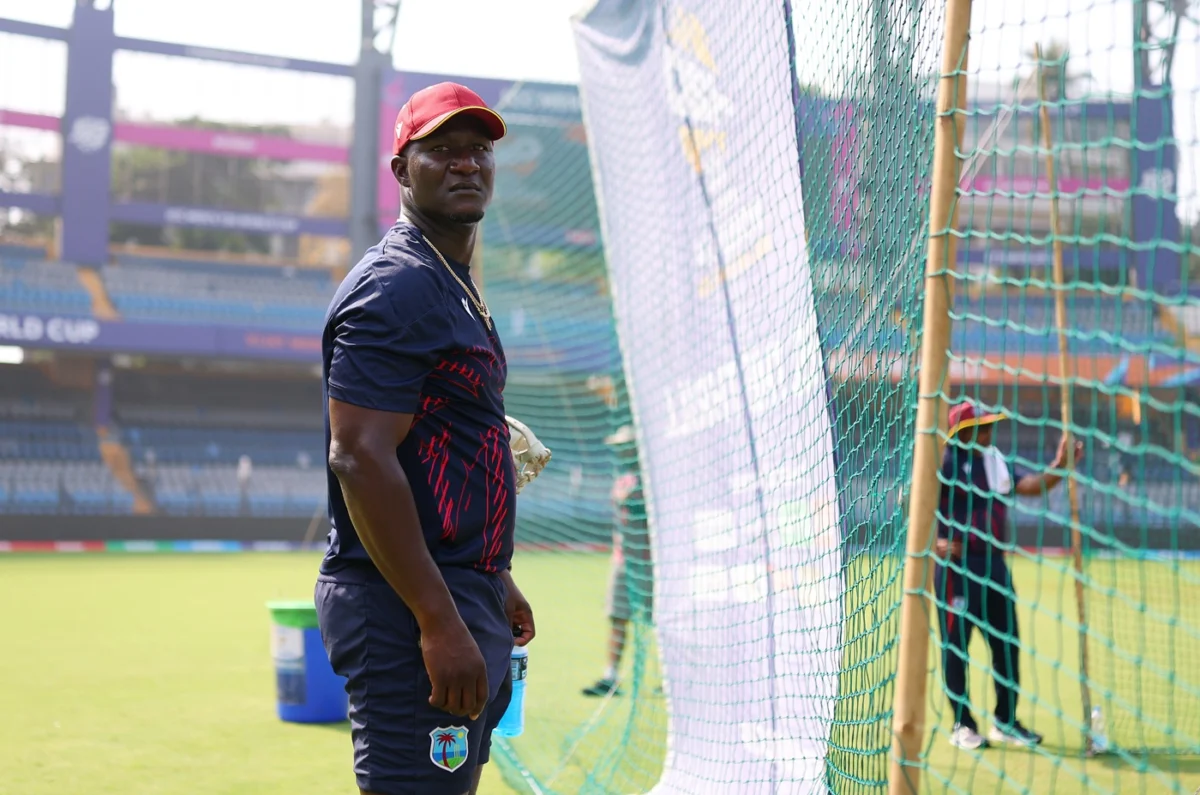
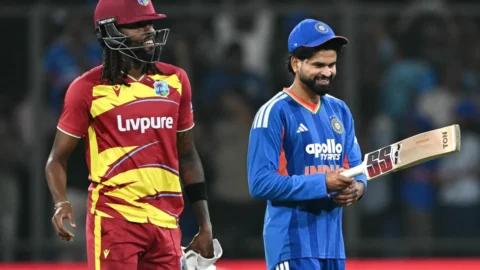
West Indies head coach Daren Sammy believes that a 2-2 scoreline is a remarkably fair and accurate reflection of his team’s hard-fought T20I series against India, following a dramatic washout in the fifth and final encounter in Bengaluru that brought an abrupt end to a compelling contest.
Speaking to the media at the post-match press conference after the series finale was abandoned due to inclement weather, Sammy reflected on the expectations that surrounded his squad heading into the tour and how completely they managed to alter that external narrative through grit, tactical discipline, and exceptional execution on the field.
"It’s a true reflection of how all the teams have played, especially for our guys," Sammy said. "I’m pretty sure when the series started, we probably didn’t have a chance. But that was just the opinion of others."
The historical context of the matchup certainly favored those outside opinions. Prior to this tour, the West Indies had played three previous bilateral T20I series against India on Indian soil and had suffered defeats in every single one of them. Across those past bilateral engagements, the Caribbean side had managed to secure just a single victory out of seven matches.
This time around, however, the dynamic was entirely different. The visitors went toe-to-toe with the hosts, running India neck-and-neck through high-pressure encounters, tactical shifts, and thrilling finishes. For Sammy and his coaching staff, this competitive parity represents a "massive step" toward the broader strategic goals the team has set for itself in the international arena.
While acknowledging that a series victory would have been preferable—especially given the historical drought of bilateral series wins in India—Sammy emphasized the psychological and competitive value of holding their own against elite opposition in their own backyard.
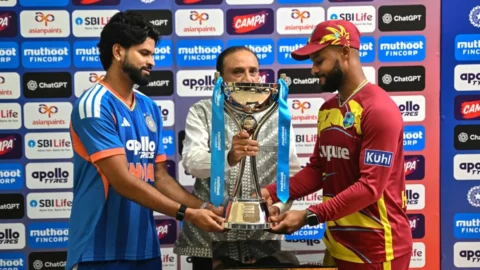
"We would want to win," Sammy said, "because something we’ve not done forever in India, so it would have been nice. I think the cup still is in our favour because we won the home leg the last time we played in 2023 3-2."
The 2023 home series victory remains a vital milestone for the Caribbean side, but matching India away from home adds a completely different dimension to their development. Sammy stressed that the team deeply understands what success means to them, remaining grounded and fully aware of the unique obstacles they face as a multi-nation board representing a vast yet dispersed geographic region.
"We understand what success means to us, we don’t ever take for granted where we are as a team and the challenges that we face," Sammy said. "We just look to make those strides, and I think after this series we’ve taken a massive step. We played against the defending champions and we’ve matched them, and in certain areas we’ve outplayed them, especially in their backyard."
Beyond the immediate tactical successes on the pitch, Sammy is hopeful that this sustained on-field progress can act as a catalyst to help guide West Indies cricket out of a long-standing period of financial instability. The roots of this fiscal vulnerability run deep, extending far beyond the boundaries of modern bilateral scheduling.
According to Cricket West Indies (CWI) CEO Chris Dehring, a major turning point for the board’s financial struggles dates back to 1997. During that year, the International Cricket Council (ICC) voted to alter the financial model of international cricket. CWI, which was known at the time as the West Indies Cricket Board (WICB), was outvoted by other member nations. The resulting policy shift meant that host boards would henceforth pocket all the revenue generated by bilateral series, effectively ending the traditional system of touring fees. For boards representing smaller populations and domestic markets, such as the West Indies, the loss of these touring fees stripped away a critical and reliable source of financial stability.
In the decades since that 1997 decision, West Indies cricket has drifted into multiple recurring financial crises. The ongoing economic pressures recently forced CWI to announce major internal restructuring measures last month. Among these difficult decisions was a 25 percent pay cut implemented for contracted international players, a move that highlights the severe fiscal realities currently facing the organization.
Addressing these structural hurdles, Sammy pointed out that understanding the historical context is crucial to appreciating the true value of West Indies cricket to the global game.
"You heard the CEO spoke about things that happened in 1997 that kind of has us in this situation," Sammy said, "but I think it’s important to understand what West Indies cricket means, not only to the region but to the world and to the game. I’ve heard the stories of guys from past West Indies teams spending three or four months in a place touring, playing warm-up matches, spreading their talent by the way they played and the fanbase that they created, and the revenue they generated for so many people."
Sammy invoked the wisdom of his mother to describe the emotional and moral obligation the broader cricketing world has toward supporting the Caribbean legacy. In his view, human empathy and institutional care must not be lost amidst the commercialization of modern sport.
"I think it’s important, my mom always says you must have a care factor," Sammy noted. "No matter what you do in life, the human nature should never lose that care factor. I think we’re in a position where we need somebody to put a hand around the shoulder of West Indies cricket. Financially, that is, and series like this, here in India, against the best team in the world, puts us in a conversation closer to that."
The strong showing in India did not happen in a vacuum. It forms part of an encouraging upward trajectory for the West Indies white-ball setup. Prior to securing this hard-fought 2-2 draw in India, the team had already demonstrated its capabilities by defeating Sri Lanka in a T20I series at home. Furthermore, that series success was preceded by a deep run to the semi-finals of the 2026 T20 World Cup, which was also hosted in India back in March.
This accumulated body of work has instilled a renewed sense of identity within the squad, characterized by expressive stroke-play, aggressive bowling plans, and an unmistakable collective swagger. Sammy believes that the psychological barrier of competing against the world’s best has finally been broken.
"All the guys in the dressing room, they’ve gone out there and played with intent and I think what was good to see is that the swagger is back, the confidence is back," Sammy said.
He noted that this transformation initially took root during their World Cup campaign earlier in the year, where observers could visibly see players enjoying their cricket and exhibiting an intense, unwavering willingness to win. For Sammy, that mindset is the foundation upon which all sustainable success must be built.
"That’s where it starts, the belief that we belong where we are, and to have the performances that says you belong there," Sammy concluded. "Hopefully, right now it’s just been consistent."

Comments (0)